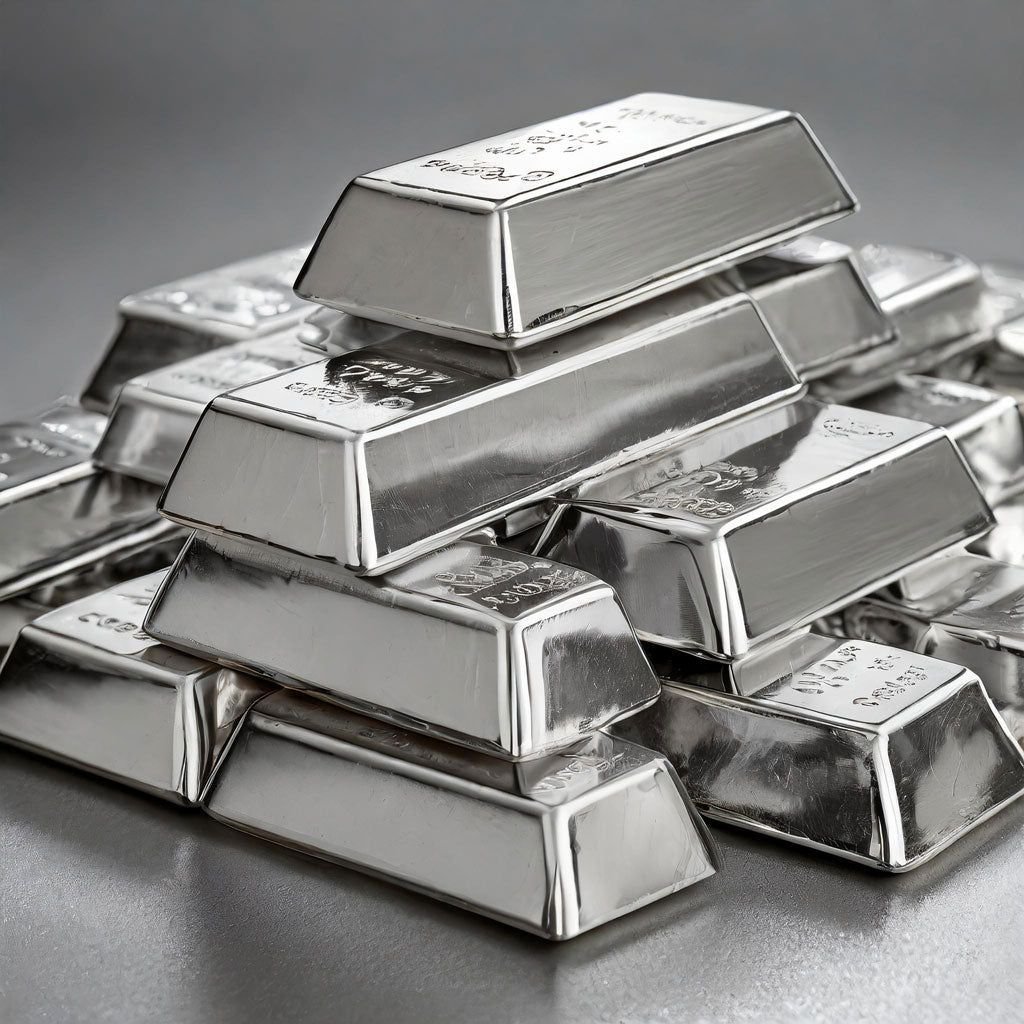
Silver sits in a rare category: it is simultaneously an indispensable industrial input and a monetary-style asset. That double life makes silver fascinating — and often volatile. Industrial users buy silver because of its physical properties (best electrical conductivity, reflectivity, antimicrobial traits); investors buy silver because it’s liquid, globally recognized, and relatively scarce above ground. Understanding why silver is both a metal and an investment requires unpacking its demand base, supply structure, market plumbing, and the economic regimes that push people from “user” to “buyer.”
This article explains those forces, brings in the most recent market picture, and gives practical guidance on how different participants (manufacturers, investors, policy-makers) should think about silver today.
The two economies of silver: industrial use vs investment
Think of silver as running two distinct businesses at the same time.
-
Industrial economy: About half of all silver demand now comes from industrial applications — photovoltaics, electronics, automotive (especially electric vehicles), electrical contacts, and countless small but critical components. These uses are non-discretionary: engineers specify silver because, for many applications, there is no equally effective substitute.
-
Investment economy: The other half of demand is financial and retail — bars, coins, exchange-traded products, futures and options, and dealer inventory. That demand is driven by macro sentiment (inflation, real rates), portfolio allocation decisions, and occasional speculative frenzies.
Because both economies draw on the same finite pool of above-ground metal and the same flow from mines and recyclers, big shifts on one side immediately affect price availability and behavior on the other.
Latest market snapshot (January 2026)
To frame the discussion, here’s where the market stood in mid-January 2026:
-
Spot price: Silver recently traded around $90 per troy ounce, after an extraordinary rally across 2025 and into 2026 that pushed prices several-fold higher than typical historical levels.
-
Industrial demand share: Industrial demand now represents roughly half or more of overall silver consumption, the highest structural share in modern history as clean-energy and electronics uses expand.
-
Annual demand: Total global silver demand runs in the low billions of ounces per year (about 1.1–1.3 billion ounces in recent annual tallies), with industrial sectors accounting for the largest growth.
-
Mine production: Global silver mine output is on the order of ~800–840 million ounces per year (roughly 24–26 thousand metric tons), with most production coming as a byproduct of copper, lead and zinc mining.
-
Recycling: Recycled silver supplies typically contribute a mid-teens percentage of annual supply but are relatively price-insensitive because small-volume uses are hard to recover economically.
-
Inventories and deficits: The market experienced repeated annual deficits in the early 2020s, and above-ground readily available inventories have been drawn down, contributing to tighter spot market liquidity.
-
ETF and retail flows: Exchange-traded silver vehicles and retail buying surged in 2025, drawing tens of millions of ounces into financial wrappers and pressuring dealer inventories during episodes of strong demand.
(Those figures are rounded to reflect the latest consolidated market readings; percentages and volumes change as new production, recycling and demand reports arrive.)
Why industrial demand now dominates silver’s story
Several structural technology and energy trends have propelled industrial silver demand:
Solar photovoltaics
Photovoltaic (PV) manufacturing is now the single largest industrial consumer of silver. Silver paste is used to make the fine conductive lines on silicon solar cells; those traces conduct the electricity generated by the panel. Two effects have combined to raise total silver use from PV:
-
Rapid growth in installed solar capacity globally (record GW additions year after year).
-
The absolute number of panels being produced has outpaced modest per-panel reductions in silver content (manufacturers reduce grams per cell but install many more cells overall).
Even as manufacturers attempt to thrift silver content per panel, total silver consumption in solar has grown because of the sheer scale of deployment.
Electronics and electrical equipment
Silver’s unmatched electrical and thermal conductivity makes it essential in contacts, switches, circuit boards, and high-reliability connectors. The expansion of data centers, telecommunications, industrial automation, and consumer electronics keeps this demand base resilient.
Electric vehicles and power electronics
An electric vehicle contains considerably more silver than an internal-combustion vehicle because of the power electronics — inverters, control modules, connectors — and the charging infrastructure (charging stations require silver contacts and connectors). As EV penetration climbs, per-vehicle silver demand and the demand from charging infrastructure both lift total industrial consumption.
Other industrial and medical uses
Silver’s antimicrobial properties are used in wound dressings, coatings and medical devices; silver catalysts find niche roles in chemical processes; and specialized industrial applications continue to require small but important quantities of silver.
Together, these industrial uses make silver not just a precious metal but an essential raw material for the modern electrified economy.
Why supply struggles to catch up
Silver’s supply-side structure compounds the price effect of rising industrial demand.
Byproduct production
Roughly three-quarters of mined silver is produced as a byproduct of other metal mining — mainly copper, lead and zinc. That has two implications:
-
Silver mine supply does not respond rapidly to silver price signals alone. To materially boost silver output, producers would generally need to expand base-metal operations, which is costly and slow.
-
Years of investment decisions and mine depletion patterns make the marginal silver supply relatively inelastic; prices can move widely when demand surges.
Geological and operational limits
New primary silver deposits are relatively rare, expensive to develop, and often geographically constrained. Environmental, permitting, and capital constraints further slow any potential supply response.
Recycling limits
While recycling adds meaningful volumes, the structure of modern silver use (many tiny applications embedded in electronics) makes collection and recovery difficult and often uneconomic. Recycling responds to price changes but not enough to instantly cure large deficits.
Inventories and market plumbing
Unlike gold, silver has smaller above-ground inventories held in exchange vaults and dealer warehouses. When investment demand surges, readily available stock is consumed quickly, spiking spot volatility. Thin inventories raise the risk of sudden squeezes when retail or ETF demand spikes.
Investment demand: the financial amplifier
Silver’s industrial base sets a durable floor beneath price over the long run, but investment flows amplify moves in the short and medium term.
Why investors buy silver
-
Inflation hedge and store-of-value narrative (though gold is more commonly used for this).
-
Portfolio diversification — silver historically has low-to-moderate correlation with stocks and bonds in some regimes.
-
Leveraged upside — because silver’s market size is smaller than gold’s, percentage moves can be larger, appealing to traders and speculators.
-
Macro plays — during periods of dollar weakness, rate-cut expectations, or geopolitical stress, silver can attract flows similar to gold but with higher beta.
Financial vehicles
Investors access silver through physical bars and coins, exchange-traded products, mutual funds, futures and options. ETFs in particular can channel very large flows quickly; when tens of millions of ounces move into ETFs in a short period, dealer networks struggle to supply physical metal at quoted spreads, widening premiums and moving spot prices.
Retail mania and squeezes
Because silver is accessible (smaller coins and lower notional per-ounce cost historically), retail frenzy episodes can create outsized demand. Combined with limited dealer inventories and futures market positioning, these episodes sometimes produce dramatic short-term rallies.
The price mechanics: why silver is more volatile than gold
Silver’s hybrid nature explains its higher volatility:
-
Industrial sensitivity: Recession fears or factory slowdowns hit one side of demand hard, creating downside pressure even if investors remain bullish.
-
Inventory thinness: Less above-ground stock means investment flows affect spot far more than they would for a metal with deeper inventories.
-
Supply inelasticity: Because mines can’t quickly add metal, a sudden demand spike shows up immediately in prices.
-
Speculative participation: Futures markets and leveraged positions can exaggerate moves, especially with a smaller market cap relative to gold.
Hence silver often outperforms during cyclical recoveries and structural industrial expansions but can underperform in systemic risk episodes when investors prefer gold’s safe-haven characteristics.
Recent structural shifts (context from the last two years)
A few structural themes have reshaped the silver market recently:
-
Energy transition acceleration: The global push to add solar, EVs, and grid upgrades rapidly increased industrial silver demand.
-
Tighter inventories: Years of demand outpacing mine + recycled supply have reduced the cushion of available metal.
-
Massive investment inflows: ETFs and retail flows surged in episodes, drawing physical metal out of dealer chains and raising premiums.
-
Macro regime shifts: Periods of falling real yields, weaker dollar expectations, and geopolitical stress encouraged investors to seek precious metals — silver included — which magnified price moves when industrial demand was already strong.
Combined, these shifts explain why silver’s price rose sharply in recent years and why volatility remains elevated.
How different participants should think about silver
Manufacturers and procurement officers
-
Lock supply with long-term contracts where possible (and include clauses for industrial-grade silver).
-
Consider substitution where feasible (e.g., design changes to reduce grams per unit), but recognize performance trade-offs.
-
Hedge exposure using forward metal contracts if budgets require price certainty.
Investors and portfolio managers
-
Treat silver as a tactical or satellite allocation rather than a core defensive asset.
-
Consider position sizing carefully; volatility can be large.
-
Use a mix of physical metal (for long-term insurance) and financial instruments (for liquidity and rebalancing).
-
Monitor industrial indicators (solar installations, EV sales, electronics production) as well as macro indicators (real yields, dollar, ETF flows).
Policy-makers and strategic planners
-
Recognize silver’s strategic importance to clean-energy and critical infrastructure.
-
Support recycling initiatives that make recovery of embedded silver economical.
-
Consider supply-chain resilience measures to reduce dependence on a few production hubs.
Risks and upside scenarios
Risks that could push prices lower
-
A deep global recession that collapses industrial demand.
-
A technological substitution breakthrough that meaningfully reduces silver usage in PV or electronics.
-
Rapid and sustained rise in real interest rates that drains speculative interest.
Upside scenarios
-
Faster-than-expected solar and EV deployment with limited silver thrift improvement.
-
Continued structural deficits and inventory drawdowns.
-
Periodic retail or ETF-driven flurries that trigger supply squeezes.
Practical takeaways
-
Silver is not “just” a precious metal; it is an industrial raw material whose demand is growing with the energy transition.
-
Industrial demand provides a durable fundamental floor; investment flows provide the volatility and occasional spikes.
-
Supply response is slow because most silver is a byproduct; that structural inelasticity amplifies price moves.
-
For manufacturers, supply planning and hedging matter. For investors, allocation should be modest and accompanied by active risk management.
-
Watch the leading indicators: solar installations, EV penetration, electronics production, ETF flows, above-ground inventories, and real yields — these together paint the clearest picture of where silver prices are headed.
Final thought
Silver’s identity as both a metal and an investment is not a contradiction — it is the source of its appeal and its headaches. Industrial users rely on silver’s unique properties to power the technologies of the clean-energy century. Investors prize silver for its liquidity, scarcity and the potential leverage to macro shifts. Those two worlds compete for a finite supply; when both grow at once, volatility is the predictable price. Understanding both sides of silver’s nature is the only way to make informed decisions—whether you’re designing the next-generation solar cell or deciding how much of your portfolio to allocate to a small, electric, and gleaming commodity.
ALSO READ: Craig Wright’s “I am Satoshi” claims