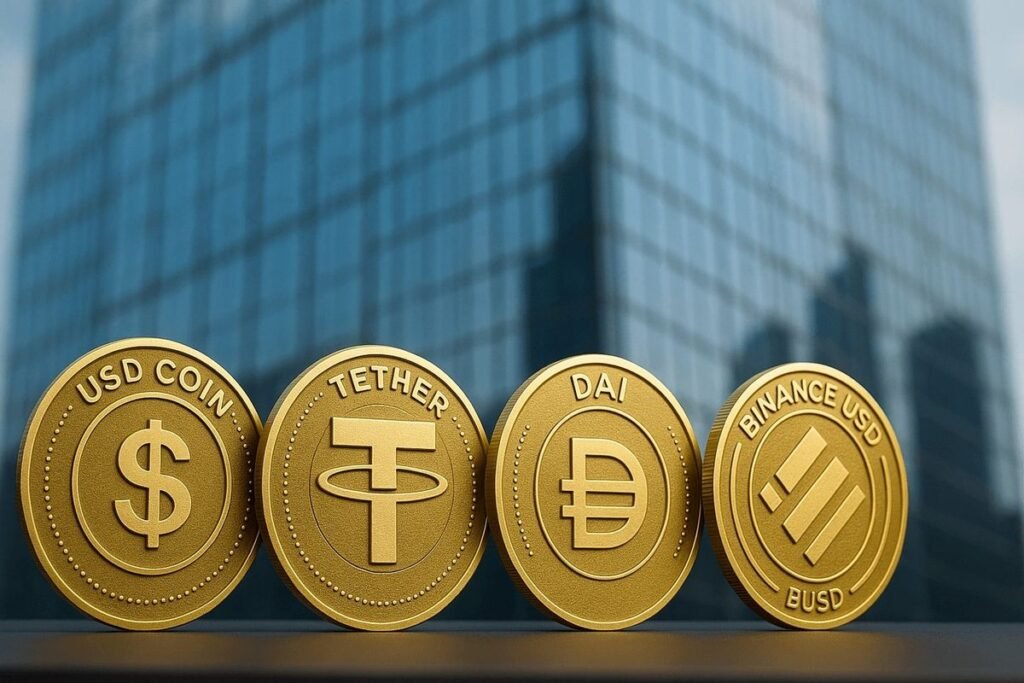
One of the most important — and most misunderstood — concepts in crypto economics is token supply dynamics. Whether a cryptocurrency is inflationary or deflationary has a profound impact on price behavior, investor incentives, network security, and long-term sustainability.
Many newcomers assume that deflationary tokens are always “better” because scarcity sounds attractive, while inflationary tokens are often dismissed as value-diluting. In reality, the picture is far more nuanced. Some of the most successful crypto networks in the world rely on inflation, while poorly designed deflationary models have collapsed under their own incentives.
This article breaks down inflationary vs deflationary crypto tokens, how each model works, real-world examples, advantages and risks, and how to evaluate which model makes sense for different use cases.
What does inflationary and deflationary mean in crypto?
At a basic level:
-
Inflationary tokens increase total supply over time
-
Deflationary tokens decrease total supply over time
But unlike fiat currencies, crypto inflation and deflation are programmatic, transparent, and governed by code rather than central banks.
Supply changes are usually driven by:
-
Block rewards
-
Staking emissions
-
Token burns
-
Transaction fees
-
Governance decisions
Understanding why supply changes is more important than whether supply changes at all.
Inflationary crypto tokens explained
What is an inflationary token?
An inflationary crypto token has new tokens continuously entering circulation, typically as rewards for miners, validators, or stakers.
Inflation does not automatically mean unlimited supply. Many inflationary tokens have:
-
Fixed annual emission schedules
-
Declining issuance over time
-
Inflation capped at a certain percentage
Why inflation exists in crypto
Inflation is often used to:
-
Secure the network (pay validators/miners)
-
Incentivize participation (staking, governance)
-
Bootstrap early adoption
-
Maintain network decentralization
Without inflation, many networks would struggle to reward participants who maintain consensus.
Examples of inflationary crypto tokens
Ethereum (historically inflationary, now variable)
Ethereum historically issued new ETH as block rewards. After major upgrades, ETH issuance became more dynamic, sometimes inflationary and sometimes deflationary depending on network activity and fee burns.
This hybrid approach allows Ethereum to:
-
Reward validators
-
Reduce supply during high usage
-
Balance security with scarcity
Solana
Solana uses an inflationary model with a declining emission schedule. New SOL tokens reward validators and stakers, securing a high-throughput network.
Inflation gradually decreases, aligning early incentives with long-term sustainability.
Advantages of inflationary tokens
-
Strong security incentives
Validators and miners are paid consistently, reducing reliance on transaction fees alone. -
Encourages active participation
Staking rewards motivate users to lock tokens and support the network. -
Supports network growth
Inflation helps bootstrap ecosystems in early stages. -
Predictable issuance
Most inflationary tokens follow transparent, algorithmic schedules.
Risks of inflationary tokens
-
Supply dilution
If demand doesn’t grow faster than supply, prices may stagnate or decline. -
Sell pressure from rewards
Validators and stakers may sell rewards, creating constant downward pressure. -
Misaligned incentives
Poorly designed inflation can reward insiders disproportionately.
Deflationary crypto tokens explained
What is a deflationary token?
A deflationary crypto token has mechanisms that reduce total supply over time. This is often achieved through token burns, where tokens are permanently removed from circulation.
Deflation can be:
-
Continuous (small burn on every transaction)
-
Conditional (burns only under certain conditions)
-
Event-based (scheduled or governance-approved burns)
Examples of deflationary crypto tokens
Bitcoin
Bitcoin is the most famous example of a deflationary asset in the long term.
Key characteristics:
-
Fixed maximum supply of 21 million BTC
-
Block rewards decrease over time through halvings
-
No mechanism to increase supply beyond the cap
Bitcoin’s predictable scarcity is central to its “digital gold” narrative.
BNB
BNB uses periodic token burns that reduce total supply over time. These burns are tied to ecosystem usage and governance decisions, gradually decreasing circulating supply.
Advantages of deflationary tokens
-
Scarcity narrative
Reduced supply can support long-term value appreciation if demand holds or grows. -
Holder alignment
Deflation rewards long-term holders by increasing relative ownership. -
Reduced sell pressure
If fewer tokens enter circulation, there may be less constant selling. -
Simple value proposition
Scarcity is easy for users to understand.
Risks of deflationary tokens
-
Security sustainability
Without inflation, networks may struggle to pay validators in the future. -
Hoarding behavior
Users may avoid spending tokens, reducing network activity. -
Short-term hype cycles
Many deflationary tokens rely on aggressive marketing rather than real utility. -
Burns don’t guarantee value
Burning tokens does not create demand — it only reduces supply.
Inflationary vs deflationary: side-by-side comparison
| Feature | Inflationary Tokens | Deflationary Tokens |
|---|---|---|
| Supply trend | Increases over time | Decreases over time |
| Network security | Strong validator incentives | May rely on fees |
| Holder appeal | Rewards active participation | Rewards long-term holding |
| Price behavior | Depends on demand growth | Depends on scarcity + demand |
| Risk profile | Dilution if demand lags | Utility loss if hoarded |
Neither model is inherently superior — effectiveness depends on execution and purpose.
Hybrid models: the best of both worlds?
Many modern crypto networks are moving toward hybrid supply models, combining inflationary rewards with deflationary burns.
These models aim to:
-
Maintain strong security incentives
-
Reduce long-term supply growth
-
Align network usage with token value
Ethereum’s post-upgrade economics are a prime example: issuance continues, but heavy network usage can burn more ETH than is issued, making supply net deflationary during peak demand periods.
Hybrid models are increasingly viewed as the most sustainable approach.
How token supply affects price (and why it’s not everything)
It’s tempting to assume:
-
Inflation = price down
-
Deflation = price up
In reality, demand matters far more than supply mechanics alone.
Price is influenced by:
-
Network utility
-
User growth
-
Developer activity
-
Market sentiment
-
Liquidity and accessibility
A deflationary token with no real use can go to zero. An inflationary token powering a high-demand network can outperform dramatically.
Common myths about deflationary tokens
Myth: Token burns automatically increase price
Reality: Burns only help if demand exists
Myth: Inflationary tokens are bad investments
Reality: Many top networks use inflation successfully
Myth: Fixed supply guarantees long-term success
Reality: Utility, security, and adoption matter more
How to evaluate a token’s supply model
When analyzing a crypto token, ask these questions:
-
Why does inflation or deflation exist?
Is it supporting security, growth, or just marketing? -
Who benefits most from emissions or burns?
Validators, insiders, users, or speculators? -
Is supply change predictable and transparent?
Clear schedules inspire confidence. -
Does the network generate real demand?
Utility must offset supply changes. -
How does the model evolve over time?
Good designs adapt as networks mature.
The role of inflation in long-term network health
Inflation is not a flaw — it is often a feature.
Sustainable networks need:
-
Security incentives
-
Active participation
-
Developer funding
-
Governance engagement
A completely deflationary system risks underpaying the very participants who keep it alive. That’s why many networks either maintain modest inflation or transition to hybrid models.
Final thoughts
Inflationary vs deflationary crypto tokens is not a battle of “good vs bad.” It’s a question of economic design.
-
Inflationary models excel at securing networks and incentivizing growth
-
Deflationary models appeal to scarcity and long-term holding
-
Hybrid models aim to balance both
The smartest investors look beyond supply buzzwords and focus on how token economics support real usage, security, and adoption.
In crypto, value is not created by burning tokens or minting them — it’s created when people use the network.
ALSO READ: Best Hybrid Funds for Long-Term Investment