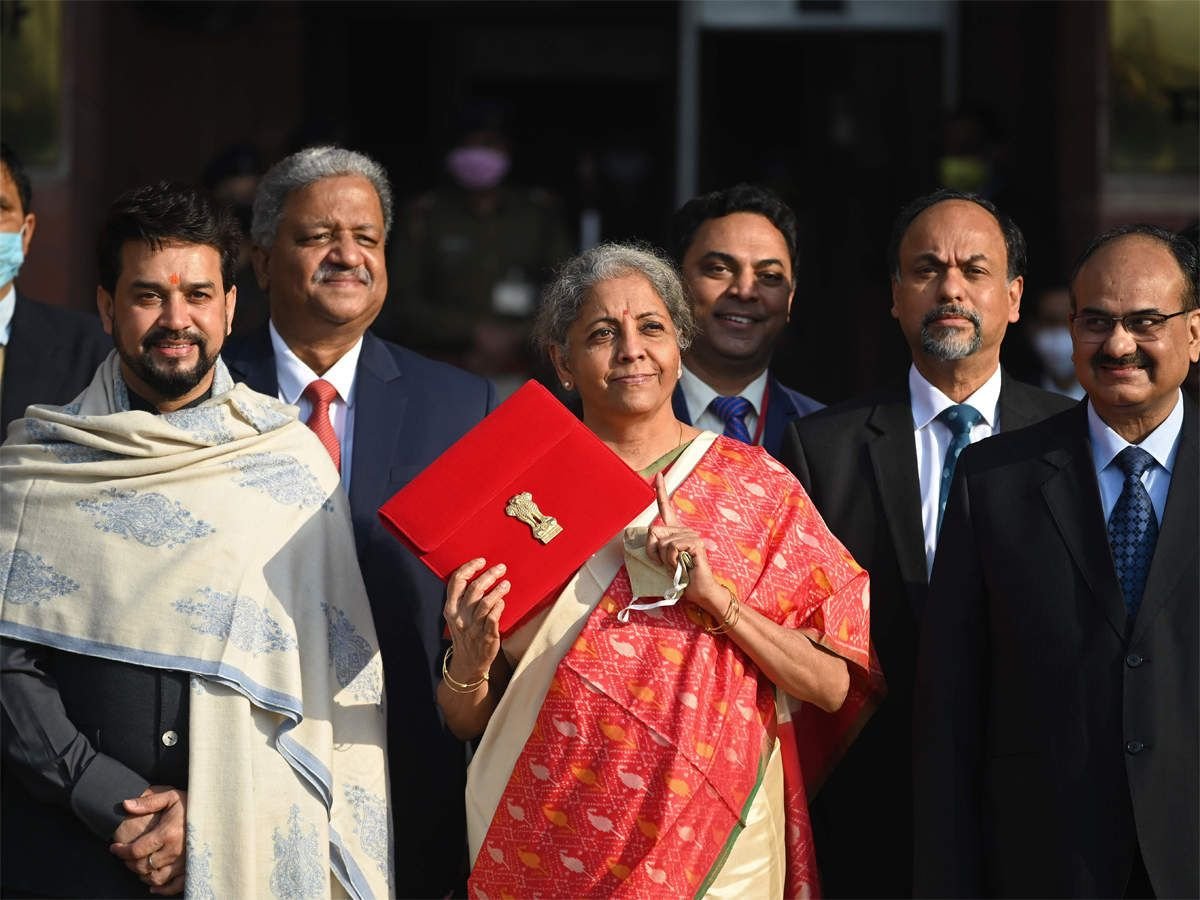
Union Budget 2026 marks a decisive shift toward job creation, industrial depth, and technological self-reliance. Finance Minister Nirmala Sitharaman places labour-intensive manufacturing and strategic sectors at the center of national growth. The budget links employment with innovation, rural livelihoods with industrial expansion, and domestic capability with global competitiveness.
From textiles and handlooms to semiconductors and rare earths, the budget builds an integrated vision of production, skills, and supply chains. Each initiative targets a specific weakness in India’s industrial ecosystem while unlocking large-scale opportunities for youth, women, and small entrepreneurs.
Textile sector as the engine of mass employment
The budget introduces a comprehensive package for the labour-intensive textile sector. The government recognizes textiles as the fastest route to generate millions of jobs, especially in rural and semi-urban regions.
Integrated program for labour-intensive textiles
The integrated program connects raw material production, processing, design, and marketing into a single value chain. This approach strengthens small producers and attracts large investors. The program also aligns with export goals by encouraging globally competitive clusters.
National Fiber Scheme
The National Fiber Scheme aims to achieve self-reliance in natural, manmade, and new-age fibers. Cotton, jute, silk, and wool will receive scientific support, while manmade fibers such as polyester and technical textiles gain production incentives. New-age fibers open opportunities in defense, sportswear, and medical textiles.
Textile expansion and employment scheme
This scheme focuses directly on job creation. It supports MSMEs with credit access, modern machinery, and training programs. Women workers and youth will benefit most from this expansion because textiles employ a high share of first-time workers.
National Handloom and Handicraft Scheme
The budget strengthens India’s cultural industries through a unified national scheme. Artisans will receive design assistance, digital platforms, and assured market linkages. This step transforms heritage crafts into modern economic assets.
Tex-Eco Initiative
Tex-Eco links sustainability with production. It promotes eco-friendly dyes, water-efficient processes, and recycling of textile waste. The initiative positions India as a responsible global textile supplier.
Samarth 2.0
Samarth 2.0 upgrades skill development for textile workers. The program trains workers in automation, quality control, and digital design. It also connects training centers directly with employers.
Mega-textile parks in challenge mode
The government will set up mega-textile parks through a competitive challenge mode. States will compete on infrastructure readiness and policy support. These parks will host integrated facilities from spinning to garmenting, reducing logistics costs and increasing exports.
Mahatma Gandhi Gram Swaraj Initiative
This initiative strengthens Khadi, handloom, and handicrafts at the village level. It blends self-reliance with entrepreneurship and revives Gandhian ideals through modern supply chains.
Together, these measures turn textiles into a national employment mission rather than a fragmented sector.
Building capacity for strong capital goods
Union Budget 2026 also targets the backbone of industrial growth: capital goods and high-precision manufacturing.
The government plans high-tech toolrooms for manufacturing precision components at scale and lower cost. These toolrooms will support automobile, aerospace, and electronics industries. They will reduce import dependence and strengthen domestic suppliers.
A new scheme for construction and infrastructure equipment will boost the production of high-value Construction and Infrastructure Equipment (CIE). This move supports highways, ports, and urban development projects while creating skilled factory jobs.
The budget also announces a container manufacturing scheme with an outlay of ₹10,000 crore over five years. This scheme will build India’s capacity in logistics hardware and reduce reliance on foreign container suppliers. It will help exporters, shipping companies, and port operators while generating thousands of technical jobs.
Dedicated rare-earth corridors for strategic security
Rare earth minerals form the foundation of electric vehicles, wind turbines, and advanced electronics. Union Budget 2026 proposes dedicated rare-earth corridors across Odisha, Kerala, Andhra Pradesh, and Tamil Nadu.
These corridors will integrate mining, processing, research, and manufacturing. The government will support exploration and modern extraction technologies. It will also promote the manufacturing of permanent magnets and advanced materials within India.
This initiative reduces strategic vulnerability and strengthens India’s position in clean energy and defense technologies. It also brings development to mineral-rich states through infrastructure and skilled employment.
India’s Semiconductor Mission 2.0
The budget raises the outlay for the Electronics Components Manufacturing Scheme to ₹40,000 crore. This investment will support chip packaging, display manufacturing, and critical component production.
ISM 2.0 focuses not only on fabrication plants but also on design talent and domestic intellectual property. India will nurture startups in chip design and embedded systems. This strategy places India in the global semiconductor ecosystem rather than at its margins.
Biopharma Shakti: health meets manufacturing
Union Budget 2026 introduces Biopharma Shakti with an outlay of ₹10,000 crore over five years. The initiative responds to India’s changing disease burden, especially the rise of non-communicable diseases such as diabetes and heart conditions.
The strategy aims to make India a global biopharma manufacturing hub. It supports advanced research, large-scale production, and clinical innovation. India will expand capacity in vaccines, biosimilars, and gene therapies.
Biopharma Shakti also encourages collaboration between research institutions and private manufacturers. This collaboration will accelerate innovation and reduce healthcare costs while creating high-skilled scientific jobs.
A unified vision of growth
Union Budget 2026 connects three powerful goals: employment, self-reliance, and global competitiveness. The textile push creates mass jobs. Semiconductor and rare-earth missions secure technological sovereignty. Capital goods and container manufacturing strengthen industrial infrastructure. Biopharma Shakti links health security with economic power.
Unlike earlier budgets that treated sectors separately, this budget integrates production, skills, and sustainability into a single framework. Rural artisans and high-tech engineers now stand within the same national development strategy.
The emphasis on challenge-mode parks, corridors, and missions introduces competition among states and encourages faster execution. Private investment will follow public commitment, especially in textiles, electronics, and biopharma.
Union Budget 2026 therefore does more than allocate money. It defines a long-term industrial identity for India. It positions the country as a manufacturing powerhouse that creates jobs, protects strategic interests, and delivers inclusive growth.
In this budget, employment does not appear as a by-product of growth. It stands as the primary objective. With textiles in villages, chips in factories, and medicines in labs, India moves toward a future where economic strength and social development advance together.
Also Read – What Moves Crude Oil Prices Every Day