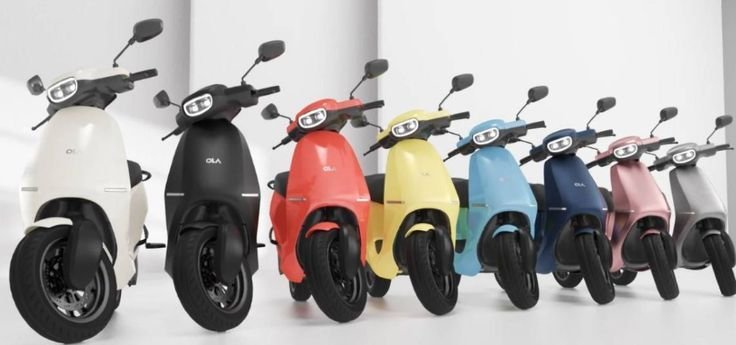
Ola Electric released its financial results for the first quarter of FY26 and revealed a mixed performance. The company continues to face challenges, but it also showed progress in key operational areas. Ola’s results reflected a clear shift in focus—from rapid expansion to improving profitability and reducing costs.
📉 Revenue Falls Sharply While Losses Widen
Ola Electric reported a net loss of ₹428 crore in Q1 FY26. This marked a 23% increase in losses compared to the ₹347 crore loss recorded in the same quarter last year. The company struggled with weak revenue and rising competition, which pulled down its top-line performance.
Revenue from operations dropped by 50% year-on-year, from ₹1,644 crore in Q1 FY25 to just ₹828 crore in Q1 FY26. The drop resulted from lower vehicle deliveries and a slowdown in demand after the phase-out of certain government subsidies.
Although yearly revenue dropped sharply, quarter-on-quarter performance improved. Ola’s Q4 FY25 revenue stood at ₹611 crore, and Q1 FY26 posted a 35.5% increase over that number. This improvement came from increased sales of newer models and better product mix.
🛵 Vehicle Sales Fall but Recover Sequentially
Ola sold 68,192 electric scooters in the first quarter of FY26. This number represented a 45% decline compared to the 1.25 lakh units it sold in the same period last year. However, compared to the 51,400 scooters sold in Q4 FY25, the Q1 sales rose by 32.7%.
The drop in year-on-year sales occurred because the FAME II subsidy ended in March 2025. The subsidy had previously helped Ola and other electric vehicle (EV) manufacturers offer more competitive prices. After its removal, customers delayed or reconsidered purchases, which hurt demand.
Ola introduced its Gen-3 scooters, which contributed to most of the Q1 deliveries. These updated models offered better range and performance, and they attracted new buyers. Nearly 80% of Q1 scooter deliveries came from these Gen-3 models.
⚙️ Strong Cost Reduction Measures
Ola’s management focused on cutting costs through a program called Project Lakshya. The company reduced total expenses by 42.4%, bringing them down from ₹1,849 crore in Q1 FY25 to ₹1,065 crore in Q1 FY26.
The auto division’s monthly operational cost dropped from ₹178 crore to ₹105 crore. The company also lowered consolidated monthly expenses to ₹150 crore and aims to reduce that further to ₹130 crore by the end of the financial year.
These cost cuts helped Ola reduce its losses on a consolidated level. They also prepared the company to transition toward sustained profitability in the coming quarters.
📊 Gross Margins Improve, Auto Business Turns Positive
Ola improved its automotive gross margin from 18.4% last year to 25.6% in Q1 FY26. The improvement came from better inventory management, efficient sourcing of parts, and cost-effective production methods.
Although the company’s overall gross margin declined slightly on a consolidated basis, the performance of the auto segment stood out. The company brought down its EBITDA loss to ₹237 crore, and improved its EBITDA margin to –28.6%, compared to –113.9% in Q4 FY25.
Most importantly, Ola achieved positive EBITDA in the auto business during June 2025. This milestone marked a significant turnaround and showed that the company could build a sustainable and profitable EV business with scale and discipline.
🧭 New Strategy Focuses on Sustainable Growth
Ola’s founder and CEO, Bhavish Aggarwal, stated that the company would now shift its focus away from hyper-growth and prioritize operational efficiency and profitability.
The management team shared a new outlook for FY26. Ola expects to:
-
Reach gross margins between 35% and 40% by the end of the financial year.
-
Achieve auto EBITDA break-even on a full-quarter basis from Q2 FY26.
-
Deliver between 3.25 lakh and 3.75 lakh electric vehicles in FY26.
-
Generate total revenue between ₹4,200 crore and ₹4,700 crore.
These targets reflect a disciplined approach where the company focuses on profitability instead of chasing high sales volumes without efficiency.
🧪 Ola Doubles Down on In-House Technology
Ola has taken several steps to increase vertical integration across its product range. The company now designs and manufactures most of the key components for its scooters, including:
-
Motors
-
Power electronics
-
Embedded software
-
Vehicle control systems
Ola has also invested in building its own battery cells. The company plans to shift from outsourced batteries to its own 4680 battery cells, starting later in FY26. Ola expects to produce 1.4 GWh of cells in FY26, and scale that up to 5 GWh in FY27.
Additionally, the company developed its own rare-earth-free electric motors, which will be used in its vehicles starting from Q3 FY26. This move helps Ola reduce dependence on imports and avoid supply chain disruptions from global raw material shortages.
🧠 MoveOS+ Gains Popularity
Ola introduced a new software platform called MoveOS+, which now comes standard with its Gen-3 scooters. The company reported that 50% of new buyers opted for the MoveOS+ upgrade, compared to only 2% in the previous quarter.
The new platform offers improved navigation, performance monitoring, and battery analytics. Ola aims to further monetize the software through subscription-based features, making it a new source of revenue.
📈 Market Reaction Shows Growing Confidence
On the day Ola released its Q1 results, the stock price moved dramatically. The shares first fell to a 52-week low of ₹39.60, but strong buying interest pushed them up by nearly 18%, and the stock closed at ₹47.66.
Investors appreciated the company’s improving gross margins and the fact that the auto business posted a positive EBITDA in June. Market participants also welcomed the management’s realistic guidance and focus on long-term profitability.
🚧 Key Challenges Remain
While Ola Electric showed progress in several areas, the company still faces several challenges:
-
Revenue remains under pressure after the removal of government subsidies.
-
Losses are still high, and the company needs to maintain its cost controls to avoid slipping back into wider losses.
-
Competition continues to grow, especially from established players like Bajaj, TVS, and Ather, who are also improving their EV offerings.
-
Execution risks exist in scaling battery production and rolling out in-house motor tech on time.
🔮 What Lies Ahead
Ola Electric will enter a critical phase in FY26. Investors and analysts will closely watch whether the company can:
-
Maintain positive EBITDA across quarters.
-
Deliver the projected number of vehicles on schedule.
-
Successfully deploy its 4680 battery cells and rare-earth-free motors.
-
Expand software and digital revenue through MoveOS+ upgrades.
If the company continues to meet its operational targets and manage costs effectively, it could become one of the leading electric vehicle brands in India with a sustainable business model.
✅ Conclusion
Ola Electric’s Q1 FY26 results reflect a business in transition. The company posted a wider net loss and a sharp revenue drop, but it also delivered sequential growth, improved gross margins, and positive results in its auto business.
By shifting its focus from rapid expansion to sustainable profitability, Ola has taken a critical step toward long-term stability. Strong cost management, technological self-reliance, and a commitment to innovation could help Ola weather short-term challenges and emerge as a market leader in the Indian EV space.
Also Read – Are Forex Signal Providers Legit or Scam?