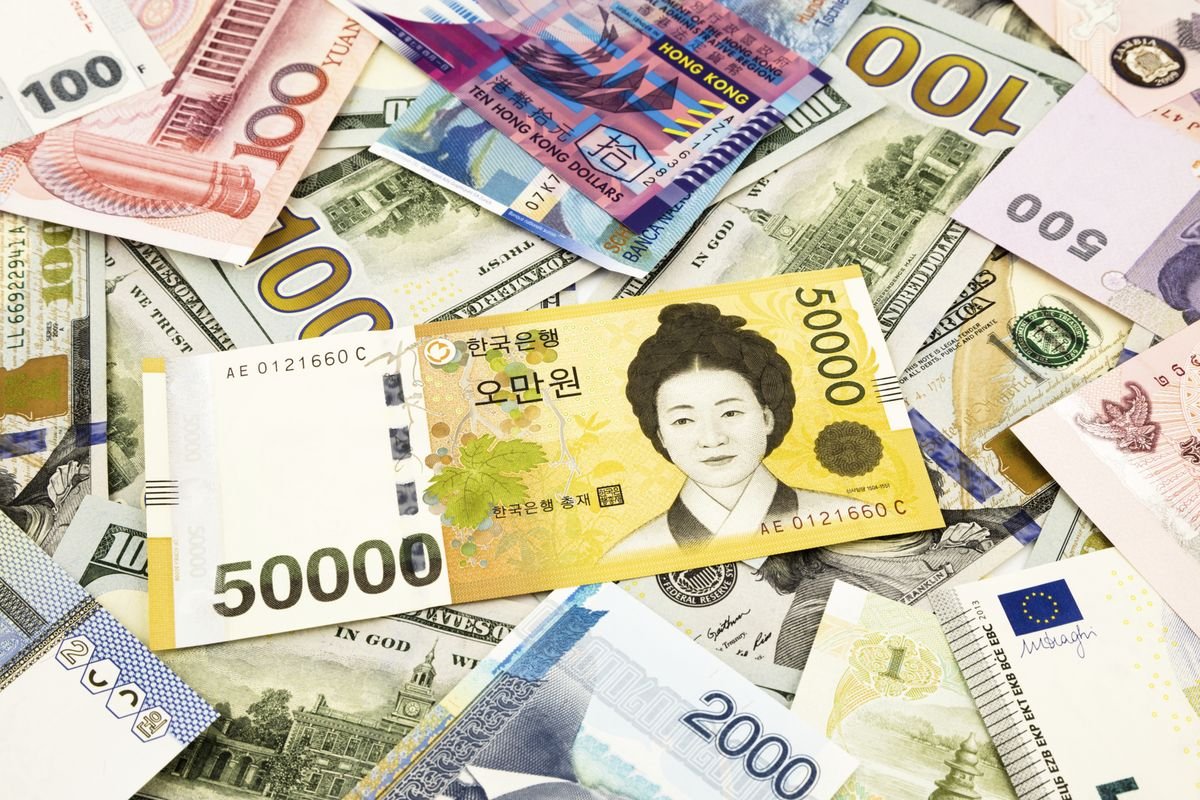
The South Korean won strengthened sharply on December 24, 2025, after senior government officials pledged strong action to stabilize the currency and counter excessive volatility in foreign exchange markets. Traders responded quickly to the remarks, pushing the won higher against the U.S. dollar and signaling renewed confidence in South Korea’s commitment to currency stability.
The move highlighted how official communication continues to play a decisive role in Asian foreign exchange markets, especially during periods of thin year-end liquidity and global monetary uncertainty.
Government Messaging Sparks Immediate Market Reaction
Senior officials from South Korea’s finance ministry emphasized their “strong determination” to address disorderly currency movements. The statements came as the won traded near multi-year lows against the U.S. dollar earlier in the week.
Currency traders interpreted the comments as a clear warning against speculative pressure. As a result, the won gained rapidly in offshore and onshore trading. The U.S. dollar–won exchange rate dropped as investors reduced short positions and reassessed downside risks.
Markets often react strongly to verbal intervention when authorities deliver messages with clarity and consistency. In this case, officials signaled readiness to use policy tools if necessary, which strengthened confidence in near-term currency stability.
Why the Won Faced Pressure in 2025
The South Korean won faced sustained pressure throughout 2025 due to several global and domestic factors. A strong U.S. dollar earlier in the year widened interest rate differentials and encouraged capital outflows from emerging Asian markets. At the same time, geopolitical uncertainty and slowing global trade weighed on export-dependent economies such as South Korea.
Investors also monitored South Korea’s large exposure to global technology cycles. When demand for semiconductors softened earlier in the year, the won weakened alongside equity markets. Although exports showed signs of recovery toward the end of 2025, currency markets remained cautious.
Against this backdrop, traders tested psychological levels in the dollar-won pair. The government’s response aimed to halt that momentum and reassert policy credibility.
Role of the Ministry of Economy and Finance
The Ministry of Economy and Finance leads South Korea’s foreign exchange policy. The ministry works closely with the central bank to monitor capital flows and currency movements.
Officials stressed that they would not tolerate excessive volatility disconnected from economic fundamentals. This wording echoed previous interventions that successfully slowed speculative attacks on the won during periods of stress.
By choosing strong language, policymakers reminded markets that they retain both the authority and the tools to act decisively. Traders understood the message clearly and adjusted positions accordingly.
Central Bank Coordination Strengthens Credibility
The Bank of Korea reinforced the government’s stance through coordinated messaging. Although the central bank did not announce direct market action, it signaled readiness to ensure financial stability.
Coordination between fiscal authorities and the central bank matters greatly in currency markets. When institutions align their communication, they reduce uncertainty and amplify policy effectiveness. In South Korea’s case, that alignment helped reverse negative sentiment toward the won.
Investors often reward economies that demonstrate institutional coherence. The won’s rally reflected that confidence.
Impact of Thin Holiday Liquidity
December 24 marked Christmas Eve, which typically brings lower trading volumes in global financial markets. Thin liquidity can amplify price moves, especially in foreign exchange markets.
Under such conditions, verbal intervention often exerts an outsized impact. Fewer market participants mean fewer counter-orders to absorb sudden shifts in sentiment. As a result, the won’s appreciation occurred quickly and decisively.
While liquidity conditions magnified the initial move, analysts noted that the underlying message carried real weight. The rally did not rely solely on technical factors.
Regional Implications for Asian Currencies
The won’s rebound also influenced sentiment across Asia. Other regional currencies stabilized as traders reassessed the likelihood of coordinated policy responses to excessive currency weakness.
Asian policymakers increasingly rely on communication strategies rather than direct intervention. These strategies help manage volatility without depleting foreign exchange reserves. South Korea’s approach fit well within that broader regional trend.
The won often acts as a bellwether for risk sentiment in Asia due to South Korea’s open capital markets and strong trade linkages. Its recovery sent a signal that authorities across the region remained vigilant.
Investor Confidence and Capital Flows
A stable currency supports investor confidence, especially in equity and bond markets. The won’s strength reduced concerns about capital flight and improved sentiment toward South Korean assets.
Foreign investors hold significant positions in South Korean equities and government bonds. Currency stability protects the value of those investments and encourages longer holding periods.
By defending the won verbally, policymakers reassured investors that they would not allow disorderly depreciation to undermine financial stability.
Limits of Verbal Intervention
Despite the positive reaction, analysts cautioned that verbal intervention alone cannot offset long-term macroeconomic pressures. Interest rate differentials, global risk appetite, and trade performance continue to influence the won’s trajectory.
If global conditions deteriorate or if the U.S. dollar regains strength, the won could face renewed pressure. However, the government’s response demonstrated that it would actively manage expectations and discourage one-way bets.
Markets generally respect such signals, especially when authorities back them with credible policy frameworks.
Outlook for the Won in Early 2026
Looking ahead, analysts expect the won to trade within a more stable range if global volatility remains contained. Improved export performance and easing inflation pressures could further support the currency.
The government’s strong stance suggests that policymakers will continue to smooth excessive moves rather than target specific exchange rate levels. This approach aligns with international norms while preserving flexibility.
If external conditions remain supportive, the won could enter 2026 on firmer footing, backed by policy credibility and improved investor sentiment.
Conclusion
The South Korean won’s rally on December 24, 2025, underscored the power of decisive government communication in foreign exchange markets. Clear and forceful messaging from South Korea’s authorities reversed negative sentiment and restored confidence during a period of heightened vulnerability.
By signaling strong determination and institutional coordination, policymakers reminded markets that they remain active guardians of currency stability. The episode reinforced South Korea’s reputation for pragmatic and credible economic management, a quality that continues to attract global investors even amid uncertain global conditions.
Also Read – Coinbase Expands Reach With The Clearing Company Deal