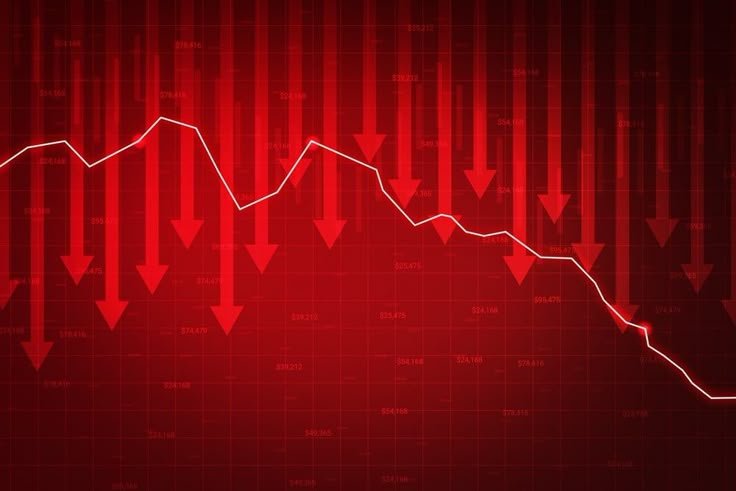
On December 28, 2025, the global cryptocurrency market recorded a sharp pullback. Prices across major digital assets declined, sentiment weakened, and trading volumes thinned. This downturn did not arrive out of nowhere. A combination of macroeconomic pressure, year-end liquidity shifts, derivatives activity, and investor psychology pushed the market lower.
This article explains why the crypto market fell, what triggered the decline, and what it signals for early 2026.
Market Snapshot: A Broad-Based Decline
Bitcoin, Ethereum, and most large-cap altcoins opened the day under pressure. The total crypto market capitalization dropped by roughly 2–3% within 24 hours. Traders reduced exposure, while short-term holders rushed to protect profits before year-end.
Bitcoin traded lower after failing to hold a key psychological level. Ethereum followed the same pattern, moving within a tight but downward range. Mid-cap and low-cap tokens suffered deeper losses as liquidity dried up.
Thin Holiday Liquidity Amplified Volatility
The final week of December always brings reduced market participation. Many institutional desks shut down or operate with minimal staff. Retail traders also step back during holidays.
Low liquidity magnifies price moves. Even modest sell orders can push prices down quickly when buy-side depth disappears. On December 28, sellers faced little resistance, which accelerated declines across exchanges.
Crypto markets trade 24/7, but participation does not remain constant. This structural reality explains why late-December sessions often experience exaggerated volatility.
Macroeconomic Pressure Weighed on Risk Assets
Global macro conditions played a central role in the downturn. Investors continued to price in higher-for-longer interest rates and slower global growth.
Bond yields remained elevated, which reduced appetite for speculative assets. Equity markets showed mixed signals, and that uncertainty spilled into crypto.
When macro risk increases, traders reduce exposure to high-volatility assets first. Crypto still sits firmly in that category for most global portfolios.
ETF Flows Turned Cautious
Spot Bitcoin and Ethereum ETFs had supported the market throughout much of 2025. On December 28, flows slowed or turned mildly negative.
Institutional investors often rebalance portfolios before year-end. Some funds locked in gains after a strong year for digital assets. Others reduced exposure to improve risk metrics for reporting purposes.
Even small ETF outflows can affect sentiment. Traders track these flows closely, and any slowdown signals caution.
Derivatives Expiry Added Downward Pressure
The end of December coincides with large options and futures expiries. These events frequently influence short-term price direction.
On December 28, traders unwound leveraged long positions. Funding rates declined, liquidations increased, and open interest dropped across major derivatives venues.
When leverage exits the system quickly, prices often fall faster than fundamentals justify. This mechanical selling does not reflect long-term conviction, but it still impacts spot markets.
Profit-Taking Dominated Trader Behavior
Crypto delivered strong returns earlier in 2025. Many traders and funds chose to secure profits before closing the year.
Tax planning also influenced behavior in several jurisdictions. Some investors sold positions to offset gains or reset cost bases ahead of the new year.
This wave of profit-taking created consistent sell pressure throughout the session. Buyers showed little urgency to step in until prices reached lower support levels.
Altcoins Suffered From Risk-Off Rotation
Altcoins experienced deeper losses than Bitcoin and Ethereum. Traders typically rotate out of smaller tokens first during periods of uncertainty.
Liquidity fragmentation worsened this effect. Many altcoins rely on thin order books, which cannot absorb selling pressure efficiently.
Projects without strong narratives, active development updates, or institutional backing suffered the most. The market favored capital preservation over speculation.
Stablecoin Flows Signaled Defensive Positioning
On-chain data showed increased movement into stablecoins during the downturn. Traders shifted capital into dollar-pegged assets while waiting for clarity.
This behavior signals caution rather than panic. Market participants did not exit crypto entirely. They moved to the sidelines temporarily.
Stablecoin dominance often rises during corrective phases and falls when risk appetite returns.
Sentiment Indicators Turned Neutral to Bearish
Fear-and-greed metrics moved toward neutral or mild fear. Social media engagement around bullish narratives declined noticeably.
Search interest for crypto terms also softened. Retail enthusiasm tends to fade quickly during slow, corrective sessions, especially near holidays.
However, sentiment did not reach extreme fear levels. This suggests consolidation rather than capitulation.
No Single Catalyst Drove the Drop
Unlike major crashes triggered by hacks, bans, or systemic failures, the December 28 decline lacked a single dramatic cause.
Instead, multiple moderate factors aligned:
-
Low liquidity
-
Macro uncertainty
-
ETF flow moderation
-
Derivatives unwinding
-
Year-end profit-taking
This combination produced a controlled but broad sell-off.
How Traders Interpreted the Move
Experienced traders viewed the decline as a structural reset rather than a trend reversal. Many identified key support zones and prepared for range-bound trading.
Short-term traders focused on volatility opportunities, while long-term investors watched for accumulation signals.
The absence of panic selling reinforced the view that the market remained in a consolidation phase.
Implications for Early 2026
December corrections often set the stage for January repositioning. Fresh capital typically enters markets once liquidity returns and portfolios reset.
If macro conditions stabilize and ETF inflows resume, crypto could regain momentum quickly. If uncertainty persists, prices may continue to range sideways.
The December 28 pullback reminded participants that crypto markets still react strongly to global conditions and structural dynamics.
What This Decline Really Means
The December 28, 2025 crypto market drop reflected context, not collapse. The market adjusted to temporary conditions rather than fundamental failure.
Blockchain development continued. Regulatory clarity improved in major jurisdictions. Institutional infrastructure remained intact.
Short-term price weakness does not erase long-term progress.
Final Takeaway
The crypto market fell on December 28 because liquidity thinned, caution rose, and traders locked in gains. Macro pressure and derivatives activity amplified the move, while sentiment cooled.
This decline fits a familiar pattern seen during year-end transitions. It highlights how structure, psychology, and timing shape crypto prices as much as technology does.
As 2026 approaches, markets will look beyond holiday noise and refocus on fundamentals, adoption, and innovation.
Also Read – Global M&A Hits $4.5 Trillion, Powering Corporate Growth