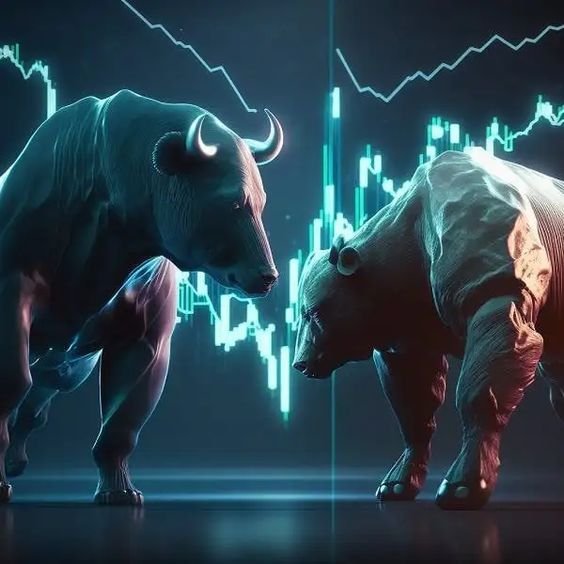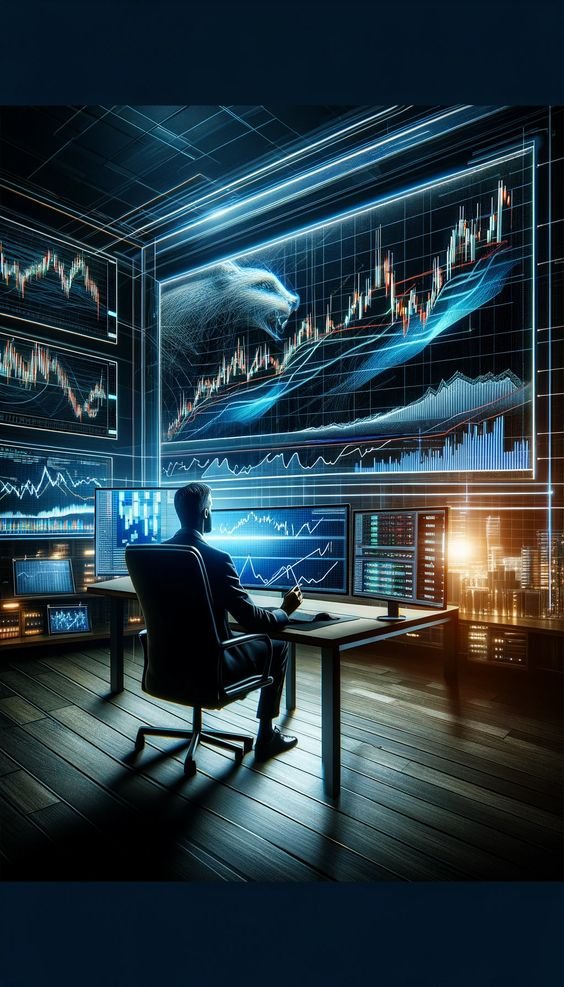
Artificial Intelligence (AI) is reshaping industries worldwide, and the financial markets are no exception. From algorithmic trading to predictive analytics, AI-driven systems are making trading faster, more efficient, and increasingly automated. This technological evolution has sparked an essential question: Will AI replace human traders?
In recent years, hedge funds, investment banks, and even individual investors have embraced AI tools to gain an edge in highly competitive markets. Machine learning algorithms can process massive amounts of data, detect patterns that humans may miss, and execute trades in fractions of a second. Yet, the human element—intuition, experience, and strategic thinking—remains relevant.
This article dives deep into the debate, exploring the strengths and limitations of AI in trading, the future of human traders, and the hybrid models that are likely to dominate the next decade.
1. The Rise of AI in Financial Markets
AI in trading primarily refers to the use of machine learning algorithms, neural networks, and predictive models to execute or optimize financial transactions. The adoption of AI in the markets has grown rapidly due to its ability to:
-
Analyze big data: Financial markets generate enormous volumes of data from price movements, news, and social sentiment.
-
Make real-time decisions: AI systems can execute trades in milliseconds, far faster than human traders.
-
Detect patterns and trends: Machine learning algorithms can identify subtle market signals that humans might overlook.
-
Reduce emotional trading: AI eliminates human biases like fear and greed that often cloud decision-making.
Some well-known applications include high-frequency trading (HFT), algorithmic trading platforms, AI-driven hedge funds, and portfolio optimization tools.
2. Advantages of AI Over Human Traders
AI provides several compelling advantages that have accelerated its adoption in trading.
1. Speed and Efficiency
Financial markets move in milliseconds, and AI excels at rapid execution. Algorithms can process thousands of market signals simultaneously and place orders faster than any human could.
2. Data-Driven Decisions
Human traders may rely on intuition or partial data, whereas AI analyzes structured and unstructured data to make highly informed decisions. This includes price data, company reports, social media trends, and macroeconomic indicators.
3. Emotional Neutrality
One of AI’s greatest strengths is its lack of emotional bias. Unlike human traders, who might panic during market volatility, AI sticks to the programmed strategy.
4. Scalability
AI can monitor multiple markets and instruments 24/7, something even large teams of human traders cannot achieve.
3. Limitations of AI in Trading
Despite its advantages, AI in trading is not infallible. Several challenges limit its ability to completely replace human traders.
1. Over-Reliance on Historical Data
AI models often rely heavily on historical patterns to make predictions. When market conditions change drastically—such as during black swan events—AI models may fail to adapt quickly.
2. Lack of Intuition
Human traders often rely on experience, intuition, and qualitative insights that cannot be easily coded into algorithms. For instance, reading a CEO’s tone during an earnings call can influence human decisions in ways AI cannot replicate.
3. Algorithmic Risks
AI-driven trading carries the risk of flash crashes, where automated systems trigger cascading sell-offs. Such events have occurred in the past, showing that fully automated markets can amplify volatility.
4. Regulatory and Ethical Concerns
As AI takes on a larger trading role, regulators face challenges in monitoring algorithmic manipulation and systemic risks. Human oversight remains crucial.
4. The Role of Human Traders in the AI Era
While AI is revolutionizing trading, humans still hold significant value in the ecosystem. The role of human traders is evolving rather than disappearing.
1. Strategy and Oversight
Humans design the trading strategies and risk parameters that AI systems follow. Experienced traders and quants are essential in interpreting market conditions and updating models.
2. Handling Unpredictable Events
Geopolitical crises, policy changes, or sudden market shocks require human judgment to interpret complex, qualitative factors. AI struggles with scenarios that deviate from its training data.
3. Regulatory Compliance
Financial institutions rely on human compliance officers and analysts to ensure that algorithmic trading remains within legal boundaries.
4. Innovation and Model Improvement
AI does not innovate on its own. Data scientists, financial engineers, and traders continuously improve models to adapt to new market dynamics.
5. AI-Human Hybrid Trading Models
The most likely future for trading is collaboration between AI and humans rather than full replacement. Here’s how hybrid models work:
-
AI handles execution and data processing
-
Humans focus on strategy, creativity, and oversight
-
Risk management systems combine both AI alerts and human decisions
This synergy leverages AI’s efficiency with human adaptability, creating a more resilient trading ecosystem.
6. Real-World Examples of AI in Trading
-
Hedge Funds Using AI – Firms like Renaissance Technologies and Two Sigma leverage AI to analyze market data and execute trades.
-
Retail Trading Bots – Platforms now offer AI-driven tools for retail traders, such as automated trading strategies and robo-advisors.
-
Sentiment Analysis – AI scans social media and news outlets to detect shifts in market sentiment, providing traders with a competitive edge.
-
Predictive Analytics for Risk – Investment banks deploy AI to anticipate volatility spikes and manage portfolio risks proactively.
7. Future Outlook: Replacement or Transformation?
The question “Will AI replace human traders?” may be better framed as “How will AI transform trading?”
-
Short-Term Outlook: Human traders will continue to play a vital role in supervision and creative strategy design.
-
Medium-Term Outlook: AI will dominate execution and data-driven decision-making, while humans focus on risk and regulatory oversight.
-
Long-Term Outlook: Certain roles, especially manual execution traders, may become obsolete, but strategists and quantitative analysts will remain critical.
8. Conclusion
AI is undeniably revolutionizing the financial markets, providing speed, accuracy, and efficiency that human traders cannot match. However, trading is not purely mechanical—it involves judgment, adaptation, and creative thinking, areas where humans still excel.
Rather than completely replacing humans, AI is reshaping trading into a collaborative process where machines handle data and execution, while humans focus on strategy and decision-making.
In the foreseeable future, the most successful trading operations will likely be those that combine AI’s computational power with human insight and oversight. AI is a transformative tool—but human expertise remains irreplaceable.
ALSO READ: Smallcase Investing: Trend or Trap?