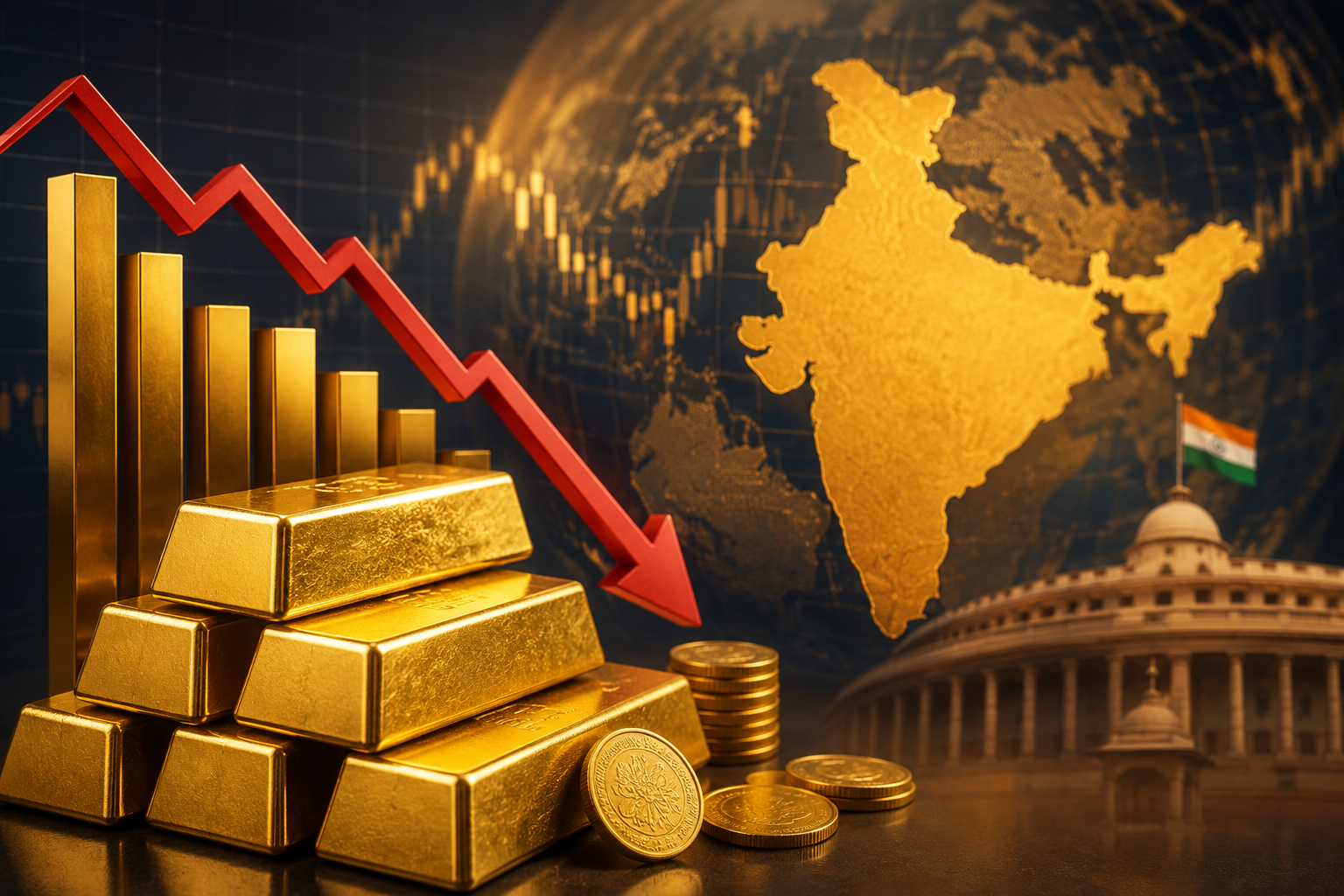
Gold exchange traded funds, also called gold ETFs, saw their first monthly outflow in almost one year. This came after Prime Minister Narendra Modi asked people to reduce gold purchases. The sudden change surprised many investors because gold funds had shown strong growth for several months.
Data showed that around 61 million dollars, close to Rs 580 crore, moved out of gold ETFs in May. Investors decided to sell part of their holdings after gold prices reached record levels. Many people chose to secure profits instead of keeping money in gold funds.
Even after this decline, experts do not see a major crisis in the gold market. They believe this was mainly a short-term reaction after a long period of high returns. Gold still remains an important asset for many Indian families and investors.
Gold Prices Rise Sharply in 2026
Gold prices moved higher throughout 2026. Global tensions, weak economic conditions in some countries, and uncertainty in financial markets pushed investors toward safe assets like gold. As prices rose, many Indian investors entered gold ETFs because these funds gave easy access to gold without the need to buy jewellery or physical bars.
The sharp rise in prices helped investors earn strong returns in a short period. Because of this, some people felt it was the right time to sell and take profits. This trend became stronger after government comments about lower gold purchases.
Market experts said profit booking usually happens after a major rally. Investors often sell part of their holdings when prices stay at high levels for several weeks. This does not always mean that confidence in gold has ended.
PM Modi’s Appeal Creates Market Reaction
Prime Minister Narendra Modi recently asked citizens to avoid unnecessary gold purchases. The government wants to reduce pressure on India’s foreign exchange reserves and lower the country’s import bill.
India imports large amounts of gold every year. When imports rise sharply, the country spends more foreign currency. This can increase pressure on the economy and widen the trade deficit.
The government hopes that lower gold demand may help control this situation. PM Modi’s statement became an important reason behind the recent investor reaction. Some investors feared that demand for gold could weaken in the coming months.
However, financial experts believe the statement mainly focused on physical gold purchases and not on long-term investment plans. They also said that investors should not make emotional decisions based only on short-term market news.
ALSO READ: UAE Speaks Against Iran Attacks as Crypto Market Falls
First Outflow After One Year
The latest data showed that gold ETFs recorded their first monthly outflow in almost twelve months. Holdings dropped by around 0.4 tonnes and total holdings came down to nearly 116.3 tonnes.
This marked an important shift because gold ETFs had received steady inflows for many months before May. Investors had continued to place money in gold funds as prices moved higher.
Still, experts pointed out that the overall picture remained positive. Gold ETFs received around 3.48 billion dollars in net inflows during 2026. This showed that investor interest in gold remained strong despite the recent outflow.
Many analysts believe one month of outflow cannot change the broader trend. They said gold funds may continue to attract investors if economic uncertainty stays high around the world.
Why Investors Choose Gold ETFs
Gold ETFs have become popular among Indian investors in recent years. These funds allow people to invest in gold through stock exchanges. Investors do not need to store physical gold or worry about purity and security.
Gold ETFs also offer easy buying and selling options. Investors can enter or exit the market quickly. This makes gold ETFs more convenient than physical gold for many people.
Another reason behind the popularity of gold ETFs is transparency. Investors can track gold prices daily and understand the value of their investments clearly.
Young investors especially prefer gold ETFs because they suit digital investment habits. Many people now use mobile apps and online trading platforms to invest in gold funds from home.
Experts Still Support Gold Investments
Even after the recent outflow, many market experts continue to support gold as a long-term investment. They believe gold can protect wealth during uncertain times.
Gold often performs well when stock markets face pressure or global tensions increase. Because of this, financial advisors usually suggest that investors keep a small part of their portfolio in gold.
Several experts recommend around five to ten percent allocation in gold depending on financial goals and risk levels. They say gold can help balance losses from other investments during difficult market conditions.
Analysts also noted that central banks across the world continue to hold gold reserves. This supports confidence in gold as an important asset even today.
Physical Gold and ETF Gold Differ
Experts explained that physical gold and gold ETFs serve different purposes. Physical gold remains closely linked with Indian culture, weddings, and festivals. Families often buy jewellery as a symbol of wealth and tradition.
Gold ETFs, on the other hand, focus mainly on investment purposes. Investors buy ETF units to earn returns from price movements without the need to handle actual gold.
PM Modi’s comments mostly targeted heavy physical gold imports. Many experts believe gold ETFs may still attract investors because they offer financial exposure instead of direct imports of jewellery and bars.
This difference may become more important in the future as digital investment products grow across India.
Future Outlook for Gold Market
The future direction of gold prices will depend on many global and domestic factors. Interest rates, inflation, geopolitical tensions, and currency movements may influence investor decisions.
If uncertainty continues in global markets, gold may remain attractive as a safe investment option. However, short-term price corrections may still happen after sharp rallies.
Experts believe investors should avoid panic reactions during temporary market declines. Long-term planning remains important in every investment decision.
Many analysts expect gold demand in India to remain stable because of cultural importance and long-term trust in the metal. Gold has always held a special place in Indian households and this trend may continue for years.
Conclusion
The recent outflow from gold ETFs marked the first decline in almost one year. Around 61 million dollars moved out of gold funds after investors secured profits and reacted to PM Modi’s appeal to reduce gold purchases.
Despite this change, the larger picture still looks positive for gold investments. Gold ETFs received nearly 3.48 billion dollars in net inflows during 2026, which shows that investor confidence remains strong.
Experts believe the recent decline reflects short-term profit booking rather than a major loss of trust in gold. Many advisors still support gold as a useful part of a balanced investment portfolio.
For now, investors may watch the market carefully, but gold continues to hold value as a trusted asset during uncertain economic times.
ALSO READ: PPMS Real Estates Takes Control of AVI Products India