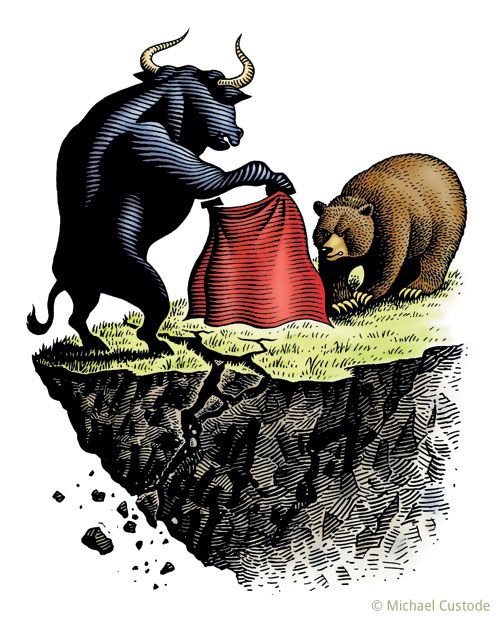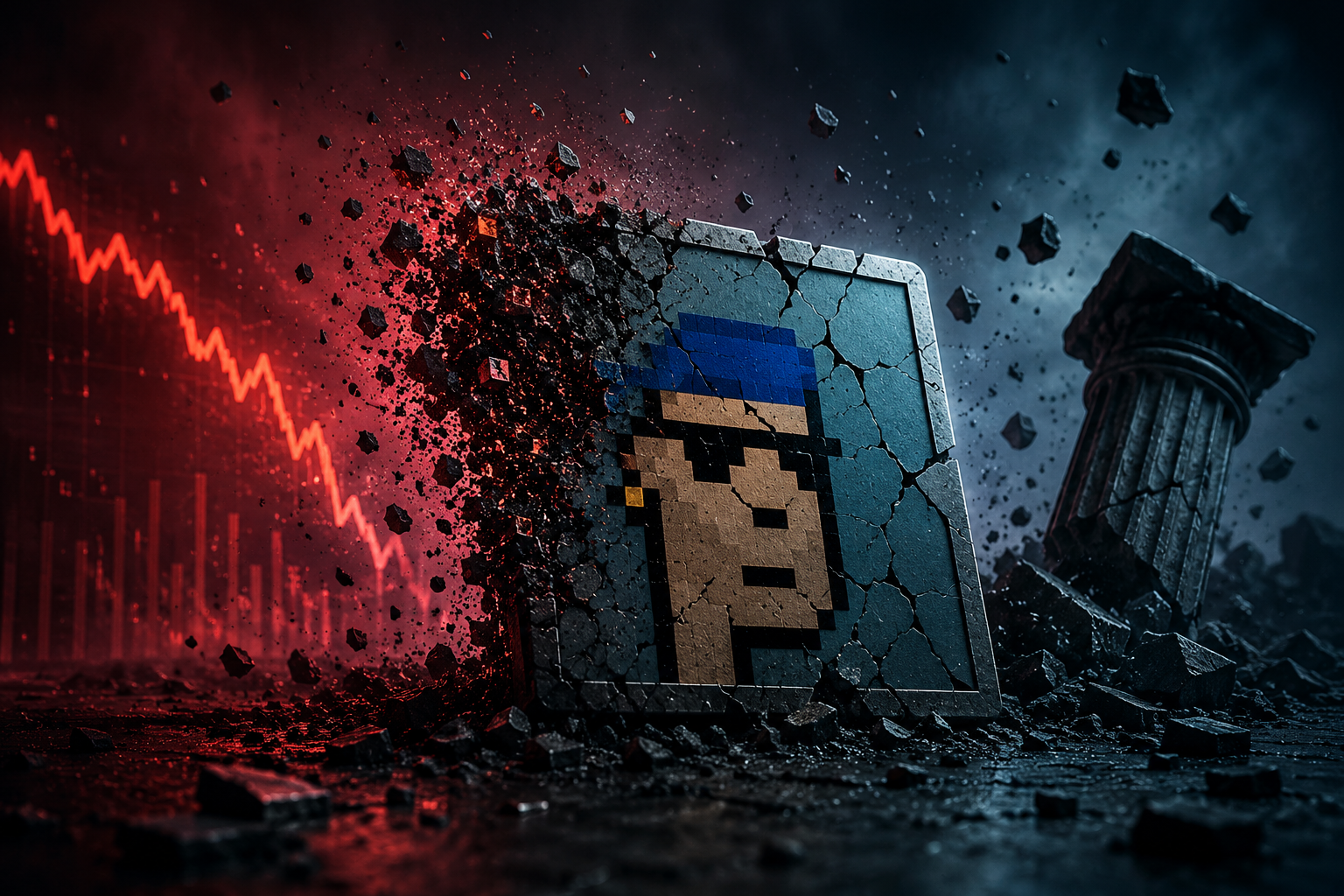
For years, NFTs looked like the future of the internet. People spent millions of dollars on digital art, virtual land, game items, and online collectibles. In 2021, the NFT market became one of the biggest trends in crypto. Celebrities joined the movement, brands launched projects, and investors rushed to buy what many believed was the next big revolution.
But in 2026, the story looks very different.
The NFT market has entered a silent collapse. Unlike sudden crashes that create panic, this shutdown has happened slowly. Many people still focus only on falling prices, but the bigger problem sits much deeper. Platforms have started closing, trading activity has almost disappeared, and the entire system that supported NFTs has started to break apart.
Most people have not noticed how serious the situation has become.
Big NFT Platforms Have Started Closing
One of the strongest warning signs came from Binance, one of the world’s biggest crypto exchanges.
In June 2026, Binance announced that it will completely stop support for NFTs on its exchange by July 3, 2026. Users now need to move their NFT assets because the platform will no longer provide NFT services.
This decision shocked many people because Binance has always played a major role in crypto markets. When a company of this size leaves a sector completely, it usually means future growth looks very weak.
Another major shutdown came from Nifty Gateway.
Nifty Gateway became one of the most famous NFT marketplaces during the 2021 boom. At its peak, the platform handled more than 300 million dollars in NFT sales. It helped popular artists and celebrities sell digital collections to the public.
But in early 2026, the company entered withdrawal-only mode. Soon after that, the platform began a full shutdown. Its parent company, Gemini, decided to move resources into other business areas.
This marked the end of one of the companies that helped build NFT popularity in the first place.
NFT Trading Volume Has Almost Disappeared
The biggest sign of trouble comes from market activity itself.
During the peak in 2021, NFT trading volume reached around 25 billion dollars. In 2022, the market stayed strong with nearly 24 billion dollars.
But after that, everything changed.
By 2024, total NFT trading volume dropped to around 8 billion dollars. In 2026, estimates show the number has fallen close to only 1.2 billion dollars.
This means the market has lost nearly 95 percent of its activity compared to its strongest period.
This matters because markets survive only when people continue to buy and sell. Right now, buyers have become rare. Sellers cannot find demand. Many NFT owners hold assets that nobody wants to purchase.
Without active trading, the market slowly dies.
NFTs Never Had a Strong Business Model
A major truth many people ignored from the beginning was the weak economic structure behind NFTs.
Most people believed NFTs created a new digital ownership system. Artists sold digital work, buyers owned rare online assets, and creators earned money through future resale royalties.
But behind this idea, the entire market depended heavily on speculation.
People bought NFTs because they believed prices would rise later. Projects earned money because new buyers entered constantly. Platforms made profits through high transaction fees.
The entire system needed fresh money at all times.
Once excitement disappeared, everything stopped.
The problem was not blockchain technology itself.
The real problem was that the NFT economy never built a stable long-term business model.
Digital Ownership Was Not Always Real Ownership
Many NFT buyers believed they owned something permanent and secure.
But in many cases, that was not true.
Most NFTs did not actually store images or artwork directly on the blockchain. Buyers often purchased a token that simply linked to files stored somewhere else, usually on private servers.
This created a hidden risk.
If the company that stored those files shut down, the NFT remained on blockchain records, but the actual artwork or content could disappear.
In simple words, the token stayed alive, but its value and purpose vanished.
This already happened with older NFT gaming projects where assets lost function after companies closed their services.
Many people never understood this weakness when they bought NFTs during the hype period.
Hundreds of NFT Projects Quietly Disappeared
The collapse does not stop with marketplaces.
Many NFT projects themselves have quietly vanished.
Recent reports show that more than 20 crypto and Web3 projects shut down during the first quarter of 2026 alone. Several of these projects operated inside the NFT ecosystem.
These included NFT analytics companies, blockchain gaming projects, wallet services, and platforms connected to NFT investments.
One major reason is lack of funding.
During the boom years, venture capital firms invested huge amounts of money into Web3 companies. Today, most investors have moved away from the sector.
Without fresh capital, many companies cannot survive.
As a result, projects disappear quietly without large media attention.
NFT Lending Platforms Also Face Collapse
Another problem hides inside NFT-backed lending systems.
Over the last few years, several crypto platforms allowed users to borrow money by using NFTs as collateral. This created a new financial system around digital collectibles.
One known example is NFTfi.
Recent announcements show the platform has started to reduce operations. New loans stopped, and front-end services face shutdown plans.
This creates a serious problem.
When NFT prices fall sharply, the collateral behind loans loses value. If borrowers cannot repay, lenders receive NFTs nobody wants to buy.
This weakens the entire lending structure connected to NFTs.
Many people outside crypto never saw this hidden risk.
OpenSea Survives But The Market Looks Weak
OpenSea remains active today and continues as one of the biggest NFT marketplaces.
But survival does not mean success.
The market now has far fewer active traders. Large investors have mostly left. Retail buyers no longer show the same excitement seen during the 2021 boom.
When an industry loses competition and only a few companies remain, it often shows major contraction.
The weak players disappear first.
Then the entire sector struggles to recover.
This is exactly what the NFT market now faces.
NFT Technology Is Not Completely Dead
Even though the NFT market has collapsed badly, the technology itself still has value.
The biggest failure came from speculative buying, not from blockchain technology.
Some future use cases still look promising.
Blockchain ticket systems may help reduce fake tickets for concerts and sports events. Digital identity systems may help store certificates and official records securely online.
Game developers may also use blockchain ownership systems for in-game items.
Property ownership records and legal documents may also use similar technology in future systems.
So while the NFT marketplace model has failed, parts of the technology may survive in other industries.
The Silent End of The NFT Boom
The biggest mistake people make is saying NFTs are completely dead.
That is not exactly true.
The real story is that the speculative NFT economy has failed.
The strongest proof does not come from price charts.
It comes from infrastructure shutdown.
Binance has left NFT services. Nifty Gateway has shut down. Trading volume has crashed by 95 percent. Lending systems have weakened. Projects continue to disappear every month.
When platforms themselves begin to close, it usually means the industry has entered serious decline.
The NFT boom created excitement, massive investment, and global attention.
But today, the market stands as a reminder that hype alone cannot build a sustainable industry.
And while many people still watch NFT prices, the real story has already happened quietly in the background.
The shutdown has already begun.
Also Read – Celebrities Accused in Major Crypto Scam Controversies