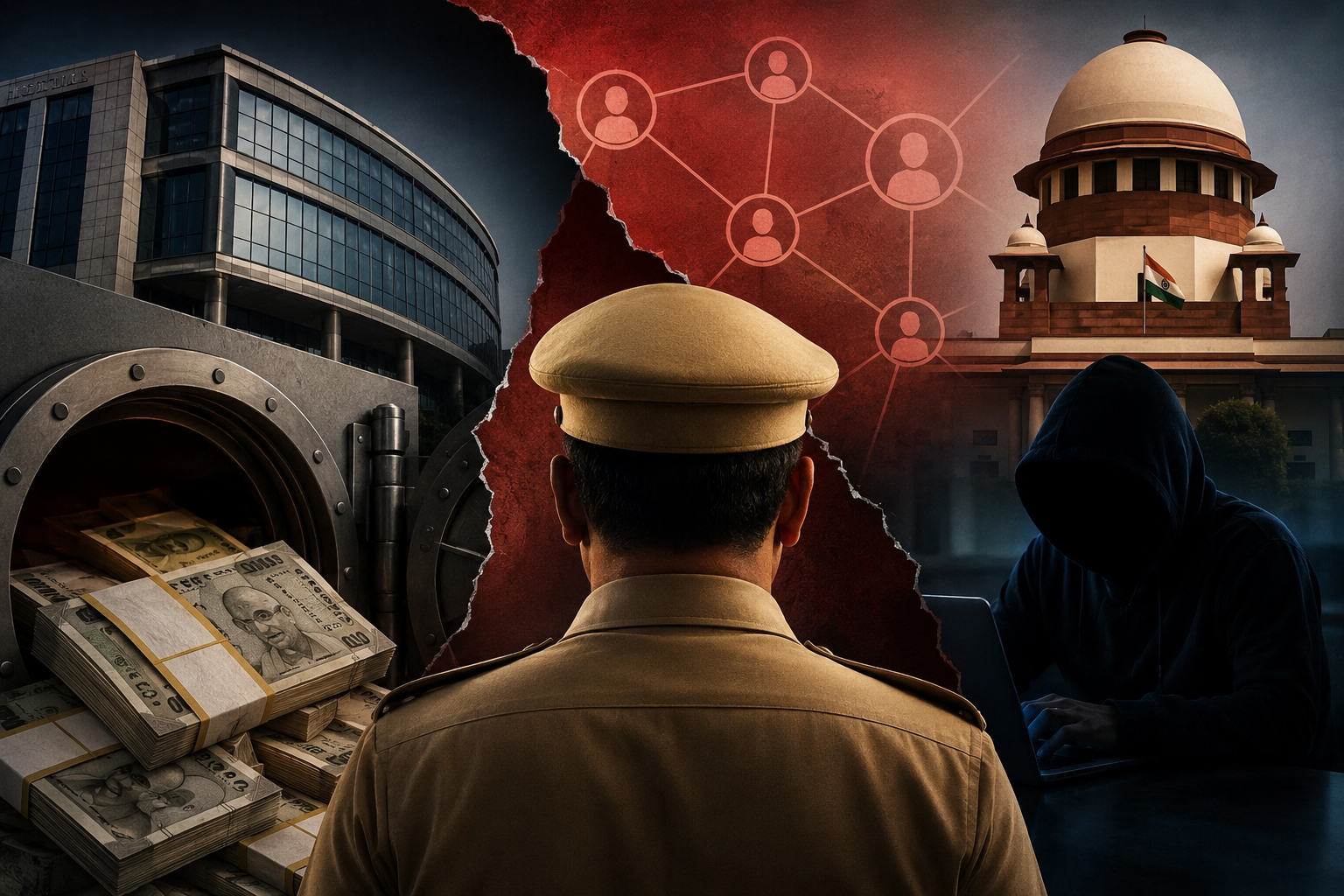
A huge banking fraud case in India has shocked many people after investigators found that hundreds of crores of public money disappeared through illegal bank transactions. The case now stands as one of the biggest financial scandals of 2026, with senior government officers, bank employees, and private companies under investigation.
The fraud came to light after authorities discovered that money linked to Haryana government departments moved out of official accounts without proper approval. The total amount first looked smaller, but after deeper investigation, officials found that the scam involved nearly Rs 645 crore to Rs 661 crore.
The case has become even more serious after the arrest of a senior IAS officer. This has raised major questions about how such a huge amount of public money left government control without anyone stopping it.
How The Scam Came To Light
The fraud centered around IDFC First Bank, especially its Sector 32 branch in Chandigarh. Investigators found suspicious transactions connected to government funds that should have remained secure.
At first, officials believed that nearly Rs 590 crore had been stolen. But as investigators studied more bank records, they found the total amount had become much larger. Current estimates place the fraud between Rs 645 crore and Rs 661 crore.
Because the money belonged to government departments, the matter quickly turned into a major national issue. Public funds meant for official work and development projects had vanished through illegal financial activity.
This discovery pushed authorities to start a large-scale investigation.
How The Fraud Worked
According to investigators, the scam did not happen because of one person alone. Officials believe several people worked together as part of a planned network.
Government departments had placed public money inside private bank accounts. Those funds should have remained protected under strict financial controls.
Investigators say fake documents and false debit instructions helped move money out of those accounts. In some cases, forged cheques also helped transfer funds illegally.
After money left official accounts, it moved through shell companies. These companies usually exist on paper but often hide illegal financial activity.
Authorities believe these transfers helped hide the real destination of the money and made it difficult to trace the complete path.
Investigators also found signs that some fixed deposits, which records claimed existed, may never have existed at all.
This suggests that bank systems may have been manipulated from inside.
The Arrest Of Senior IAS Officer
The biggest development in the case came after the Central Bureau of Investigation, also known as CBI, arrested a senior Haryana IAS officer named Ram Kumar Singh.
At the time of arrest, he already faced suspension.
Investigators believe he played an important role in transactions connected to Panchkula Municipal Corporation funds. Authorities suspect around Rs 79 crore moved illegally because certain banking approvals passed through official channels.
His arrest changed the direction of the entire investigation.
Before this, many people believed the fraud involved only bank employees or private individuals. But the arrest of a senior government officer created suspicion that officials at high levels may have helped the process.
This made the case far more serious.
More Officials Under Investigation
The investigation did not stop after one arrest.
Reports say more than eight IAS officers came under CBI scrutiny as authorities searched for evidence of wider involvement.
Investigators also examined one Indian Forest Service officer, although reports later said officials cleared that officer for questioning.
Apart from government officers, several bank employees also came under investigation.
Some bank officials already faced suspension, while others went through questioning over their possible role in approving suspicious transactions.
Authorities now believe many people across different institutions may have worked together.
This has made the investigation far more complex.
Why This Fraud Became So Dangerous
The biggest concern in this case is not only the huge amount of money.
The larger issue comes from the way public funds left government accounts without immediate detection.
Government departments trusted private banks to hold important public money safely. Strong financial systems should have stopped illegal transactions before such a huge amount disappeared.
But in this case, internal banking controls either failed completely or someone bypassed those systems.
Investigators say forged authorization documents passed bank verification.
This means normal security checks did not work as expected.
Another troubling detail came from transaction alerts. Reports suggest some alert messages may have gone to suspicious phone numbers connected to the fraud network.
This created even more concern about how deeply the system may have been compromised.
Why Experts Believe This Was Planned
Many financial fraud cases happen because of one dishonest employee or one simple mistake.
This case looks very different.
Investigators believe the fraud required coordination between multiple groups.
Bank employees had access to financial systems. Government officials had authority over public funds. Shell companies helped move money after transfers took place.
Because all these parts connected so closely, authorities suspect this was not random theft.
Experts believe a well-organized insider network may have planned the operation carefully.
This possibility has alarmed investigators.
One Of India’s Biggest Fraud Cases Of 2026
India has seen large banking fraud cases before, but this case stands out because it involves public money and possible bureaucratic involvement.
The total amount under investigation now stands near Rs 645 crore to Rs 661 crore.
The arrest of a senior IAS officer has pushed national attention toward the case.
People now want answers about how government money remained so vulnerable inside the banking system.
Many experts believe this case exposes serious weaknesses in financial oversight.
If bank controls fail and official approvals become compromised, public money can disappear much faster than expected.
This creates major risks for taxpayers and public institutions.
What Happens Next
The CBI investigation continues as authorities examine bank records, financial documents, and the role of officials connected to suspicious transactions.
More arrests may happen if investigators find stronger evidence against other people involved.
The case has already damaged trust in both government financial management and private banking controls.
For many people, this scandal now serves as a warning.
If investigators prove all allegations true, the IDFC First Bank fraud could become one of India’s biggest government-linked banking scandals of 2026.
The country now waits to see how deep the fraud goes and how many powerful people may still face investigation.
ALSO READ: South Korea Busts $11 Million Crypto Scam Network