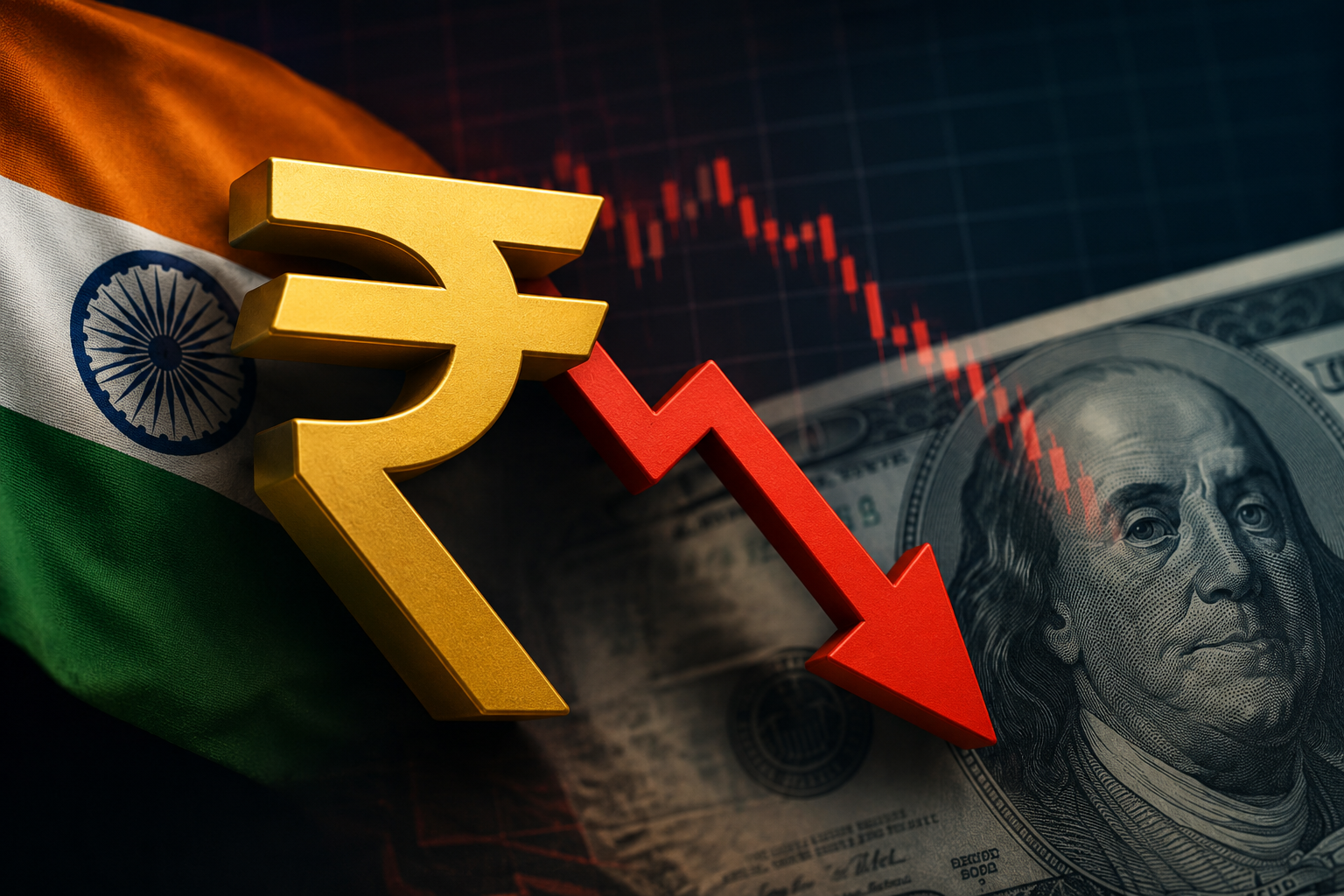
The Indian rupee closed almost unchanged against the US dollar on July 3, 2026. Even though the currency showed very little movement during the final trading session of the week, it still recorded a weekly loss of nearly 1%.
The performance came despite several positive factors. The Reserve Bank of India (RBI) took steps to support the currency, and India also continued to receive money through bond investments. Even with these developments, the rupee could not avoid a weekly decline.
The movement of the rupee remained an important topic for investors because changes in the value of a currency often affect the stock market, businesses, trade, and the overall economy.
Rupee Closed Almost Unchanged on Friday
The last trading session of the week remained calm for the Indian currency. The rupee finished the day with very little change against the US dollar. Market experts described the session as almost flat because there was no major rise or fall before the market closed.
Although the final session looked stable, the complete picture for the week told a different story. When traders looked at the performance over all five trading days, they found that the rupee had lost almost 1% against the US dollar.
This weekly decline became one of the main financial developments that investors watched closely.
Weekly Loss Reached Nearly One Percent
A fall of almost 1% in one week may appear small, but in the foreign exchange market, such a move receives a lot of attention.
Currency values usually move in small steps. Even a minor change can affect businesses that buy or sell goods in foreign countries. Importers, exporters, banks, investment firms, and multinational companies all watch these movements very carefully.
The latest weekly decline showed that pressure on the rupee remained even after several supportive measures.
RBI Continued Its Support
The Reserve Bank of India (RBI) continued efforts to support the Indian currency during the week.
The central bank often takes steps whenever there is too much volatility in the foreign exchange market. Its main goal is to maintain stability and prevent sudden swings that may create uncertainty for businesses and investors.
The report noted that RBI measures remained in place during the week. These actions helped avoid sharp daily fluctuations, but they could not completely stop the rupee from recording an overall weekly loss.
This shows that many factors influence the value of a currency, and central bank action is only one part of the larger picture.
Bond Inflows Continued
Another positive factor came from continued bond inflows into India.
When foreign investors buy Indian government or corporate bonds, money enters the country. These inflows often support the rupee because investors need Indian currency to complete their investments.
Bond investments also show confidence in the country’s financial system. They usually reflect trust in India’s economic outlook and financial stability.
Despite these continued inflows, the rupee still ended the week with a decline. This suggests that other market forces remained stronger during the period.
Why the US Dollar Matters
The US dollar is the world’s most widely used currency for international trade and finance. Because of this, the value of the rupee against the dollar receives close attention every day.
Many goods that India imports, such as crude oil and several industrial products, are priced in US dollars. If the dollar becomes stronger, Indian buyers often need more rupees to pay for the same products.
On the other hand, a weaker dollar can reduce import costs for many businesses.
For this reason, even small changes in the exchange rate can influence business decisions across many sectors.
Currency Movement Affects the Stock Market
The report also highlighted that currency movements remained an important factor for equity investors.
Stock market participants closely watch the rupee because changes in exchange rates can affect company earnings.
Businesses that depend on imported raw materials may face higher costs if the rupee weakens. At the same time, companies that earn a large share of their income from exports may benefit because they receive more rupees when foreign earnings return to India.
Because different industries react in different ways, investors often adjust their investment decisions after major currency movements.
This makes the foreign exchange market closely linked with the stock market.
Investors Remain Alert
Investors continue to follow every important development in the currency market.
Apart from RBI action and bond inflows, traders also watch global economic news, interest rate decisions, inflation data, crude oil prices, and international investment flows.
Any major change in these areas can influence the value of the rupee.
A stable currency often creates confidence among investors because it reduces uncertainty for businesses. On the other hand, sudden weakness may increase caution in financial markets.
That is why many market experts study currency movements along with stock market trends.
Businesses Also Watch Exchange Rates
Currency changes do not affect only investors. Many businesses also keep a close watch on exchange rates.
Companies that import machinery, fuel, electronic goods, or industrial materials may face higher expenses if the rupee loses value.
Exporters may experience the opposite effect because foreign income converts into more rupees.
Large companies often prepare financial plans after they study possible currency movements. Stable exchange rates help businesses make long-term decisions with greater confidence.
For this reason, many industries closely monitor the daily performance of the rupee.
What the Weekly Decline Means
The latest performance of the Indian rupee shows that financial markets continue to face several global and domestic influences.
Although the currency closed almost unchanged on July 3, 2026, it still recorded a weekly loss of nearly 1% against the US dollar. This happened despite support from the Reserve Bank of India (RBI) and continued bond inflows into the country.
The report also underlines that currency movement remains an important factor for equity investors because exchange rates can influence company profits, investment decisions, and overall market sentiment.
As financial markets move into a new week, investors will continue to watch the rupee closely. Future changes in global conditions, central bank policies, foreign investment, and economic data will remain important factors for the direction of India’s currency. A stable rupee supports confidence, while continued weakness may keep investors alert in the days ahead.
Also Read – India PMI Falls to 57.1 in June as Growth Pace Slows Down