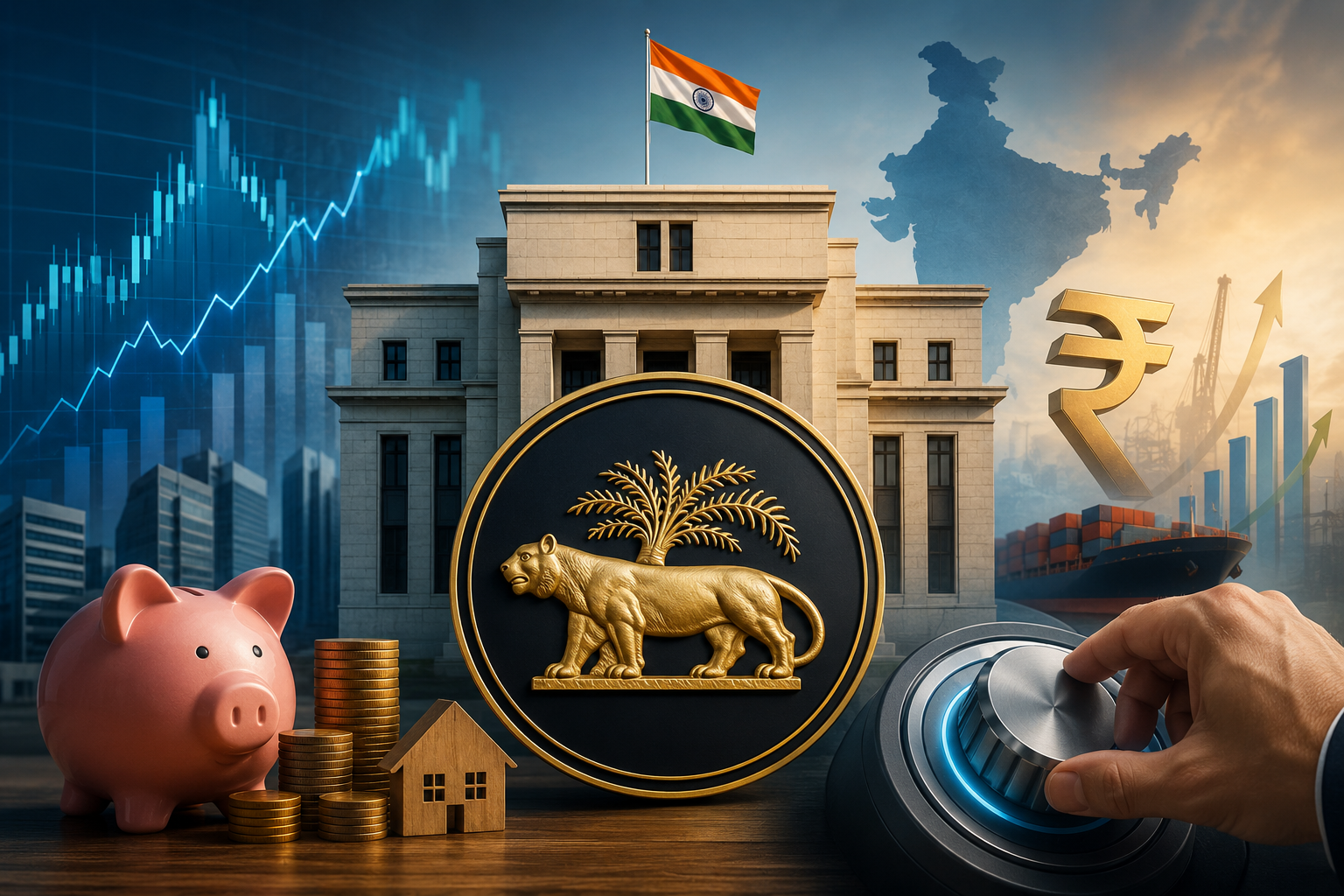
The Reserve Bank of India, or RBI, plays a very important role in the country’s economy. Every time the RBI announces a policy decision, people from every part of the country pay close attention. Banks, businesses, investors, home buyers, students, and working families all wait to see what the central bank decides. Even if many people do not follow financial news every day, they still feel the effect of these decisions in their daily lives.
Today, RBI policy decisions have become more important than ever before. India has one of the fastest-growing economies in the world. At the same time, the country faces many challenges, such as changes in global markets, higher food prices, rising fuel costs, and uncertain economic conditions. Because of these factors, every RBI decision can shape the direction of the economy.
What Is the RBI?
The Reserve Bank of India is the central bank of the country. It manages India’s money system and works to keep the economy stable. The RBI also looks after banks and makes sure the financial system stays safe and strong.
One of its biggest jobs is to decide the country’s monetary policy. Through this policy, the RBI tries to control inflation, support economic growth, and maintain financial stability. These goals may sound simple, but they require careful planning and balanced decisions.
Why Monetary Policy Matters
Monetary policy refers to the steps the RBI takes to manage money and interest rates in the economy. The RBI studies many economic reports before it makes a decision. It looks at inflation, business activity, jobs, consumer spending, global events, and many other factors.
The RBI must find the right balance. If it focuses only on growth, inflation may rise too much. If it focuses only on inflation, economic growth may slow down. This balance has become much harder in recent years because the global economy has become more uncertain.
Inflation Has a Direct Effect on Everyone
Inflation means the prices of goods and services rise over time. When inflation becomes too high, people need more money to buy the same things. Food, fuel, transport, education, and healthcare all become more expensive.
The RBI tries to keep inflation under control. When prices rise very fast, it may increase interest rates. Higher interest rates reduce spending and borrowing. As demand becomes lower, prices often become more stable.
If inflation stays under control, families can plan their monthly budgets with more confidence. Businesses also find it easier to manage their costs and future plans.
Economic Growth Needs Careful Support
India continues to grow at a healthy pace. New businesses open every year, industries expand, and many people look for better jobs and higher incomes. However, economic growth does not happen on its own.
The RBI supports growth through suitable policy decisions. When the economy becomes weak, the RBI may lower interest rates. Lower borrowing costs encourage businesses to invest in new projects. Families also feel more comfortable when they buy homes, vehicles, or other expensive items through loans.
At the same time, the RBI must avoid too much borrowing because that can create fresh inflation. This is why every policy decision requires careful judgment.
Loan EMIs Depend on RBI Decisions
Many people in India pay monthly loan installments, also known as EMIs. Home loans, car loans, education loans, and personal loans often depend on changes in interest rates.
When the RBI raises interest rates, banks may also increase lending rates. This can make monthly EMIs more expensive. Families may need to adjust their budgets because a larger part of their income goes toward loan payments.
When the RBI lowers interest rates, banks often reduce loan costs. This can lower EMIs and make borrowing more affordable. Many people wait for RBI policy announcements because these decisions can affect their personal finances.
Savings Also Feel the Impact
RBI decisions do not affect only borrowers. They also influence people who save money.
When interest rates move higher, banks often offer better returns on fixed deposits. Many retired people and regular savers welcome higher deposit rates because they earn more from their savings.
If interest rates fall, returns on savings may become lower. Although this helps borrowers, it may reduce income for people who depend on interest earnings. The RBI must think about both groups before it makes any decision.
Stock Markets Watch Every RBI Announcement
Investors always pay close attention to RBI policy meetings. Even if interest rates stay the same, the RBI’s comments about the future can influence market sentiment.
Lower interest rates often reduce borrowing costs for companies. This can improve business profits and encourage expansion. Investors may feel more confident during such periods.
Higher interest rates can increase business expenses. Some companies may delay new investments until borrowing becomes cheaper again. Because of this, stock markets often react within minutes after RBI announcements.
The Value of the Indian Rupee Matters
The RBI also helps maintain stability in the value of the Indian rupee. A stable currency supports trade and builds confidence among both local and foreign investors.
If the rupee becomes very weak, imported products such as fuel and electronic goods may become more expensive. This can increase inflation across the country.
A stable rupee also helps businesses that buy or sell goods in international markets. Predictable exchange rates make long-term business planning much easier.
Global Events Influence RBI Decisions
India does not operate in isolation. Many international events affect the country’s economy.
Interest rate decisions by major central banks, changes in crude oil prices, geopolitical conflicts, and supply chain problems all influence inflation and economic activity in India.
The RBI studies these global developments before it announces its own policy decisions. Even if the Indian economy remains strong, problems in other countries can still affect trade, investment, and prices at home.
This global connection has made RBI decisions much more important than they were several years ago.
Financial Stability Remains a Top Priority
The RBI does much more than decide interest rates. It also works to keep India’s banking system safe and reliable.
A stable financial system helps banks provide loans, protect customer deposits, and support businesses across the country. People trust banks because the RBI closely supervises the financial sector.
During difficult times, the RBI also takes steps to maintain enough money in the banking system. This helps banks continue their normal operations and supports confidence in the economy.
Financial stability is one of the biggest reasons why RBI decisions receive so much attention today.
Why RBI Decisions Matter More Than Ever
Several reasons explain why RBI policy decisions have become even more important today.
Inflation can change quickly because food and energy prices remain uncertain. Global financial markets also react to interest rate decisions by major central banks. Foreign investment can move from one country to another within a short time.
India’s economy continues to expand, and more families now use loans, digital payments, and modern financial services than ever before. This means RBI decisions reach millions of people almost immediately.
Businesses also depend on stable borrowing costs before they make investment plans. Investors look for clear signals about future economic conditions. Families want stable prices and affordable loans. The RBI must consider all these needs before it makes any policy decision.
Conclusion
RBI policy decisions have become one of the most important factors that shape India’s economy. They influence inflation, economic growth, loan costs, savings returns, stock markets, the value of the rupee, and the strength of the banking system.
Every policy announcement affects people in different ways, whether they borrow money, save for the future, run a business, or invest in financial markets. In today’s fast-changing global economy, the RBI faces the difficult task of balancing growth, stable prices, and financial security.
As India moves toward a stronger economic future, the role of the RBI will become even more important. Wise policy decisions can support steady growth, protect the value of money, and build confidence across the entire economy. That is why RBI policy decisions matter more than ever today.