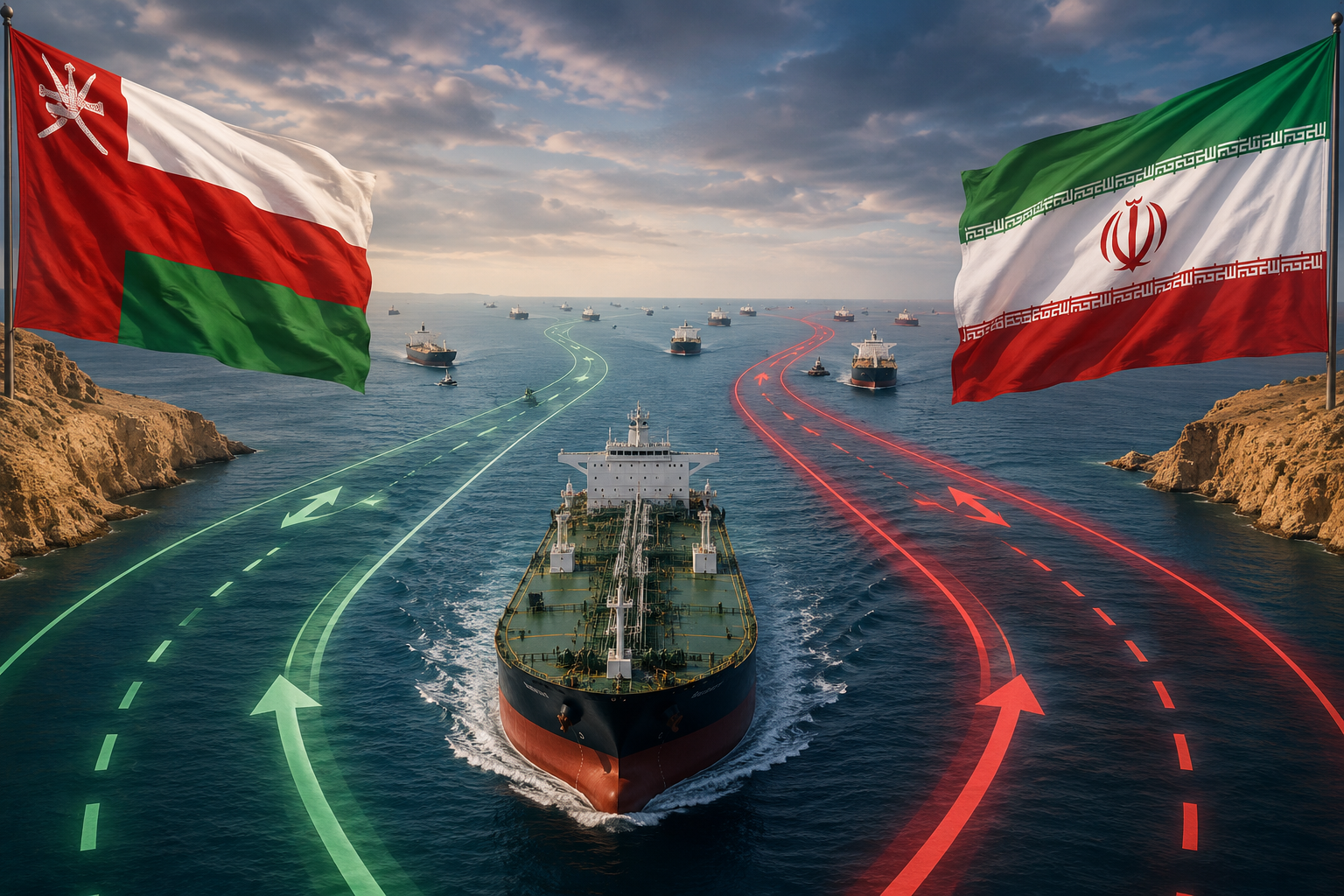
Oman has put forward a new idea to improve safety in the Strait of Hormuz. The country wants ships that leave the Persian Gulf to use a different sea lane from those that enter it. The goal is to make travel through one of the world’s busiest waterways safer and more organized. Officials believe that separate routes for ships that come in and go out could reduce the chance of accidents and lower tension in the area.
This proposal comes at a time when the Strait of Hormuz remains under close watch. Many countries depend on this narrow waterway because it connects oil and gas producers in the Gulf with customers across the world. Even a small problem in this area can affect trade, energy supplies, and shipping costs.
Why the Strait of Hormuz Is So Important
The Strait of Hormuz is one of the most important sea routes on the planet. It links the Persian Gulf with the Gulf of Oman and then to the Arabian Sea. Every day, many oil tankers, gas carriers, and cargo ships pass through this narrow stretch of water.
A large share of the world’s seaborne crude oil and liquefied natural gas moves through this route. Because of this, any event in the Strait of Hormuz can quickly attract global attention. Countries in Asia, Europe, and other regions depend on smooth traffic through the strait for steady energy supplies.
When ships face delays or security risks in this area, oil prices can rise. Insurance costs for ship owners may also increase. These extra costs often affect businesses and consumers around the world.
What Oman Wants to Change
Oman’s proposal focuses on outbound shipping. Under the plan, ships that leave the Persian Gulf would travel along a route closer to Omani waters. Ships that enter the Gulf would continue to use a different lane. This would create more distance between vessels that move in opposite directions.
Supporters of the proposal believe this system could improve safety. With separate lanes for incoming and outgoing traffic, ships would have more space to move. This could reduce the chance of collisions and help crews travel with greater confidence.
The proposal also aims to give shipping companies more certainty. Clear traffic rules often help captains make better decisions and support safer travel through busy waterways.
Iran Is Unlikely to Accept the Proposal
Reports suggest that Iran may reject Oman’s idea. According to officials familiar with the matter, Tehran believes the proposal could reduce its influence over one of the region’s most strategic waterways.
Iran has long viewed the Strait of Hormuz as an area where it holds an important security role. Because of this position, the country prefers solutions that allow it to keep a strong voice in the management of maritime traffic.
Instead of the Omani proposal, Iran has supported other ideas that maintain greater Iranian control over shipping arrangements in the area. This difference in opinion makes an agreement difficult at the present time.
Why the Proposal Matters Beyond the Region
Although the proposal comes from countries in the Gulf, its effects could reach far beyond the Middle East. The Strait of Hormuz serves as a major route for global energy exports. Any change in how ships travel through the waterway can influence international trade.
Oil exporters depend on reliable shipping routes to deliver supplies on time. Buyers also want stable transport because delays can affect fuel prices and business operations. When uncertainty grows, shipping companies often pay higher insurance premiums and take extra security measures.
These additional costs may eventually reach consumers through higher prices for fuel and other goods.
Shipping Continues Despite Concerns
Even with recent tensions, commercial shipping through the Strait of Hormuz has not stopped. Tankers and cargo vessels continue to pass through the waterway every day. However, many ship owners remain careful.
Some companies have reviewed travel plans, while others have increased security measures for their crews and vessels. Many continue to monitor the situation before each journey.
Recent shipping data shows that traffic still moves through the strait, although activity remains below normal levels. The cautious approach reflects concern about possible security risks rather than a complete halt in trade.
The Challenge of Reaching an Agreement
The biggest obstacle is the difference between the views of Oman and Iran. Oman hopes that separate shipping lanes will improve safety and lower the risk of incidents. Iran believes the proposal could weaken its position in a strategically important waterway.
Both countries recognize the value of secure shipping, but they disagree on how that goal should be achieved. Until both sides find common ground, it may be difficult to introduce major changes to the current traffic system.
Diplomatic talks may continue, but there is no clear sign that an agreement will arrive soon.
What This Means for the Global Oil Market
The Strait of Hormuz plays a major role in the global energy market. Any uncertainty in this region often draws attention from oil traders, governments, and businesses.
If shipping becomes more difficult or expensive, oil prices can react quickly. Markets usually respond to any sign of possible disruption because so much of the world’s oil passes through this narrow route.
At the same time, the current situation does not mean that exports have stopped. Ships continue to move through the strait, and energy supplies still reach international markets. However, the absence of a widely accepted shipping arrangement keeps uncertainty alive.
A Close Watch on Future Developments
The proposal from Oman highlights the importance of safe navigation in one of the world’s busiest waterways. The plan seeks to reduce risks by separating outbound and inbound shipping routes. While the idea has practical safety benefits, Iran is unlikely to support it because of concerns over its influence in the Strait of Hormuz.
For now, commercial shipping continues, but companies remain alert. Governments, energy producers, and shipping firms will closely watch future discussions between regional countries. Any decision about navigation in the Strait of Hormuz could affect global trade, shipping costs, and energy markets. Until a broader agreement emerges, the world will continue to pay close attention to developments in this critical maritime corridor.
ALSO READ: Frog Innovations Gets AI, NSE Main Board Nod Soon.