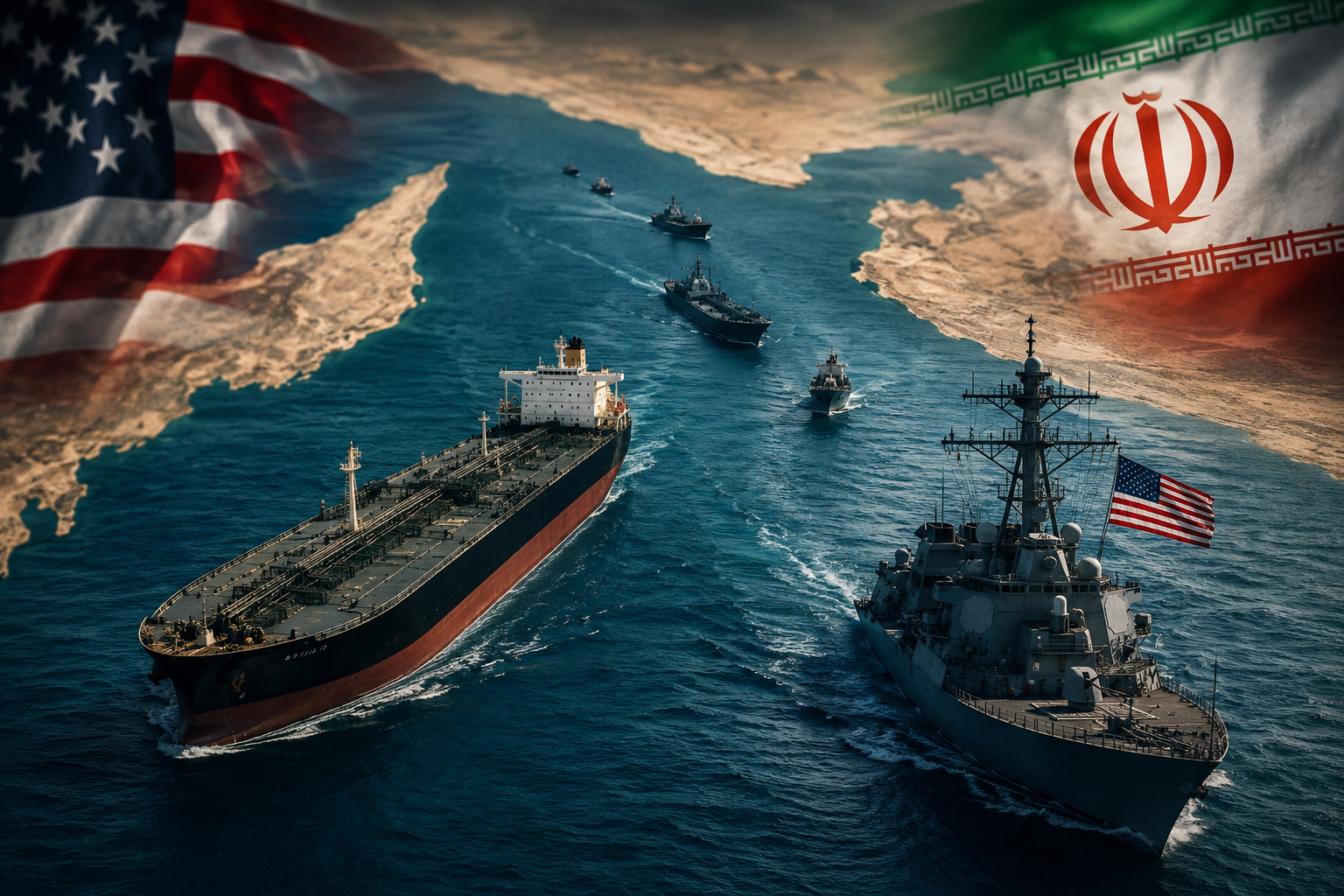
U.S. Energy Secretary Chris Wright says the United States is in contact with every ship that seeks to pass through the Strait of Hormuz as tensions with Iran remain high. The message shows how serious the situation has become for global trade and energy supplies.
The Strait of Hormuz is one of the most important sea routes in the world. It links the Persian Gulf with the Gulf of Oman and the wider Arabian Sea. A large share of the world’s oil and gas supply passes through this narrow waterway.
Wright has said that about 8 million to 9 million barrels of oil a day pass through the strait. That makes any long delay or major attack a concern far beyond the Middle East. A problem at Hormuz can affect fuel costs, transport, food prices and economic growth across many countries.
The U.S. now says it has a close line of contact with commercial ships near the route. The aim is to help vessels understand the risks and move through the area as safely as possible. The wider U.S. effort also seeks to keep energy supplies from a total halt.
Why the Strait Matters So Much
Hormuz is narrow, but its role in world trade is huge. Oil producers in the Gulf depend on the route to send crude oil to buyers across Asia and other parts of the world. Major energy exporters in the region use the waterway as a key path to foreign markets.
If ships cannot pass, oil can stay inside the Gulf. Buyers then face a smaller supply pool. That can push prices higher, especially if the problem lasts for weeks or months.
The same risk applies to liquefied natural gas, or LNG. Qatar is a major LNG exporter, and its cargoes rely on safe sea access through the Gulf region. Any long crisis at Hormuz can therefore affect both oil and gas markets.
This is why the United States treats the safety of commercial ships as a major security issue. The goal is not only to protect individual vessels. It is also to prevent a local conflict from causing a much wider economic shock.
Iran and the U.S. Give Different Views
One major problem is that Washington and Tehran do not agree on who controls the Strait of Hormuz.
U.S. President Donald Trump has said that the United States has total control of the waterway. Iran has rejected that claim. Iranian military officials say the strait remains under Iranian control and that commercial vessels need permission from Iranian forces to pass.
This dispute creates a difficult situation for ship owners and crews. A vessel may receive help or advice from the United States while also facing a demand from Iran. That makes the decision to enter the strait much harder.
For a shipping company, safety is the first concern. A cargo ship can be worth a huge amount of money, while its cargo can also have a very high value. A serious attack can cause loss of life, damage to the vessel and a long delay.
The Threat to Commercial Ships
The risk to commercial vessels has already become clear during the wider conflict.
At least 16 commercial vessels had faced attacks near Hormuz by March, according to reports at the time. The attacks showed that merchant ships can become part of the conflict even when they do not belong to a military force.
The danger has not gone away. A cargo ship was hit by an unknown projectile near the Strait of Hormuz on August 3, according to maritime authorities. The vessel was off the coast of Oman when the incident took place. Officials did not name the ship and said an inquiry was under way.
There have also been attacks on vessels linked to Gulf energy firms. ADNOC said two of its vessels came under attack in August, though no injuries were reported in the incident cited in recent reports.
Each such event can have an effect far beyond the ship itself. Ship owners may delay a voyage. Insurers may raise rates. Crews may refuse certain routes. Traders may seek other sources of oil. All of this can add cost to the global energy system.
U.S. Escort Plans Remain Important
The idea of U.S. naval escorts has been part of the Hormuz debate for months.
Earlier in the crisis, Wright said the U.S. Navy was not ready to escort oil tankers through the strait. At that stage, U.S. military assets had other tasks, while the Navy had to assess the risks of direct protection for large commercial vessels.
The situation has since changed. Reports have described U.S. efforts to help ships use safer routes and move cargo through the area. A separate route near the Omani coast has also been used as part of the effort to keep maritime trade alive.
Wright’s latest comments about contact with every ship show the importance of direct coordination. A ship does not simply enter Hormuz and hope for the best. It needs information about threats, routes, timing and military activity.
That kind of contact can help reduce confusion at sea. It can also help the U.S. know which commercial vessels are in the area and what they need.
A Huge Test for Global Energy Security
The Hormuz crisis has become a major test for the global energy system.
The world has faced energy shocks before, but Hormuz is different because so much trade depends on one narrow route. Even a partial disruption can create problems. A full and long closure would have a much larger effect.
The International Energy Agency has warned that the wider conflict has already caused a major loss of oil supply. Reuters reported that global oil supply could fall by about 4.3 million barrels a day as the crisis continues.
That number helps explain why governments are so focused on the strait. A fall of several million barrels a day can place strong pressure on prices.
Higher oil prices can then raise the cost of petrol, diesel, air travel and road transport. Businesses may pay more to move goods. Households may spend more on fuel and other products. Central banks may also face a harder task if higher energy costs add to inflation.
The Risk of a Wider Conflict
There is also a military risk.
If the U.S. protects a commercial ship and Iranian forces attack that vessel, Washington could face pressure to respond. If Iran sees U.S. escorts as a direct military challenge, it could take stronger action.
That creates a dangerous cycle. One attack can lead to a response. The response can lead to another attack. Commercial ships then face even greater danger.
This is why U.S. contact with ships matters. Better communication may help prevent mistakes at sea. It can also give crews more time to avoid a dangerous area when a threat appears.
Still, no system can remove every risk during an active conflict. The U.S. Navy itself has faced difficult questions about how much protection it can offer to a large number of commercial vessels.
What Happens Next
The future of Hormuz will depend on both military events and diplomacy.
The United States has kept strong pressure on Iran. Defense Secretary Pete Hegseth said the U.S. can maintain its naval blockade of Iranian ports for an indefinite period through the rotation of ships in the region. At the same time, peace talks have failed to produce a lasting settlement.
Iran, for its part, continues to reject U.S. claims about control of the strait. Iranian officials say the waterway remains under their authority and have warned that ships need approval for safe passage.
For the shipping industry, the key question is simple: can commercial vessels pass through Hormuz without facing a serious threat?
For energy markets, the question is even bigger: can enough oil and gas reach world buyers to keep supply stable?
Wright’s comments show that the United States is taking that problem very seriously. Contact with every ship is one part of a much wider effort to keep the route open and reduce the risk to global energy supplies.
The Strait of Hormuz may be only a narrow strip of water, but its importance is enormous. With 8 million to 9 million barrels of oil a day at stake, any major disruption can affect the entire world. Until the U.S. and Iran reach a durable agreement on security and passage, Hormuz will remain one of the biggest risks to global energy and trade.
ALSO READ: Amber Enterprises Q1FY27: Profit Growth Hides One-Time Loss