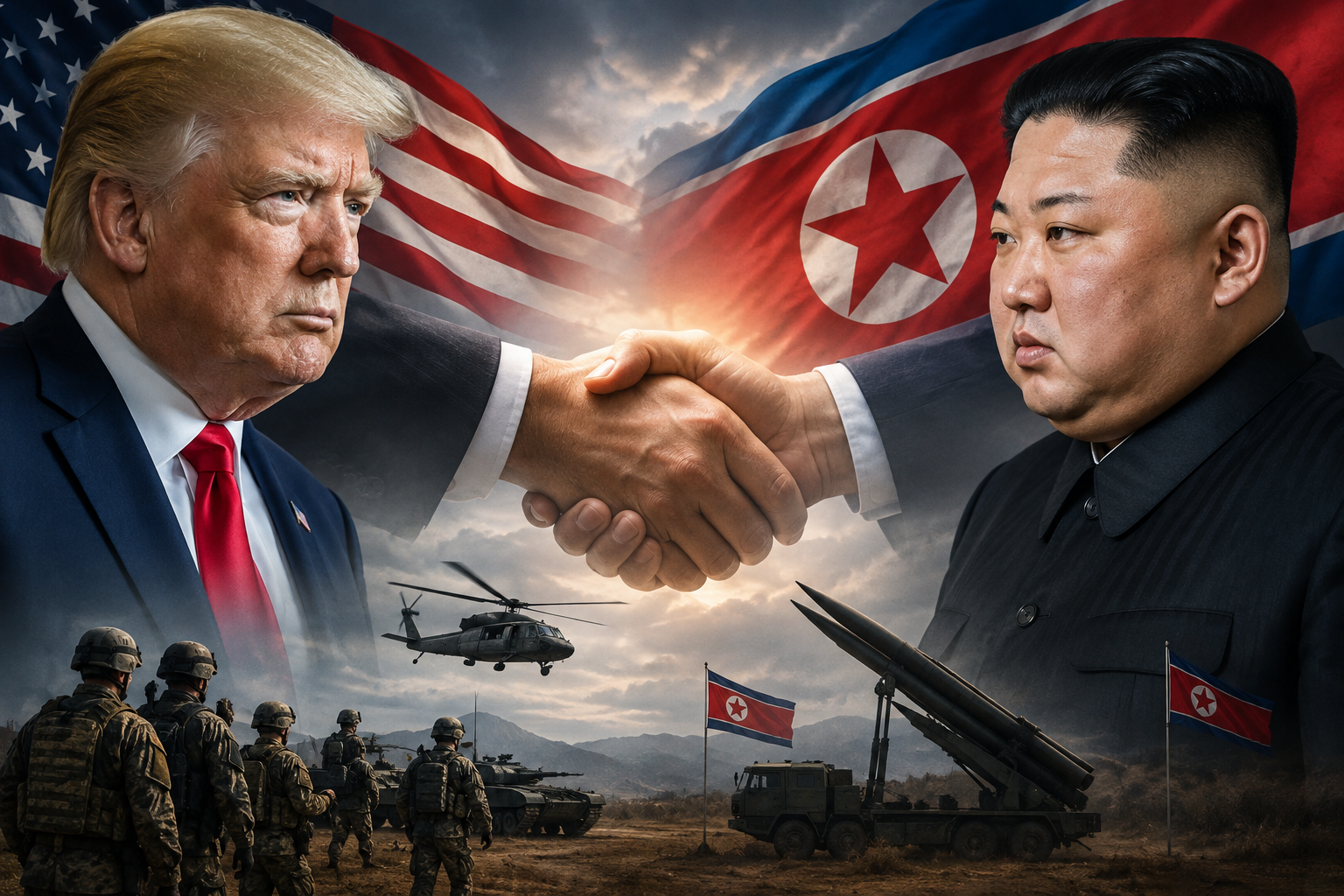
US President Donald Trump says North Korean leader Kim Jong Un has responded to his message about talks. Trump also says the response was positive. The claim came soon after he ordered the Pentagon to cut back joint military drills with South Korea.
The two moves are closely linked. Trump has long said that he has a good relationship with Kim. He also has called US-South Korea military exercises costly and provocative. His latest order appears to form part of a wider effort to create better conditions for contact with North Korea.
Still, there is no confirmed date for a Trump-Kim meeting. There is also no public detail on what Kim said in his reply. That makes it too early to call this a major diplomatic breakthrough.
The key point is that contact may have opened again after years of very limited progress.
Why the military drills matter
The US and South Korea hold joint military exercises each year as part of their defense plan. These drills help the two forces work together and prepare for a possible attack from North Korea.
The latest exercise, called Ulchi Freedom Shield, started on August 17 and will run until August 27. About 18,000 South Korean troops are part of the exercise. The drills cover modern threats such as drones, cyber attacks and GPS disruption.
Trump has now told the Pentagon to “substantially reduce” such exercises. He has pointed to their cost and also to South Korea’s refusal to support US action against Iran.
His decision has caused concern because these exercises are not only about showing force. They also help US and South Korean troops train together and maintain a high level of readiness.
South Korea has said it will continue close coordination with the United States on its defense plans. The current exercise has therefore continued despite Trump’s order.
Trump sees Kim as a possible partner for talks
Trump has taken a different view of Kim from many US leaders. He has often stressed his personal relationship with the North Korean leader and has said direct contact can help reduce tensions.
Trump and Kim met during his first term. Their talks created major global attention, but they did not produce a lasting deal on North Korea’s nuclear weapons.
Trump’s latest move has similarities to his policy from 2018. After his first meeting with Kim in Singapore, Trump also announced a halt to some major US-South Korea exercises. At the time, he described the drills as expensive and provocative.
The new order suggests Trump may again believe that fewer military exercises could make North Korea more open to talks.
There is one major difference today. North Korea has had more time to expand its nuclear weapons program. Its ties with Russia have also grown. This means the situation is more complex than it was in 2018.
South Korea welcomes the chance for diplomacy
South Korea has reacted with caution but has also shown hope that the latest US move could help restart talks.
The government of President Lee Jae Myung has backed dialogue with North Korea. Seoul has also offered ideas for a return to diplomatic contact and has expressed support for efforts that could reduce military tension on the Korean Peninsula.
For South Korea, the possibility of direct talks between Washington and Pyongyang matters a great deal. Any serious reduction in tension could lower the risk of a sudden military crisis.
At the same time, Seoul must protect its own security. North Korea still has nuclear weapons and missile systems. Its military has also gained access to new experience and closer ties with Russia.
That creates a difficult balance for South Korea. It wants peace talks, but it does not want to weaken its defense position before any real deal exists.
North Korea has reasons to be careful
Kim Jong Un has not shown clear signs that he wants to return to the type of nuclear talks seen during Trump’s first term.
North Korea has built a stronger nuclear position and has demanded major changes before it accepts serious talks. The country also has closer ties with Russia and China, which can give Kim more room to resist pressure from Washington.
This means a positive reply to Trump does not automatically mean that North Korea will agree to discuss nuclear weapons.
Kim could instead use talks to seek other goals. These could include fewer US military exercises, weaker sanctions or greater recognition of North Korea as a nuclear state.
For Washington, that would create a difficult choice. Trump may want a quick diplomatic result, while North Korea could ask for major concessions before it offers anything in return.
Security concerns are rising
The biggest concern about the drill cuts is the effect on military readiness.
US and South Korean forces have trained together for decades. Their joint exercises help commanders test plans, improve communication and understand how their forces would work together during a crisis.
If those exercises become much smaller or less frequent, some military experts fear that the two sides could lose part of that advantage.
The concern is stronger because North Korea continues to improve its weapons. Recent analysis has also pointed to North Korea’s closer military ties with Russia and lessons it may gain from modern conflicts.
Supporters of Trump’s plan see the issue differently. They argue that large exercises can raise tension and cost a lot of money. If fewer drills create space for talks, they could help reduce the chance of conflict.
The real test will be what happens next.
What this means for markets
Financial markets may view the news in two ways.
The positive view is that better US-North Korea relations could lower the risk tied to the Korean Peninsula. That could support South Korean shares and other Asian assets if investors believe a real diplomatic process is close.
The negative view is that smaller military exercises could weaken confidence in the US-South Korea alliance. If investors believe Washington is reducing its security role without receiving major concessions from Pyongyang, the risk premium on South Korean assets could rise.
For now, the market impact is likely to depend more on future headlines than on the drill cut itself.
A confirmed Trump-Kim meeting would be much more important than Trump’s current statement about Kim’s reply.
The next step is crucial
Trump’s claim that Kim responded positively has created a possible opening. But there is still a large gap between a reply and a real agreement.
The United States would likely want talks about North Korea’s nuclear and missile programs. North Korea could demand sanctions relief, fewer military exercises and changes to the US military presence in the region.
South Korea would also need a clear role. Any deal between Washington and Pyongyang that ignores Seoul could create new tension inside the US-South Korea alliance.
The coming weeks should show whether Trump’s latest move has created real diplomacy or only another short pause in the long dispute.
For now, the message is clear: Trump wants fewer military drills, says Kim has responded positively, and appears ready to test direct diplomacy again. But until North Korea takes concrete steps, this remains an opening rather than a breakthrough.
ALSO READ: US Dollar Weakens as Fed Rate Hike Bets Fade on August 18