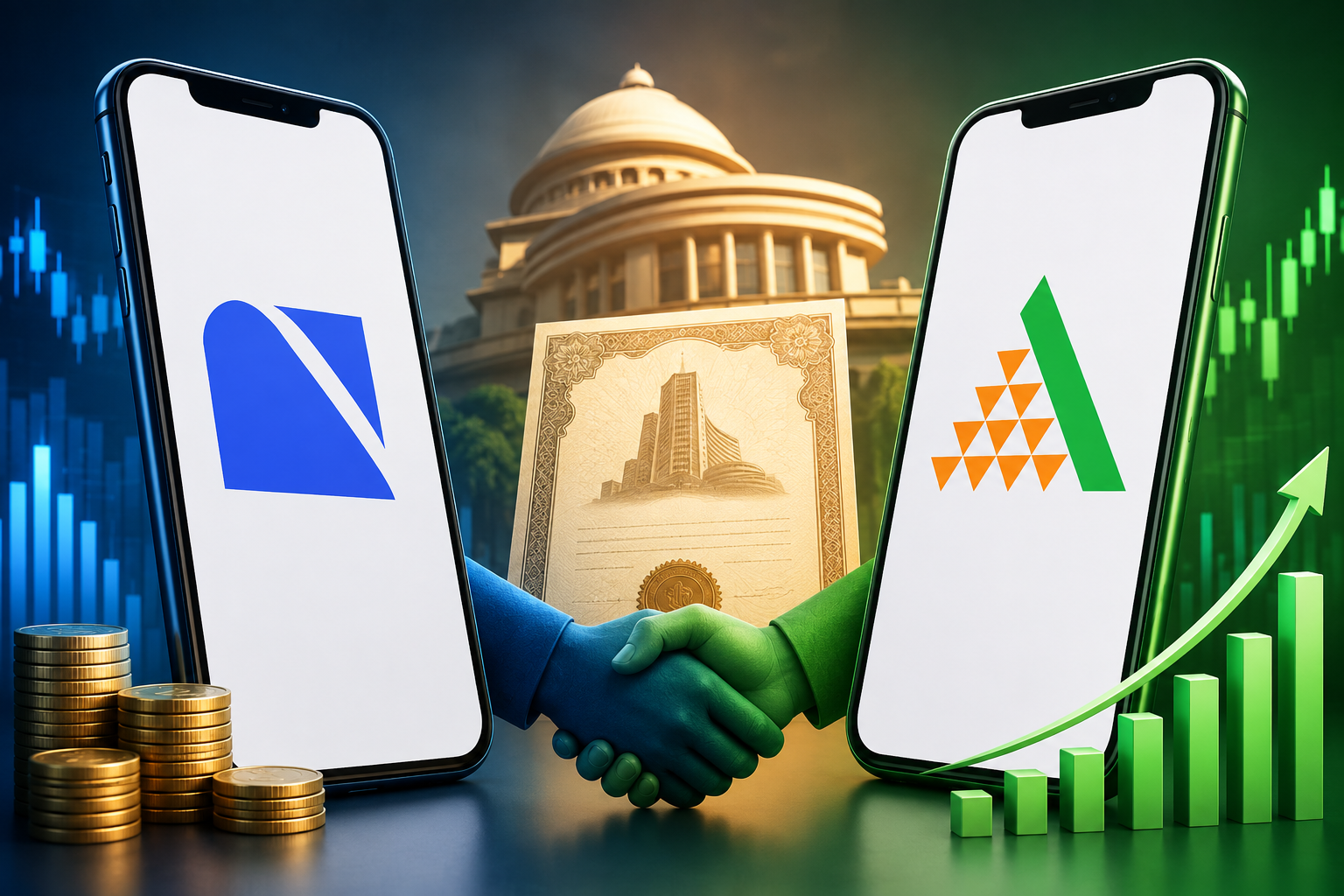
Zerodha and Angel One have secured approval from the Securities and Exchange Board of India (SEBI) to offer corporate bonds through their platforms. The move marks an important step for India’s retail bond market, as two of the country’s large stock brokers prepare to bring corporate debt closer to everyday investors. Moneycontrol reported that the approval is based on information available on the SEBI website. The two firms are likely to launch their bond services over the next few months, while they test the product and its features within their systems.
The move comes at a time when SEBI is taking several steps to make the corporate bond market easier for retail investors to access. The regulator has also worked on changes to the rules for Online Bond Platform Providers, or OBPPs. In August 2026, SEBI issued a circular that made changes to the OBPP framework, with a focus on ease of business and wider access to debt products.
What the SEBI Approval Means
An Online Bond Platform Provider is a platform that allows investors to find and transact in eligible bonds through a digital system. The framework places such platforms under SEBI rules and adds a formal regulatory structure to the online bond market. SEBI also keeps a list of OBPPs registered with NSE and BSE.
For Zerodha and Angel One, this approval means they can build a dedicated corporate bond service within their existing financial platforms. Instead of visiting a separate bond website, a customer may soon be able to access bonds through the same digital ecosystem used for stocks and other financial products.
The exact product range, fees and launch dates may differ between the two firms. The firms are expected to make more details clear once their services are ready for customers.
Why Zerodha’s Entry Matters
Zerodha has built a large retail customer base through its simple and low-cost trading model. Its Kite platform already supports bonds, including non-convertible debentures, corporate bonds and tax-free bonds. Zerodha says customers can search for such securities on Kite in the same basic manner as shares. These securities can trade in the secondary market with a T+1 settlement cycle.
The new approval could take this bond service to another level. Zerodha has also indicated that it wants to support public bond issues in the primary market as well as secondary-market trade of listed bonds through Kite, according to the report on its new licence.
This matters because bonds have often felt less simple than stocks for small investors. A wider bond choice inside a familiar platform may reduce that barrier.
Angel One Adds Another Major Player
Angel One is also set to enter the space through its own SEBI-approved OBPP setup. The company already has a large retail customer base and a broad financial product range. Its entry could bring corporate bonds to a much wider audience.
The key change is not only the presence of another platform. More major brokers in the bond market could create stronger competition. That may lead to better product access, simpler user interfaces and more choice for investors.
The bond market has traditionally had a stronger presence among large institutions and wealthy investors. A digital platform from a major broker could help shift some of that activity toward smaller investors.
Retail Bond Market Shows Strong Growth
The timing of the move is important. India’s retail corporate bond market remains much smaller than the equity market, but its pace of growth has been notable.
The market has about 1 million investors, and it grew about 7 times in the last financial year, according to the figures cited in the report.
That rise shows that retail investors are not focused only on shares and mutual funds. There is also a clear interest in fixed-income products that can provide a defined coupon or return structure, subject to the credit quality and terms of the bond.
Groww has already made a strong push into this market. Its bond platform was launched in May 2026 and reportedly sold about ₹200 crore of bonds per month. Dhan is also expected to enter the space.
With Groww, Zerodha, Angel One and possibly Dhan in the market, the next phase could see a sharper race for retail bond customers.
Corporate Bonds Are Not the Same as Bank FDs
The rise of easy bond access does not mean corporate bonds are as safe as bank fixed deposits or government securities. This point is important for new investors.
When a person buys a corporate bond, the investor lends money to a company for a fixed period under set terms. The company has to pay interest as per the bond terms and return the principal at maturity. But the ability of the company to meet those payments depends on its financial health.
A corporate bond can therefore carry credit risk. There can also be liquidity risk if an investor wants to sell the bond before maturity and cannot find a buyer at a suitable price.
A higher yield often comes with higher risk. Investors should check the credit rating, issuer, maturity, coupon, yield to maturity, security status and other terms before they put money into a bond.
SEBI approval of a platform does not mean that every bond available through that platform is safe or guaranteed. The approval relates to the platform and its regulatory framework, not to the credit risk of each company that issues a bond.
Primary and Secondary Markets
One important part of this development is the difference between the primary and secondary markets.
In the primary market, investors buy a bond when a company issues it. The company receives the funds raised through the issue, subject to the issue terms.
In the secondary market, an investor buys a bond from another market participant rather than directly from the company. The price in this market can differ from the original issue price.
Zerodha’s planned approach is notable because it aims to support both sides of the market. According to the report, the broker plans to support primary public bond issues as well as secondary trade of listed bonds on Kite.
That could make the full bond journey more accessible from one platform.
SEBI Wants a Wider Bond Market
SEBI’s recent work shows that the regulator wants more retail participation in fixed-income markets. In August 2026, SEBI also proposed a Fixed Income Channel Partner system. The proposal would allow eligible individuals and entities that are registered with stock exchanges to work with OBPPs and help distribute permitted fixed-income securities.
SEBI has also widened the scope of products that OBPPs can offer. A recent regulatory change allows such platforms to offer certain products and securities under the International Financial Services Centres Authority, or IFSCA, as well as certain tax-related bonds.
These steps point to a wider goal: make the fixed-income market easier to access while keeping a clear regulatory structure around it.
What This Means for Investors
For retail investors, the biggest benefit may be convenience. A person who already has a Zerodha or Angel One account may soon have another way to add fixed-income assets to a portfolio without the need for a separate bond platform.
But convenience should not replace research. A bond with a high return can also carry a higher chance of loss. Investors need to look beyond the headline yield and understand who issued the bond, how long the money will remain locked, what security exists and how easy it may be to sell before maturity.
Government securities can offer a different risk profile from corporate bonds. Debt mutual funds also work in a different way because a fund manager selects and manages a portfolio of debt securities. Direct bond ownership gives the investor a direct claim under the bond’s terms, but it also puts more responsibility on the investor to assess the issuer and the security.
A Bigger Shift Could Be Underway
The entry of Zerodha and Angel One could mark a new phase for retail corporate bonds in India. With about 1 million investors today and the market already up about 7 times in the last financial year, there is clear room for further expansion.
The arrival of more large digital brokers may make bonds easier to discover, compare and buy. Groww has already shown that there is demand, with about ₹200 crore of monthly bond sales reported on its platform. Dhan may add further competition in the near future.
For investors, the change is simple to understand: corporate bonds may soon become a more visible part of the same platforms they use for stocks and other assets.
That can be good for access, choice and awareness. But the basic rule remains the same. A bond is a loan to an issuer, not a guaranteed return. The easier the purchase becomes, the more important it is for investors to understand the risk before they press the buy button.
ALSO READ: Gaja Alternative Asset Management Debut: Key Details