BlackRock has made a clear move toward tokenized assets. The company does not see blockchain as only a home for Bitcoin or other crypto assets. It sees blockchain as a new form of financial infrastructure.
The basic idea is simple. A traditional asset, such as a U.S. Treasury fund, can have a digital token that represents ownership. That token can live on a blockchain. It can move between approved digital wallets and settle much faster than many traditional financial transactions.
For BlackRock, this could change how people access funds, cash, bonds, stocks, and private assets.
The firm has already put this idea into practice with BUIDL, its tokenized U.S. dollar fund. In March 2024, BlackRock launched the fund with Securitize on Ethereum. BUIDL invests in cash, short-term U.S. Treasury bills, and repurchase agreements backed by U.S. Treasuries. By August 2026, BUIDL had more than $2.6 billion in assets, based on data cited by The Block.
What Tokenization Means
Tokenization may sound complex, but the idea is easy to understand.
Suppose an investor owns a share of a money market fund. In the normal system, the ownership record sits with a financial institution. With a tokenized fund, a digital token represents that share on a blockchain.
The blockchain can provide a shared record of ownership and transactions. Approved investors can hold the token in a digital wallet. The token can also move between approved wallets, subject to legal rules.
BlackRock says its new tokenized money market products can offer near real-time transfers between approved wallets, 24 hours a day, seven days a week. Traditional dealing rules still apply to subscriptions and redemptions, but peer-to-peer token transfers can settle much faster.
This matters because finance still has many steps, systems, records, and middlemen. Tokenization could bring several of those functions onto one digital network.
BUIDL Was the First Big Test
BUIDL gave BlackRock a real-world test of this model.
The fund became the largest tokenized fund by assets within about 40 days of its launch. BlackRock later added BUIDL share classes across several blockchain networks, such as Aptos, Arbitrum, Avalanche, Optimism, and Polygon. The goal was to let more digital asset platforms use the fund inside their own systems.
The importance of BUIDL goes beyond its size.
A Treasury fund normally sits inside the traditional financial system. BUIDL brings a Treasury-based product into the blockchain world. That creates a bridge between two markets that have often operated apart.
For example, a digital asset firm may need safe collateral. Instead of holding idle cash, it may use a tokenized Treasury fund such as BUIDL. In 2026, OKX, BlackRock, and Standard Chartered announced a framework that lets BUIDL serve as yield-bearing collateral for trading, with Standard Chartered as the custodian.
That shows why BlackRock sees tokenization as more than a new way to record ownership. The token can become part of a wider financial system.
The Market Is Growing Fast
BlackRock’s move also comes at a time when the tokenized asset market has grown sharply.
According to data cited by The Block, the broader tokenized asset market rose from about $2 billion in March 2024 to more than $37 billion by August 2026. Tokenized U.S. Treasuries rose from about $721 million to $16 billion over the same period.
These figures show why large asset managers now pay close attention to this market.
U.S. Treasuries are a natural place to start. They are widely used, highly liquid, and central to global finance. A tokenized Treasury product can bring those qualities into digital markets.
That creates a useful link. Crypto firms can access traditional assets, while traditional investors can gain a cleaner path into blockchain-based finance.
BlackRock Sees a New Client Base
There is also a business reason behind the strategy.
BlackRock has said that it wants its products to become available inside digital wallets. Its management said the firm has about $110 billion in assets under management connected to digital assets and has a goal of building a $500 million revenue business from this area as part of its 2030 plan.
The company also pointed to the size of the digital wallet market. BlackRock cited about 5 billion digital wallets worldwide, along with a crypto market above $2 trillion and a stablecoin market near $300 billion. These numbers represent a large pool of potential users for traditional investment products.
This is a major reason for the strategy. BlackRock does not want to wait for digital asset users to enter the old financial system. It wants to take its products to the places where those users already hold money and assets.
That could create a new sales channel for products such as Treasury funds, exchange-traded funds, managed accounts, and, over time, private market assets.
Stablecoins Make the Case Stronger
Stablecoins are another major part of the story.
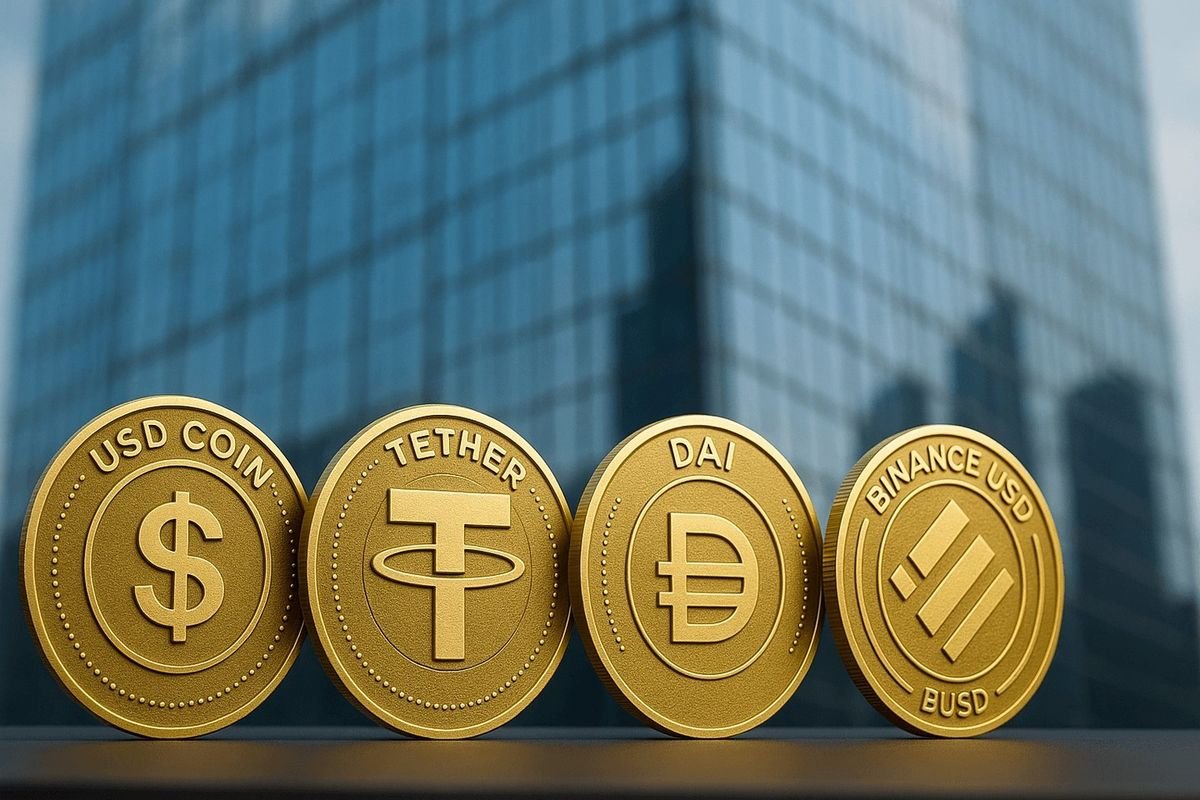
A stablecoin is a digital token designed to keep a stable value, often close to one U.S. dollar. Stablecoin issuers need high-quality assets as reserves. Short-term U.S. Treasury securities and money market funds can serve that role.
BlackRock has already built a major position here. Its management said the firm manages about $60 billion of reserves for Circle, which it described as about one-quarter of the roughly $300 billion stablecoin market.
In August 2026, BlackRock also launched two new tokenized money market products: the BlackRock Select Treasury Based Liquidity Fund OnChain Shares, called BSTBL, and the BlackRock Daily Reinvestment Stablecoin Reserve Vehicle, called BRSRV.
BSTBL uses a tokenized share class of an existing money market fund on Ethereum. BRSRV is a new fund built for digital asset users and has features such as daily dividend reinvestment and access across more than one blockchain. Both focus on cash, short-term U.S. Treasuries, and Treasury-backed overnight repurchase agreements.
This gives BlackRock another route into the digital economy.
Faster Settlement Could Lower Costs
One of the strongest reasons for tokenization is speed.
Traditional finance often needs several parties to confirm ownership, move records, process payments, and settle trades. Each step can add time and cost.
Blockchain networks can reduce some of these delays. A token can show ownership on a shared digital record, while smart contracts can handle certain rules automatically.
BlackRock has said tokenization could offer faster settlement, lower costs, better transparency, and less counterparty risk. It also sees possible value in areas such as collateral, margin, clearing, and settlement.
The goal is not to remove every bank or financial institution. Instead, the goal is to make the system more efficient.
The Risks Still Matter
Tokenization is not a magic solution.
Rules remain important. Investor access can be limited by law. Blockchain networks can face technical problems. Digital wallets can create new security risks. Public blockchains can also show wallet addresses and transaction records, even when personal identity data stays off-chain.
There are also costs. Blockchain transactions can require network fees. BlackRock says it covers certain fees for purchases and dividend payments under its new OnChain Shares model, while some transfers can require investors to pay network fees.
So the value of tokenization will depend on how well the technology works with regulation, custody, security, and existing financial systems.
BlackRock Is Building for the Long Term
BlackRock’s strategy looks larger than one fund.
BUIDL showed that a traditional asset manager can put a regulated investment product on a blockchain. Its new money market funds show that BlackRock now wants digital assets to become a normal part of its cash management business.
The company has also discussed the possible tokenization of long-term products such as iShares ETFs and, over time, private market assets.
That is the bigger picture.
BlackRock is not simply betting on crypto prices. It is betting that the rails of finance will change. If assets can exist in digital form, move through digital wallets, settle faster, and connect with stablecoins and other blockchain systems, the asset manager wants its products ready for that world.
BUIDL is therefore more than a tokenized Treasury fund. It is a test of a much larger idea: traditional finance may not disappear because of blockchain, but it may become part of the blockchain economy.
For BlackRock, the opportunity is clear. If tokenized assets become a major part of global finance, the firm wants to be one of the companies that supplies the assets, manages the money, and builds the bridge between old finance and the digital market.
Also Read – Hyperscale Data Ends Bitcoin Mining for AI Data Center