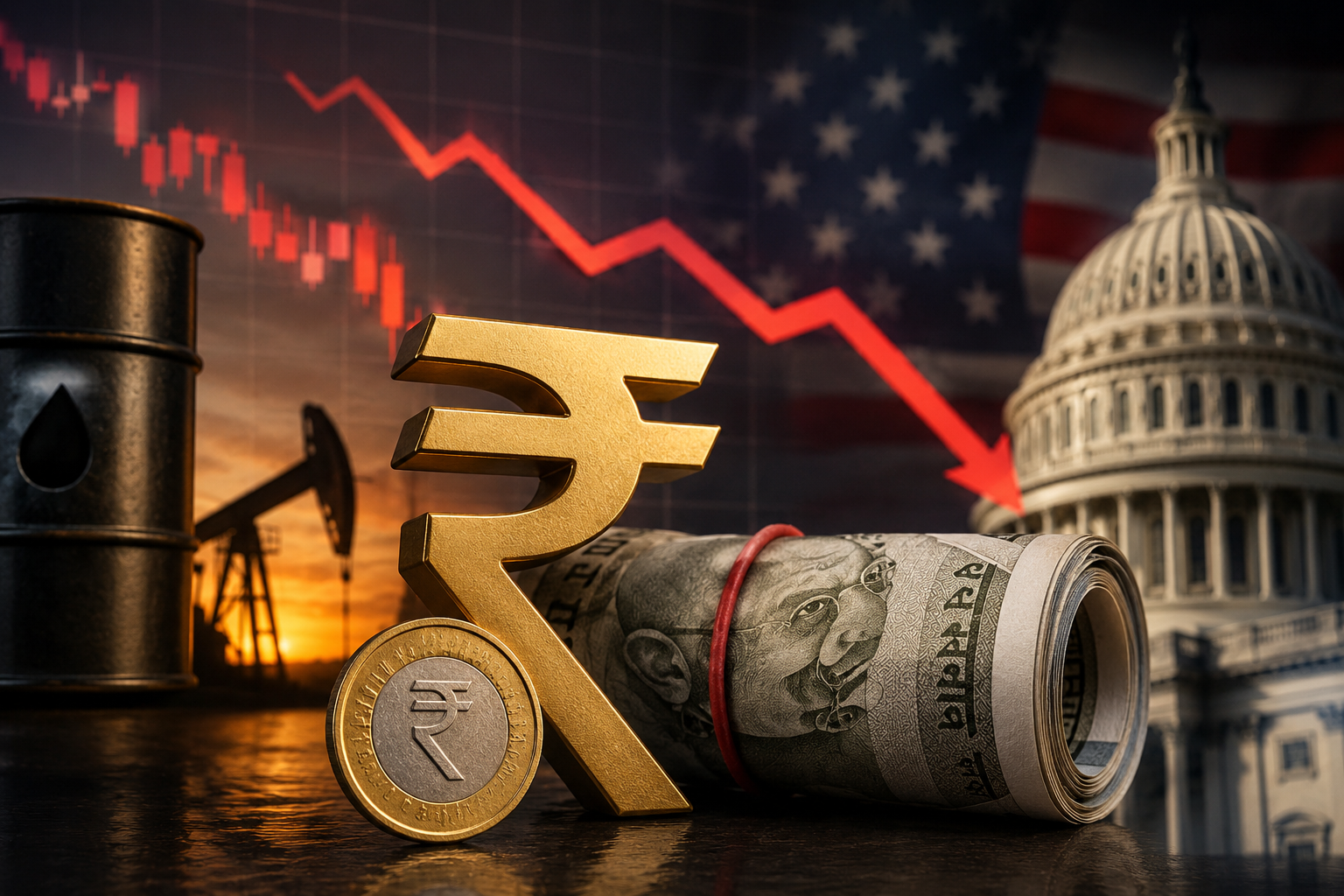
The Indian rupee opened lower against the US dollar on Monday, August 31, 2026. The rupee opened at ₹95.56 per US dollar, down 13 paise from its previous close. On Friday, the rupee had closed at ₹95.43, after a small gain of 2 paise. The weak start came as higher crude oil prices, fresh concerns in the Middle East and stronger expectations of a US Federal Reserve rate hike gave support to the dollar.
The move shows how global events can affect the Indian currency. The rupee does not move only on local economic data. Oil prices, US interest rates, the dollar, foreign money flows and global political risks also have a strong effect. At present, several of these factors are working against the rupee.
Why the Rupee Fell to ₹95.56
The main pressure came from crude oil. Brent crude, the global oil benchmark, was near the $90 per barrel mark. In early trade, Brent rose 1.34% to $89.28 per barrel in futures trade. Later reports put Brent at about $90.92, after a fresh rise in tensions between the US and Iran.
This matters a lot for India because the country imports a large share of the oil it uses. When crude becomes more expensive, Indian companies need more dollars to pay for the same amount of oil. This can raise demand for the US currency and put pressure on the rupee.
The latest oil move also has a political reason. New tensions in the Middle East have raised fresh concerns about oil supplies. The situation around the Strait of Hormuz is especially important because it is a major route for global energy trade. Any serious threat to oil flows can push crude prices higher very quickly.
Fed Rate Hike Bets Give the Dollar More Support
Another major factor is the US Federal Reserve. Investors have increased their expectations for a US rate hike at the Fed’s September 15-16 meeting.
Fed Chair Kevin Warsh used a more hawkish tone in a speech on Friday. His comments made markets consider the chance of another US rate increase if inflation stays above the Fed’s target. According to market data reported on Monday, the chance of a September rate hike rose to about 60% from 35% before his speech.
A higher US interest rate can make dollar assets more attractive to global investors. If investors expect better returns from US assets, some money can move toward the dollar. That can lift the dollar against other currencies, including the rupee.
The dollar index was at 99.62, down only 0.07% in early trade. Even with that small fall, the dollar remained strong enough to add pressure to the Indian currency.
RBI Steps In to Support the Rupee
The Reserve Bank of India has also played an important role in the currency market. The central bank has stepped in to reduce sharp moves in the rupee.
The rupee briefly fell to ₹95.60 on Monday before it recovered. By 11:49 a.m. IST, it was at about ₹95.44 per dollar, according to Reuters. The RBI’s action helped limit the fall and gave some support to the currency.
The RBI’s role is important because a sudden fall in the rupee can create several problems. A weaker rupee can make imported goods more expensive. Oil is the biggest concern, but India also imports electronics, machinery, chemicals and several other products.
The RBI also appeared to use short-term dollar-rupee swaps. These steps helped ease pressure in the short-term currency market. The cash-tomorrow swap rate fell to about 0.75 paisa after it had reached 2.8 paisa per day on Friday. The tomorrow-spot rate fell to about 0.60 paisa.
Key Levels for the Rupee
Market experts expect the rupee to remain in a fairly narrow range for now. Anil Kumar Bhansali of Finrex Treasury Advisors expects the rupee to stay between ₹95.25 and ₹95.75. He also said exporters may sell dollars near ₹95.60, while importers may buy dollars when the rupee gets stronger.
Other market views have placed focus on the ₹95.70 to ₹95.80 area as an important support zone. If the rupee falls through this area, traders may expect more weakness. At the same time, strong RBI action could help keep the currency within a controlled range.
The key point is that the rupee is not showing a clear one-way move yet. The currency has stayed within a fairly tight range in recent sessions because RBI action has reduced large swings.
Foreign Money and Dollar Demand
Foreign money flows are another factor for the rupee. On Friday, foreign institutional investors sold Indian shares worth ₹5,039.80 crore on a net basis, according to exchange data. Such sales can create demand for dollars when investors move money out of India.
At the same time, India has received strong dollar flows through the special FCNR(B) deposit scheme. These flows have helped support the currency. The scheme has brought in more than $65 billion in fresh dollar inflows, according to market reports.
India’s foreign exchange reserves also remain strong. The reserves rose by $12.422 billion to $729.328 billion for the week ended August 21. A large reserve pool gives the RBI more room to deal with sudden pressure on the rupee.
What a Weak Rupee Means for India
A weaker rupee is not always bad for the economy. Indian exporters can benefit because their foreign earnings become worth more in rupee terms. Companies that receive dollars from overseas sales may get more rupees when they convert those dollars.
But the effect can be negative for importers. A weaker rupee makes imported goods more costly. Oil is the biggest concern because India has a large import bill for crude. If oil prices also stay high, the pressure can become stronger.
Higher import costs can also add to inflation. That is why the rupee, crude prices and RBI policy are closely linked. If oil stays near or above $90 for a long time, the effect can spread beyond the currency market.
What Markets Will Watch Next
The rupee’s next move will depend on several global and local factors. The US Fed’s policy view will remain important. Traders will closely watch US jobs and inflation data before the September meeting. Strong US data could support the case for higher rates and give the dollar more strength.
Oil prices will also remain critical. Any new change in the Middle East could quickly affect crude and, in turn, the rupee. A fall in oil prices could give the Indian currency some relief.
On the domestic side, India’s economic growth data will also matter. The market expects April-June growth at about 7.1%, according to a Reuters poll. Manufacturing and services data due this week will also give investors more clues about the health of the Indian economy.
The Road Ahead for the Rupee
The rupee’s move to ₹95.56 per dollar is a clear sign of the pressure from global markets. Higher crude, fresh Middle East risks and stronger expectations of a US rate hike have all helped the dollar and hurt the rupee.
Still, the fall remains controlled. The RBI has shown a clear willingness to support the currency, while India’s large foreign exchange reserves provide a strong safety cushion.
For now, the rupee may stay range-bound rather than face a sudden sharp fall. The ₹95.70–₹95.80 area will remain important, while oil prices and the Fed’s next steps could decide the broader direction.
The bigger picture is simple: if crude stays high and US rate hike expectations grow, the rupee may face more pressure. If oil prices cool, Fed expectations soften and foreign money returns to Indian assets, the rupee could find better support. For now, global events remain the main force behind the currency’s next move.
ALSO READ: Sberbank Plans Crypto-Backed Loans as Russia Opens Market