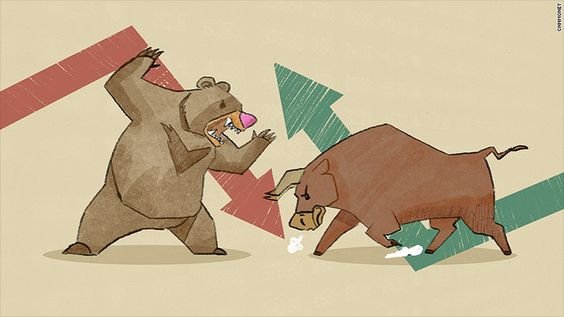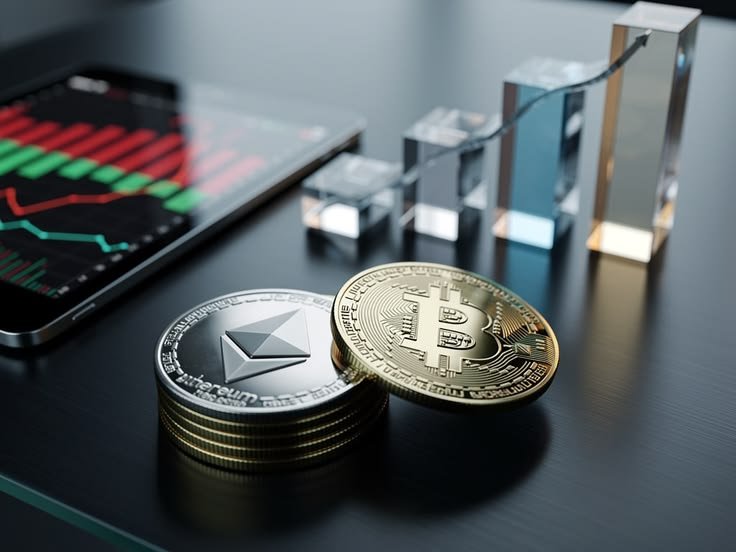
Optionality means the freedom to choose later.
When you hold an asset, its value is not only about what it can buy today. It is also about the choices it can give you tomorrow. Can you use it fast? Can you move it across borders? Can you hold it without a bank? Can it protect your wealth when prices rise? Can you sell it when you need money?
Cash and Bitcoin offer very different answers to these questions.
Cash is simple, familiar, and useful for daily life. Bitcoin is scarce, digital, global, and independent of a central bank. Neither one is perfect. The better choice depends on what kind of future you want to prepare for.
The real question, then, is not simply whether Bitcoin is better than cash. It is which one gives you more useful choices when conditions change.
Cash Has Strong Short-Term Optionality
Cash has one major advantage: it is easy to use.
You can use cash to buy food, pay a bill, make a small purchase, or cover an urgent cost. Almost every economy has a local currency that people understand. Prices, wages, taxes, and debts are usually set in that currency.
This gives cash a high level of practical value.
Cash also has low price risk in the short term. If you keep $1,000 in a bank account, you still have close to $1,000 tomorrow. Bitcoin does not offer that kind of stability. Its price can move sharply over a short period. The Federal Reserve has noted that Bitcoin has shown extreme price volatility, which can limit its use as a payment method and store of value.
That makes cash useful for near-term needs.
If you need money for rent next month, a sudden Bitcoin price drop could create a serious problem. Cash avoids that problem.
But cash has a weakness that becomes clear over longer periods.
Cash Loses Value Through Inflation
Cash is stable in terms of its number. It is not always stable in terms of what that number can buy.
If prices rise, the same amount of money buys fewer goods and services. This is the basic effect of inflation.
The Federal Reserve has a long-run inflation goal of 2%. At a 2% inflation rate, the purchasing power of money falls over time. The effect may look small in one year, but it becomes much larger across decades.
Recent data also show why this issue matters. The Federal Reserve’s July 2026 Monetary Policy Report said that the personal consumption expenditures price index rose 4.1% over the 12 months that ended in May 2026, well above the Fed’s 2% long-run goal.
This does not mean cash is bad.
It means cash has a cost that is easy to miss. You gain stability today, but you may lose purchasing power over time.
So cash offers strong spending optionality, but weaker long-term scarcity.
Bitcoin Offers A Different Kind of Choice
Bitcoin works from a very different design.
The Bitcoin network has no central bank. Its rules set a maximum supply of 21 million Bitcoin. New supply falls at set intervals, and the total supply will eventually reach that limit.
This creates scarcity.
No central authority can simply decide to create another 10 million Bitcoin because the economy needs more money. The rules of the network control new supply.
That feature gives Bitcoin a form of optionality that cash cannot match.
A person who holds Bitcoin can keep a digital asset outside the direct control of a bank or government. Bitcoin can also move across borders through the internet, subject to local laws, access to exchanges or wallets, and network conditions. The Bitcoin network was built as a peer-to-peer system with no central authority or bank at its core.
For someone who values monetary independence, this can matter a lot.
Bitcoin Has Higher Risk
Bitcoin’s biggest strength is also part of its biggest weakness.
Its price can change a great deal.
Cash usually has low short-term price volatility. Bitcoin can rise or fall by large amounts within a short period. That means Bitcoin may offer more upside, but it can also create large losses.
This is why Bitcoin should not be treated as a direct replacement for emergency cash.
Imagine two people with $10,000.
One person keeps the full amount in cash. The money may lose purchasing power over time, but the person knows the nominal value is close to $10,000.
The other person puts the full amount into Bitcoin. That person may have more purchasing power in the future if Bitcoin rises. But a major price decline could reduce the value of the asset at the exact moment when cash is needed.
That difference is important.
Optionality only has value if you can survive the risks that come with it.
Liquidity Is Not The Same As Stability
Both cash and Bitcoin can be liquid, but they offer different types of liquidity.
Cash has direct everyday liquidity. You can use it for ordinary expenses without first converting it into another asset.
Bitcoin has digital liquidity. You can transfer it to another Bitcoin address without asking a traditional bank to move the asset for you. But practical access still depends on wallets, exchanges, internet access, fees, regulation, and user knowledge.
So the two forms of liquidity serve different needs.
Cash is better for normal daily activity.
Bitcoin may be more useful when the key goal is digital transfer, global access, or control outside a traditional financial system.
Bitcoin’s Scarcity Creates Long-Term Optionality
The strongest argument for Bitcoin is not that it will always rise.
There is no such guarantee. Bitcoin.org itself notes that Bitcoin’s price can rise or fall.
The stronger argument is that Bitcoin has a predictable supply structure.
Only 21 million Bitcoin can exist under its current rules. Each Bitcoin can also be divided into 100 million smaller units called satoshis.
This means scarcity does not prevent small transactions.
Cash works through an elastic supply. Central banks can adjust money supply as economic conditions change. Bitcoin works through fixed rules and a capped supply.
One system offers policy flexibility.
The other offers supply certainty.
That is a major difference in optionality.
Cash Wins In One Future, Bitcoin In Another
If the future is calm, local, and predictable, cash has a clear advantage.
You need money for food, housing, transport, taxes, and regular expenses. Cash is simple. Its value does not normally jump around from one day to the next.
But imagine a future with high inflation, capital controls, banking problems, or a need to move wealth across borders.
In that case, Bitcoin may offer a different set of choices.
You can hold it directly. You do not need a bank account to own Bitcoin. You can transfer it across the internet. Its supply rules do not depend on a central bank.
That does not make Bitcoin risk-free. It simply gives it a different form of protection and access.
The Best Answer May Be Both
The debate becomes easier when we stop asking which asset must win.
Cash and Bitcoin can serve different jobs.
Cash can cover short-term needs and provide stability. Bitcoin can serve as a scarce digital asset with a different risk profile and a different monetary structure.
This mix can create more optionality than a total commitment to either side.
Cash gives you the ability to act today.
Bitcoin may give you another option for tomorrow.
One protects near-term spending power in nominal terms. The other offers exposure to a scarce asset whose supply cannot easily expand.
So, Which Holds More Optionality?
The answer depends on the time frame.
For short-term optionality, cash wins. It is stable, familiar, easy to spend, and useful for daily needs.
For long-term monetary optionality, Bitcoin has a stronger case. Its 21 million supply limit, digital nature, and independence from a central bank create choices that ordinary cash does not provide.
But Bitcoin comes with much higher price risk. Cash has much lower price risk but faces inflation risk.
So the most useful way to view them is not as enemies.
Cash is about certainty and immediate use.
Bitcoin is about scarcity and alternative access.
The person who wants maximum optionality may value both. Cash can handle the needs of today, while Bitcoin can provide exposure to a monetary system with fixed supply rules.
In the end, optionality is about having choices when the future does not go as planned. Cash gives you strong choices in the present. Bitcoin gives you a different set of choices for a future where scarcity, digital ownership, and financial independence may matter more.
Neither asset can predict the future.
But understanding what each one can and cannot do can help you prepare for more than one version of it.
ALSO READ: How to Build an Investment Journal That Improves Decisions