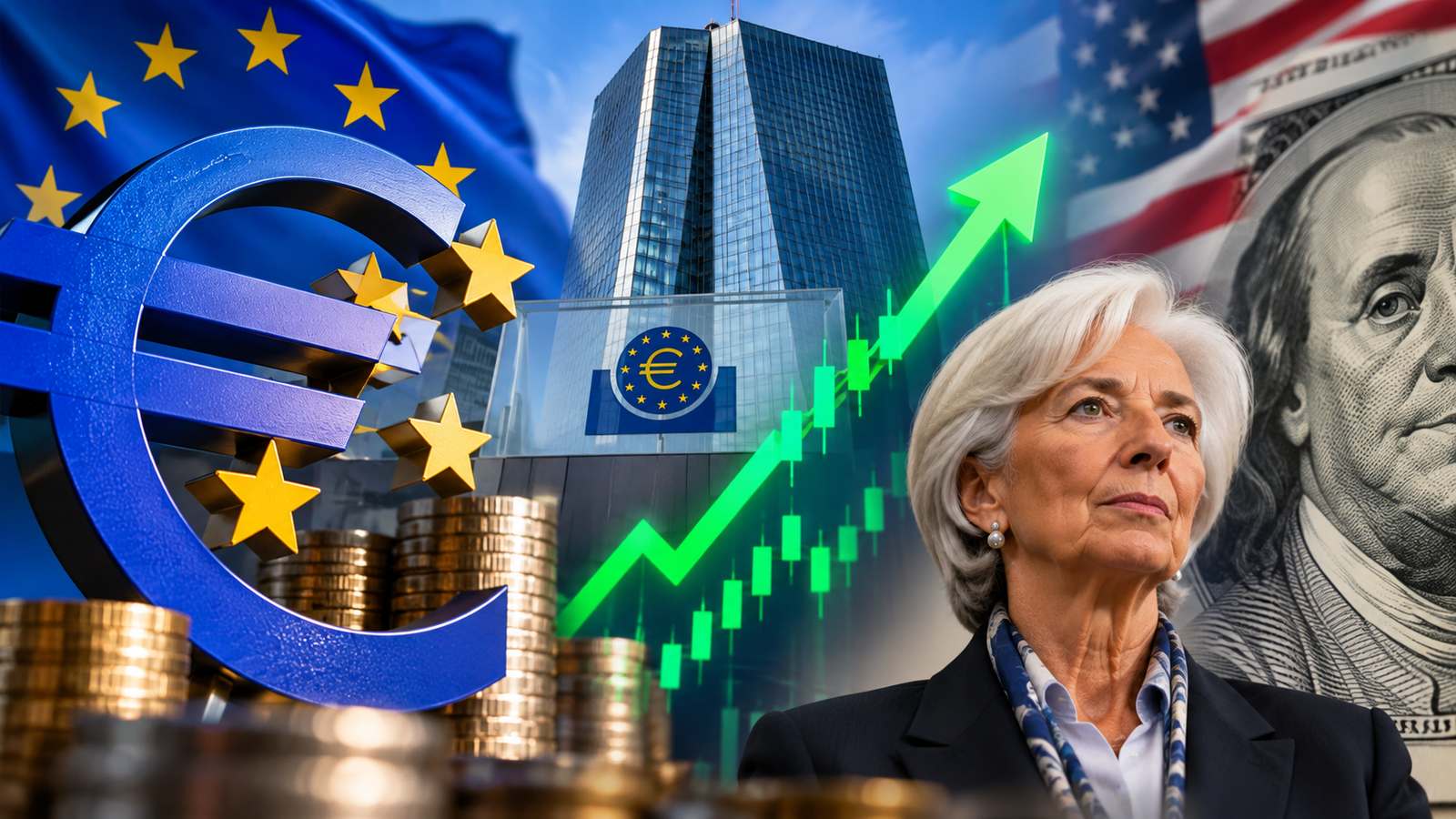
EUR/USD moved up to about 1.1645 on September 9, its highest level in 12 days. The euro has found support from two main forces: broad weakness in the US dollar and strong expectations for another interest rate hike from the European Central Bank, or ECB.
The ECB is due to announce its next policy decision on September 10. Markets almost fully expect a 25-basis-point hike, which would take the ECB deposit rate from 2.25% to 2.50%. Market pricing had placed the chance of this move at about 99.7%, while other market data showed close to 100% pricing for the hike.
This means the rate increase itself is no longer a major surprise. Traders have had plenty of time to prepare for it. The bigger question is what the ECB says after the decision.
The hike is already in the price
A central bank rate move can push a currency higher when traders did not expect it. But the effect can be much smaller when the market has already priced it in.
That is the situation for the ECB this time.
A 25-bp hike to 2.50% is almost certain based on current market prices. Because traders already expect it, the euro may not get a large boost simply from the rate decision.
Instead, attention will turn to ECB President Christine Lagarde and the wider policy message.
If the ECB suggests that another hike could come later, traders may raise their expectations for European interest rates. That could give the euro more support against the dollar.
If the ECB makes clear that September marks the end of the current rate cycle, the reaction could be very different. The euro could lose some of its recent gains because traders may reduce bets on higher rates.
Why the ECB is under pressure
The main problem for the ECB is inflation.
Eurozone inflation rose back above 3% in August, with higher energy costs a major reason. At the same time, the conflict linked to Iran has pushed oil prices much higher. Brent crude moved close to $100 a barrel on September 9.
Higher energy prices can create a difficult situation for a central bank.
The first effect is direct. Consumers and businesses pay more for fuel and energy. This pushes overall inflation higher.
The second effect can come later. Higher energy costs can raise the price of transport, goods and services. If companies pass those costs to customers, inflation may remain high for longer.
This is one reason some investors now expect the ECB to keep rates high for a longer period.
The case for more ECB hikes
There are signs that the ECB may need to act again.
Energy prices have risen sharply, and the inflation outlook has become less comfortable. The longer the energy shock lasts, the greater the risk that higher prices spread across the wider economy.
Deutsche Bank has already changed its forecast. It now expects another 25-bp ECB hike in December, after the expected September move. The bank sees 2.75% as the more likely peak for the ECB deposit rate.
This view is important for EUR/USD because interest rate expectations can have a strong effect on currencies.
If investors expect European rates to rise while US rates remain less attractive, demand for the euro can increase. That could help EUR/USD move above its recent highs.
A clear signal from the ECB that another rate increase is possible could therefore give the euro a fresh boost.
Why the ECB may stop after September
There is also a strong case for caution.
Most economists do not expect a long series of additional rate hikes. A Reuters poll of 65 economists found that most expect the September increase to be the second and final hike in the current tightening cycle. The same poll showed expectations for the ECB deposit rate to remain at 2.50% through mid-2027.
One reason is economic growth.
Higher interest rates can help control inflation, but they also make loans more expensive. That can reduce business investment, housing demand and consumer spending.
The eurozone economy is not strong enough to ignore this risk. Reuters’ economist poll puts eurozone growth at 0.8% for 2026 and 1.2% for 2027.
There is also little evidence so far of a broad second wave of inflation. Services inflation has eased, while wage growth has also slowed. This gives the ECB some reason to avoid an aggressive rate path.
The key message for EUR/USD
For the euro, the difference between a dovish hike and a hawkish hike could be very important.
A dovish hike would mean the ECB raises rates by 25 basis points but gives little support to the idea of more increases. Officials could point to weaker growth, softer wage pressure and the risk that high rates hurt the economy.
Such a message could cause traders to reduce their bets on future ECB hikes. In that case, EUR/USD could struggle to hold its move toward 1.1650.
A hawkish hike would tell a different story.
If Lagarde says that inflation risks have increased and that further action may be needed, traders could raise their expectations for another move. That would give the euro a stronger reason to rise beyond 1.1650.
The key issue is therefore not the September hike itself. It is the expected path after September.
The dollar also matters
The euro’s rise is not only an ECB story.
The US dollar has also faced pressure. The dollar index moved close to a three-week low as US Treasury yields fell and the Japanese yen strengthened.
This has helped EUR/USD rise even before the ECB decision.
US inflation data will also matter later this week. The market is waiting for US Producer Price Index and Consumer Price Index data, which could affect expectations for the Federal Reserve’s next decision.
If US inflation comes in higher than expected, the dollar could recover. Higher US inflation could make traders less confident about future Federal Reserve rate cuts or more open to a higher US rate path.
That could limit the euro’s gains, even if the ECB sounds firm.
What could happen after the ECB decision
At around 1.1645, EUR/USD is already close to a key area.
A strong ECB message, combined with softer US inflation, could give the pair enough support to test 1.17. That would mark an important psychological level after the recent rise.
But a cautious ECB message could have the opposite effect. If traders decide that the September hike is the final move, the euro may face profit-taking.
Recent technical levels also show a relatively narrow range. UOB has kept an upside view but sees EUR/USD within a range around 1.1585 to 1.1670 in the near term. Another technical level to watch is around 1.1705, where the upper Bollinger Band sits.
This suggests that a clear break above the 1.1650–1.1700 area could become important for the next major move.
The bigger question is the rate path
The ECB decision on September 10 is almost certain to bring a 25-bp hike. The deposit rate should move to 2.50%, and the market has already priced most of this move.
That is why EUR/USD may react more to words than to the rate decision itself.
The euro has reached 1.1645, a 12-day high, but the next step depends on whether the ECB shows concern about the latest energy shock or treats it as a temporary problem.
A hawkish ECB could push EUR/USD toward 1.17 if the dollar also remains weak. A cautious ECB could cause the pair to fall back as traders remove bets on future rate increases.
For now, the market faces a simple question: Is 2.50% the end, or is it only another step?
That answer could matter far more for EUR/USD than the September hike itself.
ALSO READ: U.S. 10-Year Yield Nears 4.8% as Oil Fuels Inflation Fears