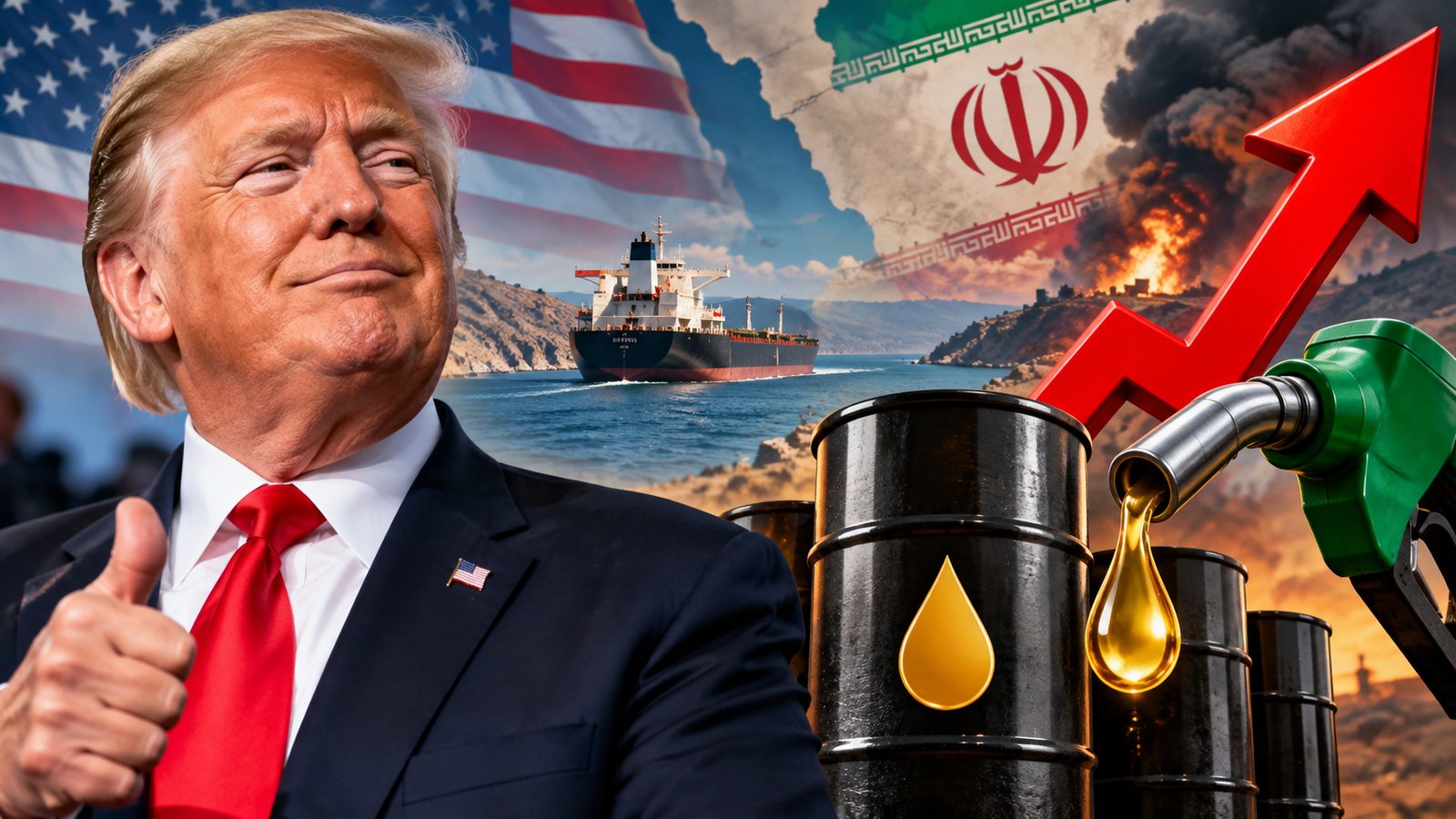
President Donald Trump has made a bold prediction about oil and gasoline prices at a time when the energy market faces severe pressure. Trump said oil prices should fall sharply after the U.S. midterm elections in November. He also said gasoline prices could eventually fall below $2 per gallon.
The statement came on September 9, as crude oil prices moved in the opposite direction. Brent crude, the main global oil benchmark, closed above $100 per barrel for the first time since July. The sharp rise came as the conflict between the United States and Iran caused fresh concern about oil supplies from the Middle East.
Trump said the recent rise in oil and gasoline prices has a clear cause. He linked the higher costs to the war with Iran and the wider dispute over Iran’s nuclear program. He said prices should fall after the November elections and that gasoline could drop below $2 per gallon.
His prediction now faces a major test from the oil market itself.
Brent Crude Moves Above $100
Brent crude futures settled at $101.21 per barrel on September 9. That was a gain of $3.29, or 3.4%, for the day. Brent also reached an intraday high of $101.58 per barrel.
U.S. West Texas Intermediate crude, or WTI, also rose sharply. WTI gained $3.02, or 3.25%, and settled at $96.05 per barrel.
Both major oil benchmarks closed at their highest levels since May 22. Brent had stayed below the $100 mark for much of the period since late May, as traders had hoped that the conflict in the Middle East would stay limited.
That view has now changed.
Fresh attacks between the United States and Iran have raised fears that the supply problem could last much longer. The market now has to deal with the possibility of more damage to oil ships, ports and other energy assets.
The Strait of Hormuz Is at the Center
One of the biggest concerns is the Strait of Hormuz. This narrow water route is one of the most important energy routes in the world.
Before the war, about one-fifth of global oil and gas trade passed through the strait. Any major problem there can have an effect far beyond the Middle East.
Oil flows through the route have fallen sharply. In the week before the latest return of major attacks on August 30, about 8 million to 9 million barrels per day passed through the strait. More recently, that figure has fallen below 2 million barrels per day, according to data cited by Reuters.
The number of vessels that pass through the area has also fallen. Only six commodity vessels passed through the strait on Tuesday, compared with nine a day earlier and a 10-day average of about 12.
These figures show why the oil market remains under pressure. A major oil route cannot lose so much traffic without raising fears about supply.
Attacks Add More Pressure
The latest attacks have made the situation more serious. Iran said it had attacked 10 ships near the Strait of Hormuz. The United States also sank five Iranian oil tankers.
There are risks beyond the strait as well. Iran-backed Houthi forces have attacked Saudi energy facilities. Those attacks have raised fears that the conflict could spread to more oil facilities and shipping routes.
The Red Sea is also at risk. It has served as an alternative route for some energy shipments when traffic through the Strait of Hormuz faces problems.
If more routes become unsafe, oil companies and traders could face even greater difficulty as they try to move crude and fuel around the region.
That would put more pressure on prices.
Gasoline Is Already Far From $2
Trump’s forecast of gasoline below $2 per gallon is especially notable because U.S. drivers currently face much higher prices.
The average U.S. gasoline price is about $4.22 per gallon. Diesel prices are close to $6 per gallon, with diesel at a record level, according to Reuters.
The gap between today’s gasoline price and Trump’s target is therefore very large. A fall from $4.22 to below $2 would require a drop of more than half.
Crude oil is one major part of the price drivers pay at the pump, but it is not the only part. Refining costs, transport costs, taxes and other expenses also affect the final price.
That means even a large fall in crude prices would not automatically send gasoline below $2.
For Trump’s prediction to become reality, the oil market would likely need a major change in supply conditions, along with lower refining and fuel costs.
Oil Stocks Face Pressure
Another concern is the level of oil stocks.
Six months of lower oil exports from the Middle East have reduced supplies in some major consumer markets. The United States has also used a large amount of its Strategic Petroleum Reserve.
U.S. emergency oil stocks now stand at 289.7 million barrels, their lowest level since 1982.
The reserve has seen years of releases under both Joe Biden and Trump. Those releases helped reduce some pressure on fuel prices, but they also left the reserve with less oil available for a future emergency.
This matters because a new supply shock could become harder to manage if the conflict lasts for a long time.
Analysts See More Risk
Trump expects a sharp price drop after the midterm elections, but some market forecasts show a more cautious view.
Goldman Sachs raised its year-end Brent forecast from $80 to $90 per barrel. It also raised its average 2027 forecast from $75 to $80 per barrel.
More importantly, Goldman warned that Brent could rise above $120 per barrel if average Gulf oil output in 2027 stays 4 million barrels per day below pre-war levels.
That view is far from Trump’s prediction of a major fall in oil prices. It shows how much the final price depends on what happens to Middle East production and shipping routes.
What Could Bring Prices Down?
There is a clear path for oil prices to fall, but it depends on several major events.
A lasting ceasefire between the United States and Iran could reduce fears about supply. A safe return of ships through the Strait of Hormuz could also help restore normal oil trade.
Higher oil production would provide another source of relief. If Gulf producers can return close to their normal output, global supply could improve.
A drop in demand could also put pressure on prices. High fuel costs can hurt households and businesses, which can reduce fuel use and slow economic activity.
If several of these factors occur at the same time, oil prices could fall sharply.
The Election Adds a Political Test
The timing of Trump’s forecast is also important.
The U.S. midterm elections take place in November. High gasoline prices can create serious political pressure because drivers see fuel costs directly every time they visit a gas station.
Trump has said prices may remain high until after the election, but he expects a sharp fall soon after it.
The market, however, does not respond to political dates alone. Oil prices depend on actual supply, demand, production and shipping conditions.
If the conflict ends or supply routes reopen after the election, Trump’s prediction could gain support. If the war continues and oil flows remain weak, prices could stay high or rise further.
A Big Gap Between Prediction and Reality
The current oil market presents a sharp contrast to Trump’s forecast.
Trump says oil prices will tumble after the midterm elections and gasoline could fall below $2 per gallon. At the same time, Brent crude has climbed to $101.21 per barrel, WTI is at $96.05, U.S. gasoline averages $4.22 per gallon, and diesel is close to $6 per gallon.
The Strait of Hormuz also faces severe disruption, with oil flows recently below 2 million barrels per day, compared with 8 million to 9 million barrels per day before the latest escalation.
The next few months will show which side has the stronger case. If the Iran conflict eases and oil supplies return, prices could fall quickly. If attacks continue, the market could face even tighter supply and much higher costs.
For now, the facts point to a difficult road from $101 Brent crude and $4.22 gasoline to Trump’s target of sub-$2 gasoline.
ALSO READ: Meta’s Muse AI Agent Sparks 6.6% Stock Market Jump