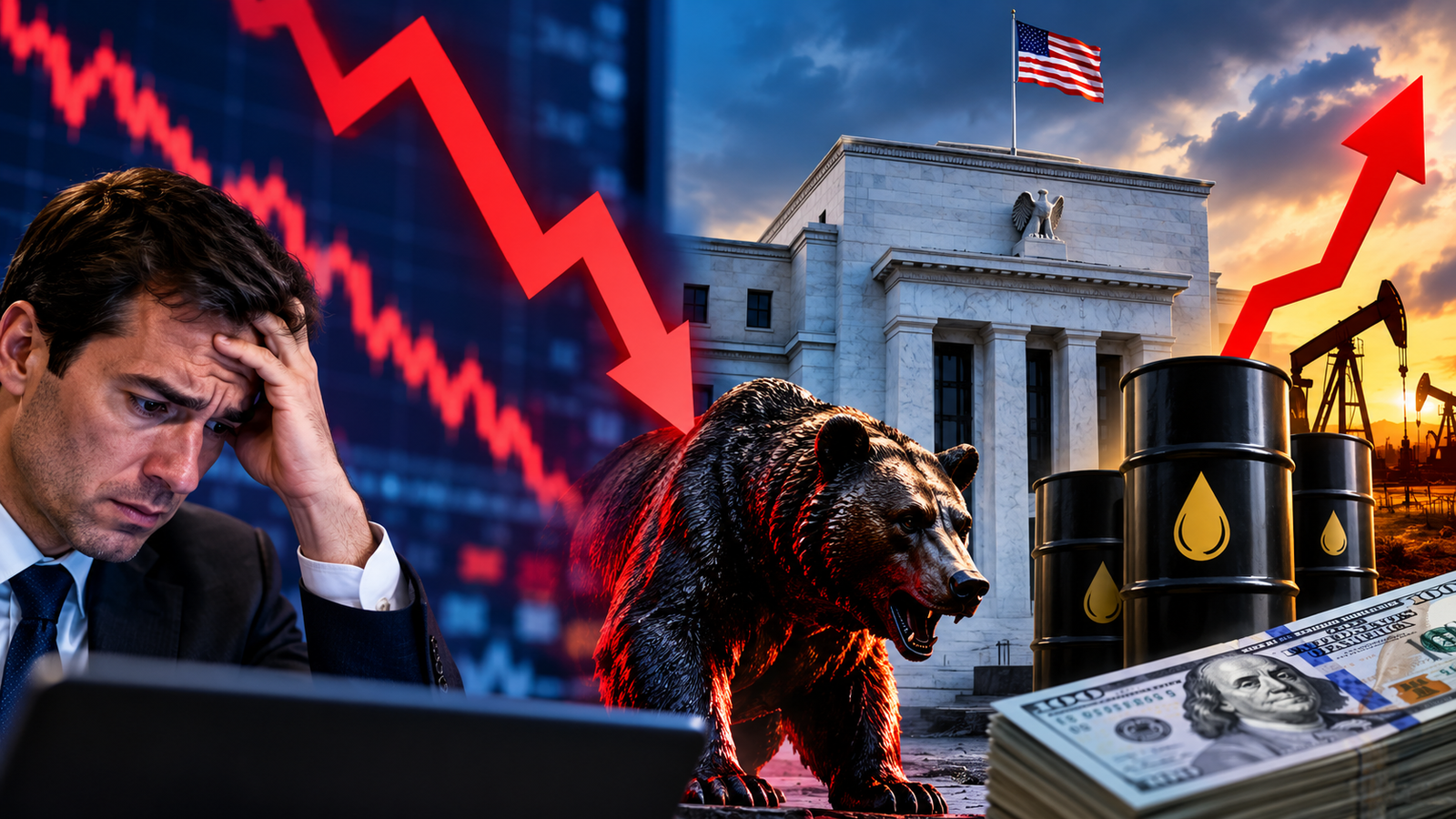
U.S. stocks fell for a fourth straight session on Thursday as investors grew more worried about inflation, higher oil prices and a possible Federal Reserve rate hike. The decline came just one day before the release of the August Consumer Price Index, or CPI, a report that could have a major effect on the next move in financial markets.
The S&P 500 fell 0.58% to 7,591.70. The Nasdaq dropped 0.65% to 26,081.72, while the Dow Jones Industrial Average lost 0.60% to 52,064.10. All three major indexes ended lower for the fourth session in a row.
The latest losses may look small on their own, but the reason behind them has made investors more nervous. Treasury yields have moved sharply higher, oil has climbed above $100 a barrel, and fresh inflation data has raised the chance of another Fed rate hike.
Treasury Yields Near the 5% Level
The bond market has become one of the biggest sources of concern for Wall Street. The 10-year Treasury yield rose to about 4.94% to 4.95% on Thursday. It reached its highest level in years and moved close to the important 5% level.
The move matters because Treasury yields affect the cost of money across the U.S. economy. Higher yields can push up borrowing costs for companies, home buyers and consumers. They can also make bonds more attractive compared with stocks.
The rise in yields has been especially hard on technology and growth stocks. These companies often have high valuations based on profits that investors expect far into the future. When bond yields rise, those future profits become less valuable in today’s money.
The 30-year Treasury yield also reached a very high level. It closed at 5.360%, its highest level since June 2004. The two-year Treasury yield rose to 4.548%, its highest close in more than two years.
This shows that the pressure is not limited to one part of the bond market. Investors across different parts of the Treasury market have become more cautious.
Oil Adds More Pressure
Oil has made the inflation story harder for investors to ignore. U.S. crude rose to $102.48 a barrel on Thursday, its highest close since May 19. Brent crude also moved above $108 for a time.
The rise in oil prices has come as the conflict with Iran continues to affect the global flow of crude. Higher oil prices can quickly affect fuel costs, transport expenses and the price of many goods.
That creates a difficult situation for the Federal Reserve. If energy costs stay high, inflation may take longer to return to the central bank’s 2% target.
The oil move also came at a bad time for markets. Investors were already concerned about inflation before the latest jump in crude prices. Now they have to consider whether higher energy costs could keep price pressure strong in the months ahead.
PPI Raises More Inflation Concerns
Thursday also brought fresh evidence that price pressure remains a concern. The Producer Price Index, or PPI, rose 0.4% in August from July. It was up 5.4% from a year earlier. Energy costs, especially higher diesel prices, played an important role in the rise.
PPI measures prices at the producer level. It is not the same as CPI, which measures prices paid by consumers, but investors still watch it for clues about future consumer prices.
The PPI report also changed expectations for the Fed. Market-based estimates showed the chance of a quarter-point rate hike at the September meeting rise to about 71% to 74%, depending on the measure and time of the estimate.
That is a major shift from the calmer view seen earlier in the week.
Why August CPI Matters So Much
The August CPI report is now the main focus for Wall Street. The data is due on Friday, September 11, and it could influence the Federal Reserve’s decision at its September 15–16 meeting.
Economists expect headline CPI to rise 0.4% from July and 3.4% from a year earlier. Core CPI is expected to rise 0.2% on a monthly basis and 2.4% from a year earlier.
These numbers matter because inflation is still above the Fed’s 2% target.
Core CPI will receive special attention. Energy prices can move sharply from month to month, so the core measure gives investors a clearer view of price pressure across other parts of the economy.
A core CPI result of 0.2% for the month would be close to expectations. A result of 0.3% or higher could create much more concern about inflation. Some economists and market analysts believe such a result could strengthen the case for a rate hike at the September meeting.
A Cooler CPI Could Help Stocks
A softer CPI report could give Wall Street some relief.
If inflation comes below expectations, Treasury yields could fall. That would reduce some of the pressure on stocks, especially technology and other growth shares. Investors could also lower their expectations for a Fed rate hike.
Such a result could create a strong rebound after four straight sessions of losses.
The market reaction would depend not only on the headline number but also on the details. A lower headline CPI with strong core inflation may not be enough to calm investors. The opposite could also happen. A firm headline number caused by energy prices may be less worrying if core inflation remains under control.
A Hot CPI Could Make the Selloff Worse
A hotter-than-expected CPI could have the opposite effect.
If both headline and core inflation come in above forecasts, traders may expect the Fed to raise rates by 0.25 percentage point at the September 15–16 meeting. Treasury yields could move higher again, perhaps toward the 5% level for the 10-year note.
That would place more pressure on stocks.
The recent market action already shows how sensitive investors have become to rates. The S&P 500, Nasdaq and Dow all fell on Thursday even though the daily losses were less than 1%. The concern is not simply about one bad trading session. It is about a possible change in the interest-rate outlook.
The Fed Has a Difficult Choice
The Federal Reserve faces a difficult decision. It must balance inflation against the wider economy.
If inflation stays too high, the Fed may need higher rates to slow price growth. But higher rates also make loans more expensive and can reduce economic activity.
The August CPI report has gained unusual importance because market expectations have shifted so quickly. Traders were leaning toward a rate hike, with the probability around 65% before Thursday’s latest market moves. Other market measures later put the chance closer to 70% or above.
That means the CPI number could either support the current view or force traders to rethink it.
What Investors Will Watch Next
The first focus will be the headline CPI number. The second will be core CPI. The third will be the reaction in Treasury yields.
If CPI is soft, yields may fall and stocks may get a relief boost. If CPI is close to forecasts, investors may turn their attention back to oil, Treasury yields and the Fed’s September decision. If CPI is hot, the pressure on stocks could grow.
Oil will remain another major factor. Even a good CPI report may not fully calm markets if crude prices continue to rise.
For now, Wall Street is caught between hopes for lower inflation and fears of a new period of tighter monetary policy.
A Crucial Day for U.S. Markets
The fourth straight decline has left investors in a cautious mood, but the larger story is about what comes next.
The S&P 500 closed at 7,591.70, the Nasdaq at 26,081.72 and the Dow at 52,064.10. At the same time, the 10-year Treasury yield reached about 4.94% to 4.95%, while oil moved above $100 a barrel.
Now the August CPI report stands between Wall Street and the Fed’s September 15–16 meeting.
A cool inflation report could give stocks room to recover after four losing sessions. A hot report could push yields higher and add to the pressure on equities.
The numbers may look small on paper, but this time a difference of just a few tenths of a percentage point could have a very large effect on markets.
ALSO READ: Nasdaq Invests $100 Million in Kraken Parent Payward