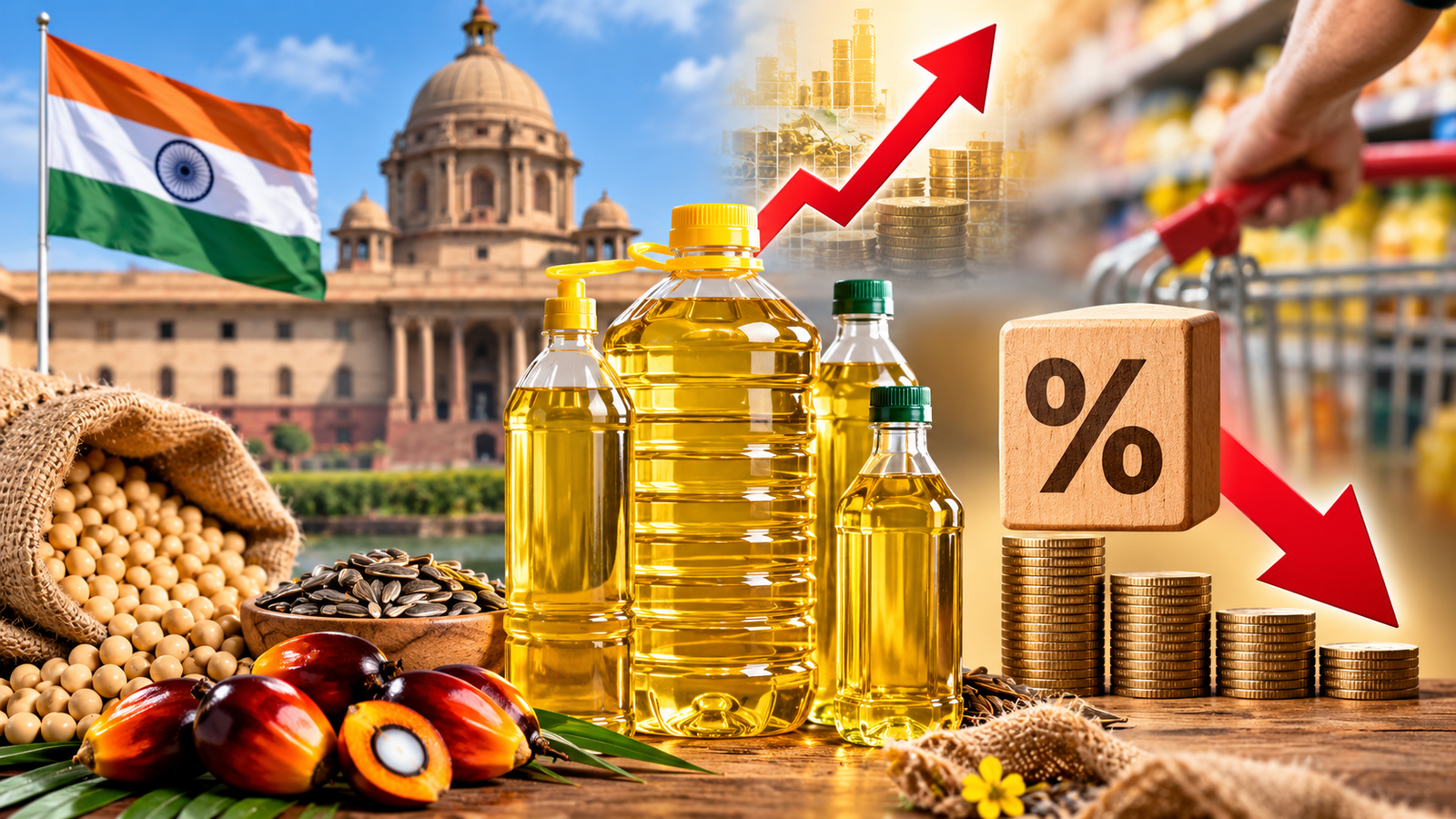
The Indian government is considering a cut in import taxes on vegetable oils as local prices rise. The main aim is to control food inflation and give some relief to households before the major festive season.
Vegetable oil prices in India have risen by nearly 20% over the past year. This has added pressure on household budgets at a time when demand for cooking oil usually rises. The September to November period brings several major festivals, when families buy more oil for sweets, snacks and fried food.
India is the world’s biggest importer of vegetable oils. The country gets nearly two-thirds of its vegetable oil needs from overseas markets. Palm oil, soybean oil and sunflower oil make up a large share of these imports.
The possible tax cut has not yet received an official announcement. Two government sources and two industry sources told Reuters that the idea is under review. A government spokesperson did not give an immediate response to questions about the plan.
Why Vegetable Oil Prices Are High
Several factors have pushed vegetable oil prices higher in India. Global supply problems have played a major role. The Russia-Ukraine war has affected trade and supply routes. Extreme weather linked to El Nino and global climate change has also affected oilseed output and global supply.
India has a strong dependence on imports for edible oil. This means changes in world prices can have a direct effect on the Indian market.
India buys palm oil mainly from Malaysia and Indonesia. Soybean and sunflower oil come from countries such as Argentina, Russia and Ukraine. Any change in supply, freight costs or global prices can affect the cost of oil in Indian shops.
The rise in vegetable oil prices also comes at a time when food prices have added more pressure to inflation. India’s wholesale food prices rose 7.05% year on year in August 2026, up from 6.65% in July. Overall wholesale prices rose 9.92% in August, compared with 9.78% in July.
Government Faces a Difficult Choice
A lower import tax can make imported oil cheaper. This can reduce the cost for local refiners and may help bring retail prices down.
However, the government also has to protect domestic farmers. Cheaper imported oil can put pressure on the prices of Indian oilseeds such as soybean.
A deep tax cut could make imported oil much cheaper than local oil. That could hurt farmers if local crop prices fall too far.
Because of this concern, the government may choose a smaller move. A senior industry official said a 5 percentage point cut in the basic import duty could be considered. Such a move could help consumers while keeping local soybean prices above government-set support levels.
This shows the main problem for policymakers. Consumers want lower cooking oil prices, while farmers need enough price support for their crops.
What Happened in 2025
This is not the first time India has cut import duties on edible oils.
In May 2025, India reduced the basic import tax on crude edible oils from 20% to 10%. The change covered crude palm oil, crude soybean oil and crude sunflower oil.
After the change, the total effective import duty on these crude oils fell to 16.5%. The final duty was higher than the basic rate because these oils also faced the Agriculture Infrastructure and Development Cess and Social Welfare Surcharge.
The government had said the 2025 move was meant to reduce the cost of edible oils and provide relief to consumers. It also aimed to support domestic oil refining.
The government had earlier raised the basic customs duty on crude soybean, crude palm and crude sunflower oil from 0% to 20% in September 2024. The effective duty on those crude oils rose to 27.5%. The purpose was to support domestic oilseed farmers and protect local crop prices.
In June 2025, the government said the basic customs duty on major crude edible oils had been reduced from 20% to 10%. It also asked edible oil companies to pass the lower import cost on to consumers through lower prices.
Another Tax Cut Could Affect Global Prices
A lower Indian import tax may not only affect the Indian market.
Since India is the world’s largest vegetable oil importer, a rise in Indian purchases can affect global prices. If imports rise after a tax cut, demand for palm oil and soybean oil may also rise.
Analysts said stronger Indian demand could support Malaysian palm oil prices and US soybean oil futures. This means a tax cut may offer some relief to Indian buyers, but it could also push up prices in international markets.
There is also a risk that exporters may raise prices if they see stronger demand from India. A senior industry official cited by Reuters said this could reduce the benefit of a lower import tax.
So, a lower duty does not always mean an equal fall in the price paid by Indian consumers.
Festival Demand Adds More Pressure
The timing of the possible tax cut is important.
The period from September to November is a major season for food demand in India. Families buy more cooking oil for sweets, snacks and fried food. Restaurants and food businesses can also see higher demand during this period.
Higher demand at a time of higher global prices can put more pressure on the domestic market.
Recent import data also show strong purchases by Indian refiners. Vegetable oil imports rose to an 11-month high of 1.54 million tonnes in August 2026. Soybean oil imports reached a record 601,000 tonnes, while palm oil imports rose 7% to 780,000 tonnes.
However, heavy imports have also created storage problems at some ports. Reuters reported that at least nine vessels with about 300,000 tonnes of edible oils were waiting to unload at Kandla port.
This means the market already has a large amount of imported oil in the supply chain.
What It Could Mean for Consumers
If the government cuts the import tax, the first benefit could come through lower import costs. Refiners may pay less for crude vegetable oils, which can lower their production costs.
The size of the benefit for consumers will depend on global oil prices, the rupee-dollar exchange rate, freight costs and how much of the tax reduction reaches retail prices.
A small duty cut may offer limited relief. A larger cut could have a stronger effect, but it could also create more pressure on local oilseed prices.
The government therefore has to balance two different needs: affordable cooking oil for consumers and fair prices for farmers.
What It Could Mean for Farmers
Indian soybean and other oilseed farmers could face pressure if imported oil becomes much cheaper.
When imported oil costs less, local processors and buyers may have less reason to pay high prices for domestic oilseeds. This can affect farm income and crop choices.
That is why a 5 percentage point duty cut is under consideration rather than a much deeper cut, according to the industry source cited by Reuters. The smaller move could give consumers some relief while offering more protection to local soybean prices.
The final decision will depend on how the government views consumer prices, farmer interests and global supply conditions.
A Policy Decision With Wider Effects
The possible reduction in vegetable oil import tax is more than a simple move to lower cooking oil prices.
It affects households, farmers, refiners, importers and global commodity markets. A lower duty can reduce the cost of imported oil, but stronger Indian demand can also lift world prices.
The government has not yet confirmed the proposed tax cut. For now, the key point is that officials are looking at a possible 5 percentage point reduction in the basic import duty as vegetable oil prices remain nearly 20% above their level a year ago.
The decision will be closely watched before and during the festive season. The challenge for the government is clear: offer some relief to consumers without causing a sharp fall in prices for Indian oilseed farmers.
ALSO READ: Bitcoin Nears $76K: The 5 Forces That Could Move BTC Next