Asian stock markets began September 17 with a mixed but relatively firm tone after the US Federal Reserve raised its policy rate by 25 basis points to 3.75%–4.00%. This was the first US rate increase in more than three years. The Fed also left the door open to more rate rises as inflation remains above its preferred level.
The Fed decision is now the main macro factor for Asian markets. A higher US rate can support the US dollar and raise the cost of capital across global markets. It can also place pressure on Asian currencies and on companies whose valuations depend on low interest rates.
The US dollar rose to a seven-week high after the Fed decision. The two-year US Treasury yield also rose to its highest level since July 2024. At the same time, Brent crude fell 0.7% to about $105.05 per barrel, while gold rose 1% to about $4,305 an ounce.
This creates a mixed setup for Asia. Exporters in some countries may benefit from weaker local currencies, while banks can gain from higher rates. Property firms, REITs and other businesses with large debt costs can face more pressure.
The following are the ten major Asian stock-market developments outside India that deserve attention today.
1. Japan: Nikkei rises as yen weakens
Japanese equities showed relative strength on September 17. The Nikkei 225 rose 1.0% to 64,548.75, according to a market report from Japan. Pharmaceutical and machinery shares led the rise. Eisai gained 2.4%, while Mitsubishi Heavy Industries rose 3.2%.
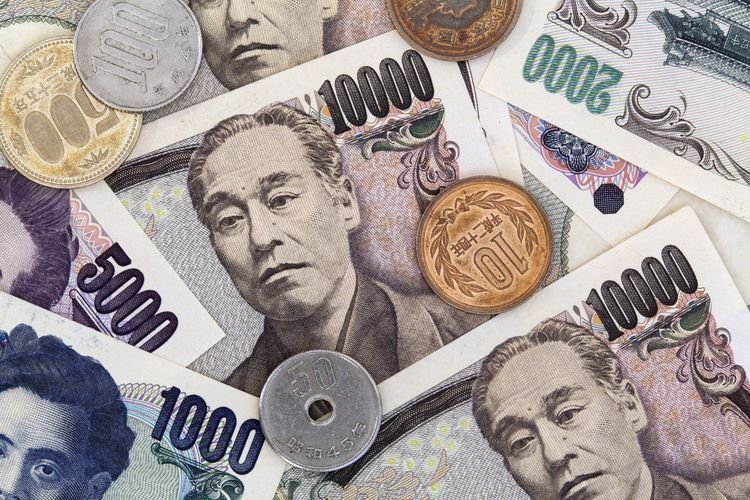
The weaker yen is an important part of this move. The US dollar traded near ¥155.87, compared with ¥155.10 at the prior close. A weaker yen can help Japanese exporters because overseas sales translate into more yen revenue.
However, the currency move also creates a major policy issue. The Bank of Japan has a policy meeting this week, with its decision due on Friday. Markets expect a possible rate increase. The yen had weakened as much as 1% to ¥156.42 per dollar after the Fed decision, which has raised pressure on the BOJ.
The key issue for Japanese shares is therefore the balance between a weak yen, higher export revenue and the possibility of tighter BOJ policy.
| Japan data | September 17 |
|---|---|
| Nikkei 225 | 64,548.75 |
| Nikkei move | +1.0% |
| Eisai | +2.4% |
| Mitsubishi Heavy Industries | +3.2% |
| USD/JPY | ¥155.87 |
2. Hong Kong: higher rates add pressure
Hong Kong shares faced a tougher session after the US rate move. The Hang Seng Index opened at 24,480.57, down 0.94%, while the Hang Seng Tech Index opened 1.03% lower. By the time of the cited report, the Hang Seng had fallen more than 1.44%.
Hong Kong also had a direct monetary-policy response. The Hong Kong Monetary Authority raised its Base Rate by 25 basis points to 4.25% on September 17. The move followed the Fed rate increase and came through Hong Kong’s established currency mechanism.
The Hong Kong dollar is linked to the US dollar within a narrow range. Because of this system, Hong Kong rates tend to move with US rates.
Higher borrowing costs matter for Hong Kong property firms, developers, REITs and companies with high debt. They can also affect household borrowing costs and property demand.
The move does not mean every Hong Kong company faces the same effect. Banks may receive some support from higher rates, while property firms may face greater cost pressure.
3. China: CSI 300 faces the global rate effect
Mainland Chinese shares also faced pressure after the Fed decision. The CSI 300 declined, while the broader Asian market remained mixed. Reuters reported that China’s CSI 300 and Hong Kong’s Hang Seng were lower as investors assessed the new US rate environment.
China’s market has a different policy structure from Japan and Hong Kong. The People’s Bank of China does not simply copy the Federal Reserve. Local economic conditions remain the main factor for Chinese monetary policy.
Even so, global rates matter. A stronger dollar can affect capital flows, while higher US yields can make dollar assets more attractive. Chinese equities also remain sensitive to domestic growth expectations and policy support.
One company-specific development also drew attention. Tinci Materials received regulatory approval for a Hong Kong listing, after a lengthy review process. The battery-material producer may now move closer to a Hong Kong IPO. This is relevant for China’s equity market because Hong Kong remains an important route for Chinese companies that seek overseas capital.
4. South Korea: KOSPI gives back early gains
South Korean stocks began the day with a strong response. The KOSPI opened at 6,779.02, up 0.91%. Tech shares helped the early move. However, the index later gave back most of that gain. By 11:12 a.m. local time, the KOSPI stood at 6,723.23, up only 0.08%.
The change within the same morning shows how sensitive the market is to the Fed decision.
Samsung Electronics fell 0.39%, while SK hynix fell 0.74% by 11:12 a.m. KB Financial gained 1.47%, and Hanwha Aerospace rose 3.03%. The Korean won stood at 1,381.9 per dollar, weaker by 4.9 won from the previous close.
Korea has a major connection to the global technology cycle. Semiconductor companies account for a large share of market value, so changes in AI demand, memory prices and global capital costs can affect the KOSPI quickly.
The weaker won can help exporters in some cases, but it also raises the local cost of imported goods and energy.
5. Taiwan: AI demand supports technology shares
Taiwan remains one of the most important Asian markets for semiconductor and AI exposure.
The Taiwan market had a strong session on September 17. The TAIEX opened at 45,936 and rose by more than 800 points in early trade to cross 46,700. Taiwan Semiconductor Manufacturing Co. rose NT$60 to NT$2,440 at that point. Hon Hai rose NT$5 to NT$253, while MediaTek rose NT$100 to NT$4,630.
The move follows a strong technology trend. In the prior session, Nanya Technology rose 5.96% and Winbond Electronics also gained 5.96%. TSMC closed at NT$2,380 and recovered quickly after its ex-dividend adjustment.
The market view remains closely tied to AI demand. Strong demand for advanced chips and memory can support Taiwan’s technology companies.
At the same time, higher US rates create a counterforce. Technology shares often have high valuations, so higher bond yields can affect how investors value future earnings.
| Taiwan shares | Reported move |
|---|---|
| TAIEX early session | Above 46,700 |
| TSMC | NT$2,440 early |
| Hon Hai | NT$253 early |
| MediaTek | NT$4,630 early |
| Nanya Technology, prior session | +5.96% |
| Winbond, prior session | +5.96% |
6. Singapore: banks rise while REITs face rate pressure
Singapore’s Straits Times Index rose 0.4% in the first five minutes of trade on September 17. Banks were among the stronger names. DBS rose about 0.7%, OCBC gained 0.6%, and UOB rose 1.3%.
The response from REITs was different. Rate-sensitive REITs opened lower. UI Boustead REIT fell 1.2%, while Suntec REIT fell 0.7% at one point. Several names later recovered part of the early loss.
This split is logical from a basic financial perspective. Banks can receive some benefit from a higher interest-rate environment because loan rates can rise. REITs, by contrast, can face higher funding costs when they refinance debt.
Singapore therefore gives a clear example of how one policy event can affect sectors in different ways.
7. Australia: ASX 200 stays positive
Australia’s S&P/ASX 200 rose about 0.2% to 8,716 by 2:30 p.m. AEST on September 17. Health and banking shares helped the index. The Australian dollar stood near US$0.7103.
The Fed decision has also created a policy issue for the Reserve Bank of Australia. The US rate increase adds to the global debate about inflation and the appropriate level of interest rates.
Australia has its own inflation pressures, with energy costs a major concern. The RBA’s next major policy meeting is due on September 29.
For Australian equities, the current environment has several competing forces. Banks can benefit from higher rates, while expensive financing can hurt property and other rate-sensitive sectors. Commodity prices also remain important because Australia has a large resource sector.
8. Indonesia: shares seek a rebound
Indonesia’s equity market has faced a recent period of weakness. The market had suffered a decline of about 3% over five sessions, before a rebound of as much as 1.2% in the latest session.
The main issue remains the effect of US monetary policy on emerging-market assets. A stronger dollar can place pressure on the Indonesian rupiah and can affect foreign capital flows.
Indonesia also remains sensitive to energy prices. Higher oil prices can raise import costs and add pressure to inflation. A later decline in oil prices therefore offers some relief.
The Indonesian market has a separate domestic story as well. Local policy, consumer demand and commodity exports remain important. For investors, the main question is whether the recent rebound can hold if US yields stay high.
9. Philippines: PSEi falls below 6,000
The Philippines has had one of the clearest recent signs of market weakness. The PSEi fell 1.51%, or 90.84 points, to 5,916.94 in the latest completed session. The broader All Shares Index fell 1.26% to 3,300.26.
Local market concerns include the outlook for third-quarter economic growth, currency weakness, inflation and high crude oil prices.
The Philippine peso has also been under pressure. A weaker currency can raise the local cost of imported energy and other goods. If inflation remains high, the local central bank may face greater pressure to keep monetary policy tight.
There is also a company-specific market factor. Investors have shown interest in the upcoming IPO of Mynt, the parent company of GCash. Philippine market analysts cited the possibility that some investors may reduce existing equity positions to keep funds available for the IPO.
10. Thailand: rates, oil and growth remain key issues
Thailand’s stock market has also faced pressure from the global rate shift. The SET Index had fallen 1.01% to 1,562.73 in the latest reported session before the September 17 market response.
Thailand faces several external pressures at once. Higher US rates can support the dollar and affect the baht. Higher oil prices can raise energy costs. At the same time, domestic growth remains important for corporate earnings.
The recent fall in oil prices offers some relief. Brent crude stood near $105.05 after a 0.7% decline on September 17.
For Thailand, the market reaction may therefore depend on the balance between lower oil costs and the wider effect of higher global interest rates.
What the Asian market data shows
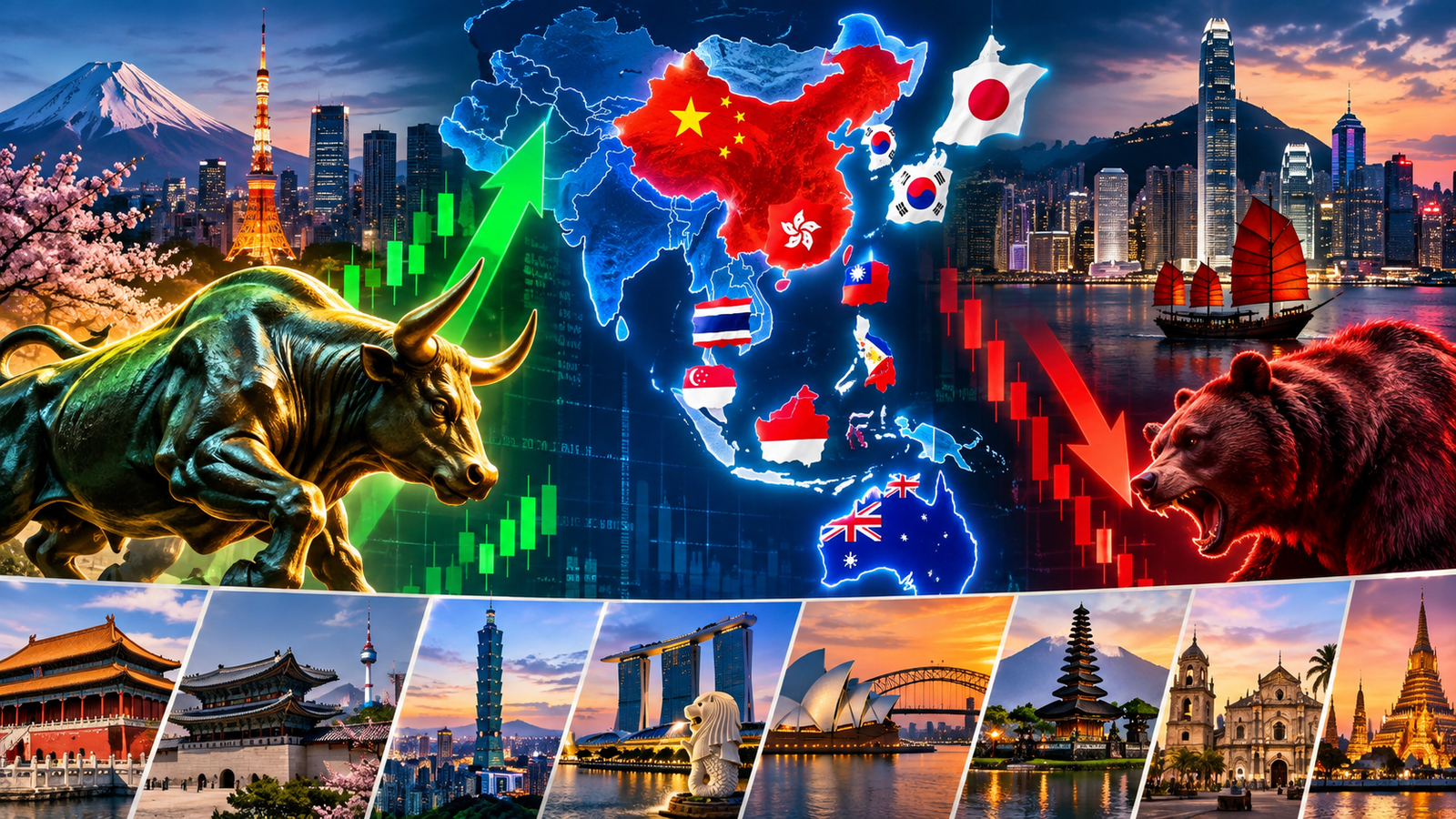
The market response is not uniform. Japan and Taiwan have shown strong equity performance, while Hong Kong and China face more pressure. Korea began with a strong gain but later moved close to flat. Singapore showed a clear difference between banks and REITs.
| Market | Key reported level or move | Main factor |
|---|---|---|
| Japan | Nikkei 64,548.75, +1.0% | Weak yen, oil relief |
| Hong Kong | Hang Seng opened -0.94% | Higher rates |
| China | CSI 300 lower | US rates, dollar |
| South Korea | KOSPI 6,723.23, +0.08% | Fed impact, chips |
| Taiwan | TAIEX above 46,700 early | AI and chips |
| Singapore | STI +0.4% early | Banks, rates |
| Australia | ASX 200 8,716, +0.2% | Banks, health |
| Indonesia | Rebound up to 1.2% | Recovery after selloff |
| Philippines | PSEi 5,916.94, -1.51% | Growth, peso, oil |
| Thailand | SET 1,562.73, -1.01% prior session | Rates, oil, growth |
The larger market picture
The most important fact for Asian investors today is the change in the US interest-rate cycle. The Fed raised its rate to 3.75%–4.00%, and markets now have to assess whether this is the start of a longer period of tighter policy. Reuters reported that markets had priced another hike by December.
The dollar has already reacted. A stronger dollar can create pressure for Asian currencies, especially where countries have large dollar liabilities or high energy-import costs.
Oil remains the second major factor. Brent crude was near $105.05 per barrel on September 17 after a modest decline. A sustained rise in oil would create more inflation pressure across energy-importing economies. A further fall would provide some relief.
Japan has an additional issue because the BOJ decision is due on Friday. The yen’s move toward ¥156 per dollar has made that decision more important for currency markets.
Taiwan and South Korea have a different focus. Their technology markets remain closely tied to AI, semiconductors and memory demand. Strong chip demand can offset some of the pressure from higher global yields.
Singapore shows another side of the story. Banks can respond differently from REITs when interest rates rise. This means sector selection matters even when the wider index gives only a small move.
What matters next
The next major event for Asia is the Bank of Japan policy decision on September 18. The market will focus on the policy rate, the BOJ’s view on inflation and the future path for Japanese rates.
The US dollar, US Treasury yields and crude oil will remain important external signals. Asian investors will also watch whether the early strength in Taiwan and Japan can hold through the full trading session.
For China and Hong Kong, domestic policy support and property-sector conditions remain important alongside global rates. For Korea and Taiwan, semiconductor demand remains central. For Singapore, Australia and Southeast Asia, the effect of rates and energy prices will remain a key part of the market picture.
Overall, September 17 shows an Asian market with different country and sector responses to the same global shock. The Fed rate increase has not produced a single direction across Asia. Instead, the result depends on each economy’s currency, debt structure, export base, energy position and exposure to technology shares. That distinction is important when the data is used for market analysis.
This is a factual market summary, not investment advice. Market prices can change during the session, and the figures above should be read with their stated time reference. The analysis describes possible market mechanisms and does not state that any particular security or market will rise or fall.