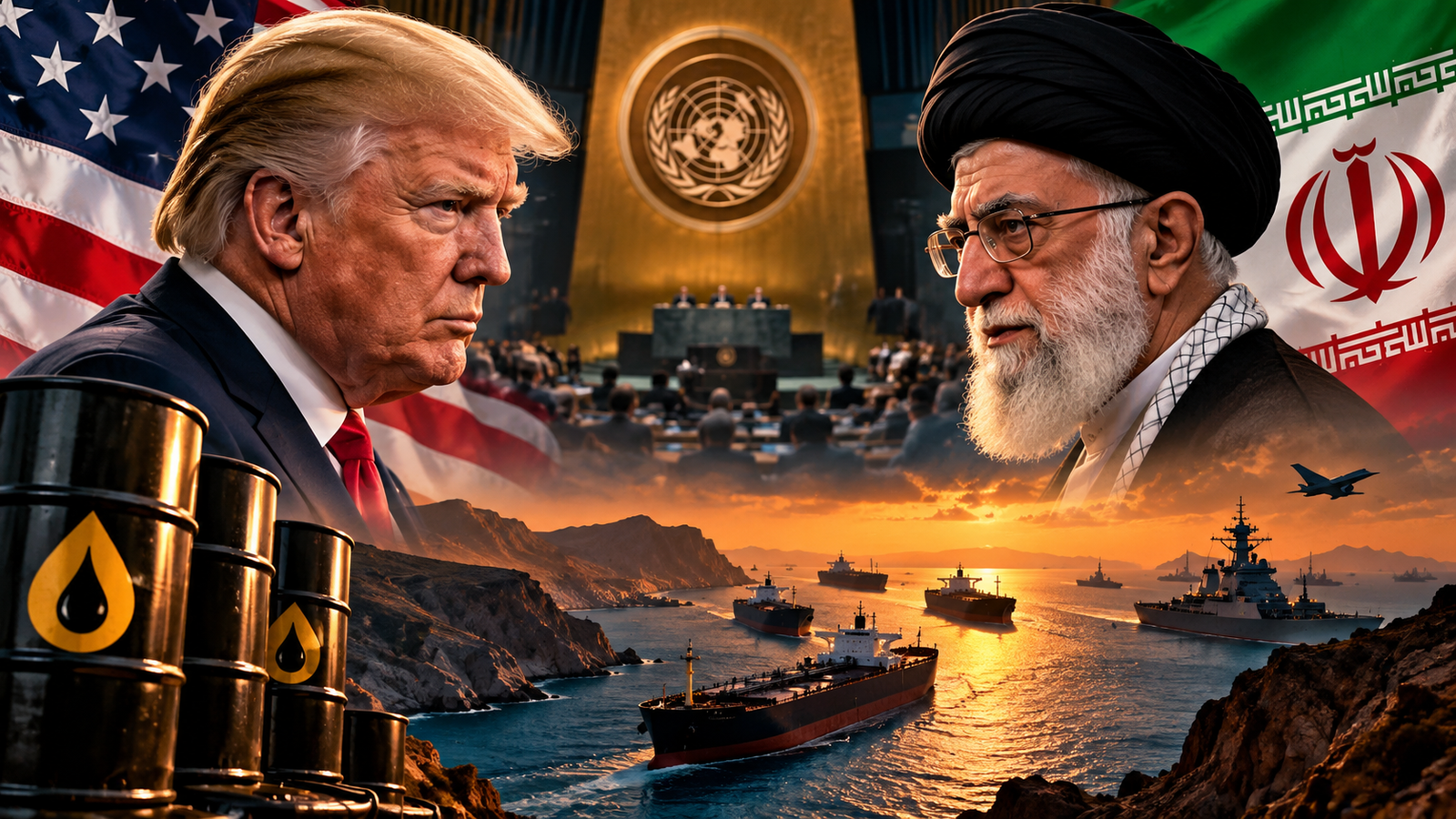
US-Iran tensions remain one of the main forces that shape global markets this week. Oil prices, stock markets and investor mood all react to each new signal from Washington and Tehran. The focus has now moved to the United Nations General Assembly in New York, where US and Iranian officials have held talks through mediators.
The talks have raised some hope of a deal, but there is no clear agreement yet. Iran and the United States still have major differences over the war, sanctions, military pressure and the Strait of Hormuz. As a result, investors remain cautious about the next major move in oil and other assets.
Fresh Talks Bring Some Hope
US and Iranian officials took part in several hours of indirect talks on the sidelines of the UN General Assembly. US special envoy Steve Witkoff said mediators moved between the two sides during the talks. US President Donald Trump later said the talks were very productive and that there was strong momentum toward a possible deal.
The talks were important because direct contact between the two sides had been limited after an earlier ceasefire process broke down. Qatar has played a key role as a mediator. Iranian Foreign Ministry spokesman Esmaeil Baghaei also confirmed that contact took place through Qatari mediation.
However, the talks did not produce a final agreement. Iranian officials also made clear that Tehran had not dropped its main conditions. This means the diplomatic channel is open, but the two sides still face a difficult path before any settlement can take shape.
Strait of Hormuz Is the Main Market Risk
The Strait of Hormuz sits at the centre of the market story. It is one of the world’s most important oil routes. Any long disruption to this waterway can create serious concern about global energy supply.
Iran has said it could reopen the strait within seven days if the United States eases military pressure and lifts its blockade of Iranian ports. Tehran has also set other conditions, such as an end to the war and the release of Iranian assets.
For oil traders, this matters more than diplomatic words alone. A real return of safe oil transport through Hormuz could reduce supply fears. A fresh military clash or a longer closure could have the opposite effect.
Oil Remains Near the $100 Mark
Oil has shown how sensitive markets are to each new US-Iran signal. Brent crude had moved above $100 a barrel as fears about supply grew. On September 21, Brent settled at $100.34 a barrel, after a fall of $3.53, or 3.4%. At the same time, WTI crude fell $4.52, or 4.51%, to $95.78 a barrel.
On September 22, Brent traded near $99.94 a barrel, while WTI stood near $95.43. The price move came as traders assessed fresh diplomatic signals, higher oil flows through Hormuz and comments from the US side about a possible deal.
Then, after reports of the latest US-Iran talks, Brent fell below $100 again. Brent stood at $98.41 a barrel and WTI at $95.21 in early European trade on September 23.
These price moves show the market’s current mood. Traders do not yet see a stable return to normal oil supply. Instead, they react to each new sign of peace or conflict.
Why Oil Prices Matter So Much
A sharp rise in oil prices can affect much more than petrol costs. Oil is a key input for transport, factories, power systems and many other parts of the global economy.
Higher crude prices can raise fuel costs for airlines, shipping firms and road transport companies. They can also raise the cost of goods because companies may pass higher transport and production costs to customers.
Higher energy prices can also create pressure on inflation. If inflation stays high for longer, central banks may have less room to cut interest rates. That can affect bonds, stocks, currencies and business investment.
For this reason, investors are watching the US-Iran conflict as an economic issue as well as a geopolitical one.
Saudi Arabia Adds Another Supply Factor
Saudi Arabia is another major part of the oil story. Recent attacks had affected key energy routes, but Saudi Arabia has started to restore some oil flows.
Saudi Arabia had resumed operations on its East-West Pipeline and had also raised exports through Hormuz. Its exports through the strait averaged 2.9 million barrels per day over six days.
This extra supply has helped reduce some pressure on the oil market. Still, traders remain focused on whether these flows can continue and whether the wider conflict can spread to other energy routes.
The Red Sea Is Also a Concern
Hormuz is not the only major energy route at risk. The Bab al-Mandab Strait, which links the Red Sea with the Indian Ocean, has also faced disruption due to conflict in the region.
The Houthis in Yemen have attacked Saudi energy targets, which has added another layer of risk to the oil market. China has also asked Iran to limit Houthi attacks on Saudi oil facilities.
On September 18, Brent settled at $104.87 a barrel, while WTI settled at $100.30. Those levels showed how quickly oil prices can react when traders fear a wider supply shock.
US and Iran Still Have Major Differences
Despite the latest talks, the gap between Washington and Tehran remains wide. Iran wants an end to the war, a halt to US military action, an end to the naval blockade and the release of frozen Iranian assets.
The US position also has major demands. Trump has said that a deal should address Iran’s nuclear programme and other security concerns raised by Washington.
Both sides have used strong language, which adds to uncertainty. Trump has warned of further military action if there is no agreement, while Iranian officials have said they will defend their position.
That mix of diplomacy and threats makes it hard for markets to settle into a clear direction.
What Investors Will Watch Next
The next major market signal will come from the talks themselves. If the US and Iran make clear progress toward a settlement, traders may expect more oil supply to return to the global market. That could reduce some of the risk premium in crude prices.
If talks fail or military action grows, supply fears could return very fast. In that case, Brent could again face strong pressure above the $100 level.
Investors will also watch the Strait of Hormuz, Saudi oil exports, the Red Sea route and any new sanctions. These factors can affect the actual flow of oil, not just market expectations.
For now, the key message is simple. The US-Iran conflict remains a major source of uncertainty for global markets. The latest talks offer a possible path toward peace, but there is no final deal yet. Oil remains close to $100 a barrel, and the next major move may depend on whether diplomacy can produce a real change in energy flows.
ALSO READ: European Stocks Face Fresh Oil and Inflation Pressure