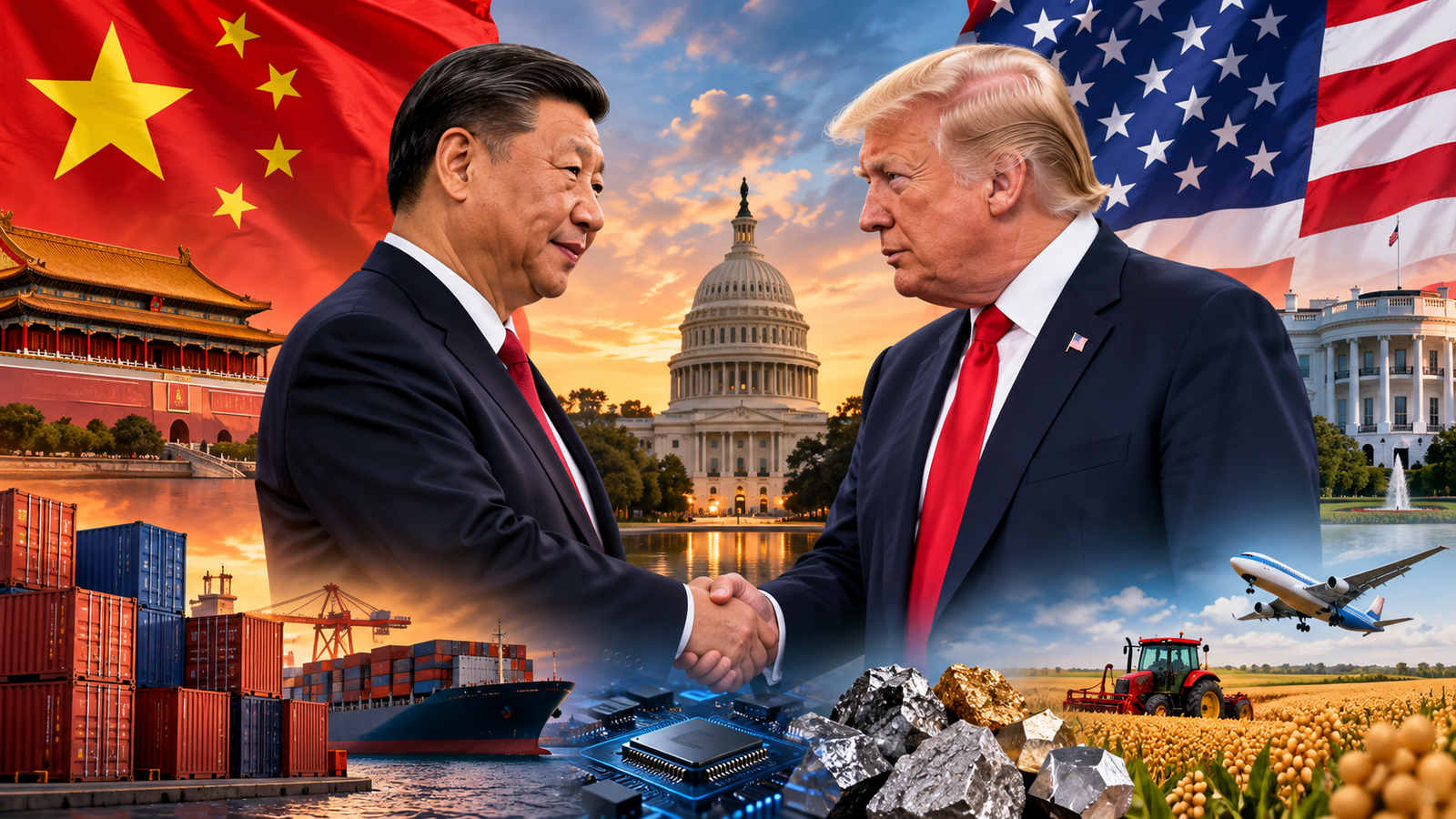
Chinese President Xi Jinping has arrived in the United States for a three-day state visit from September 23 to 25. He will meet US President Donald Trump in Washington on September 24. The visit comes at a key point for relations between the world’s two largest economies.
This is Xi’s first state visit to the United States since 2015. It is also the second face-to-face meeting between Xi and Trump this year. Trump visited China in May 2026, and the latest trip is part of a wider effort by both sides to keep relations stable after years of trade and security disputes.
The visit has a strong diplomatic message. Trump plans to personally greet Xi at Joint Base Andrews near Washington. Xi will then go to the White House for a formal ceremony, talks and a state dinner. The White House programme includes full military honours, with nearly 480 personnel and a flyover by a B-2 bomber and four F-22 fighter jets.
The ceremony shows the importance both countries place on the meeting. But behind the formal welcome are several difficult issues. Trade, tariffs, rare earths, artificial intelligence, agriculture, Taiwan and global security are all part of the wider discussion.
Trade remains at the centre
Trade is one of the biggest issues before Trump and Xi.
The United States and China have had a trade truce that helped reduce some of the pressure between the two sides. That truce is due to expire on November 10. Both countries now have to decide whether to extend it and under what terms.
Before Xi’s arrival, US Treasury Secretary Scott Bessent met Chinese Vice Premier He Lifeng in New York. US Trade Representative Jamieson Greer also took part. The talks covered trade, critical minerals and artificial intelligence.
The two sides also discussed tariff cuts for non-sensitive goods. These could include consumer goods, low-tech products, energy products, farm goods and possibly medical devices. The talks seek to create a more balanced flow of trade between the two countries.
A proposed Board of Trade is also part of the talks. The plan could help both sides put tariff reductions into practice. A May agreement had linked possible tariff reductions to about $30 billion worth of trade.
For companies, the issue is simple: lower tariffs could reduce costs and improve access to the two huge markets. A longer trade truce could also give businesses more certainty about future prices and supply chains.
China’s farm purchases matter to the US
Agriculture is another major part of the talks.
The United States wants China to buy more American farm products. Soybeans, wheat and beef are among the goods under discussion. The US also wants more purchases of aircraft and aircraft engines.
A previous Chinese commitment called for $30 billion of US farm purchases. But the latest estimates suggest China may buy about $21.5 billion, which would fall short of that target.
Boeing is another part of the picture. China had promised to purchase 200 Boeing aircraft, but that commitment has not yet become reality. These numbers show why trade talks are not only about tariffs. They also concern actual orders, exports and access to markets.
Rare earths are a key issue
Rare earths and other critical minerals have become an important part of the US-China relationship.
These materials are vital for many modern products. They have uses in electronics, vehicles, defence equipment and other advanced industries. China has a major role in global rare earth supply.
Washington wants reliable access to these materials. Beijing, meanwhile, wants better access to the US market and less pressure from American trade and technology rules.
Bessent and He discussed rare earths before the Trump-Xi meeting. Their talks show that the issue is not separate from trade. It has become part of the wider economic and security relationship between the two countries.
Artificial intelligence enters the talks
Artificial intelligence is a newer but very important part of the relationship.
The United States and China are the two major powers in advanced AI. Both want strong AI industries, but both also have concerns about national security and the rapid growth of the technology.
During the New York talks, Bessent proposed a system that would allow the two countries to notify each other about major AI incidents linked to national security or safety. The idea is to create more transparency between Washington and Beijing.
AI also links directly to the dispute over advanced computer chips. The United States has placed limits on some technology exports to China because of national security concerns. China objects to many of these restrictions.
The summit may not solve the larger technology dispute. However, even a basic system for communication could help prevent a serious incident from becoming a larger crisis.
Taiwan remains a sensitive issue
Trade and technology may dominate the economic side of the summit, but Taiwan remains one of the most sensitive political issues.
China regards Taiwan as part of its territory and has not ruled out the use of force to achieve reunification. The United States has close ties with Taiwan and has long maintained a policy of strategic ambiguity over how it would respond to a military crisis in the Taiwan Strait.
The two governments have different views on Taiwan, so a major agreement on the issue is not expected. The main concern is whether both sides can avoid steps that raise the risk of a wider confrontation.
Other security issues are also part of the broader relationship. Iran and the global effects of the conflict there have become another point of discussion between Washington and Beijing.
What both leaders want
The United States wants greater stability with China, continued access to rare earths and critical minerals, and more Chinese purchases of American farm products. It also wants progress on aircraft sales and other trade commitments.
China wants a stable economic relationship and continued access to the US market. It is also seeking an extension of the trade truce and better conditions for Chinese exports and investment.
China has sought approval for about $30 billion of low- or zero-tariff exports to the United States, according to analysis from the Center for Strategic and International Studies. Beijing has also shown interest in greater access for Chinese investment in areas such as electric vehicles, batteries and renewable energy.
These goals overlap in some areas but remain far apart in others. That makes the summit important, but it does not mean that the deeper disputes between the two countries have disappeared.
A visit with a bigger message
Xi’s visit is more than a single trade meeting. It is part of a new effort to manage competition between Washington and Beijing.
The two leaders have met several times in a relatively short period. They are also scheduled to meet again in November at the APEC leaders’ meeting in Shenzhen, China, and at the G20 summit in December, which will take place at the Trump National Doral Miami golf resort in Florida.
For businesses and financial markets, the immediate areas to watch are tariffs, rare earth supplies, farm purchases, aircraft orders and technology rules.
For the wider world, the key question is whether regular talks can keep disagreements under control.
What comes next
The September 24 meeting may produce new trade commitments, more talks on AI and a decision on the future of the trade truce. But the larger US-China rivalry will remain.
Both countries still compete in technology, manufacturing, trade and national security. Taiwan remains a major source of tension. The dispute over advanced chips and other strategic technology also remains unresolved.
The state visit can create a more stable channel between the two governments, but long-term relations will depend on what comes after the ceremony. The real test will be whether the commitments made by Trump and Xi turn into actual trade, investment and security measures.
For now, Xi’s return to Washington marks a major moment in China-US relations. The two sides have moved from a period of sharp trade pressure toward a more managed form of competition. The coming months will show how far that shift can go.
ALSO READ: Wall Street Ends Lower as S&P 500, Nasdaq and Dow Fall