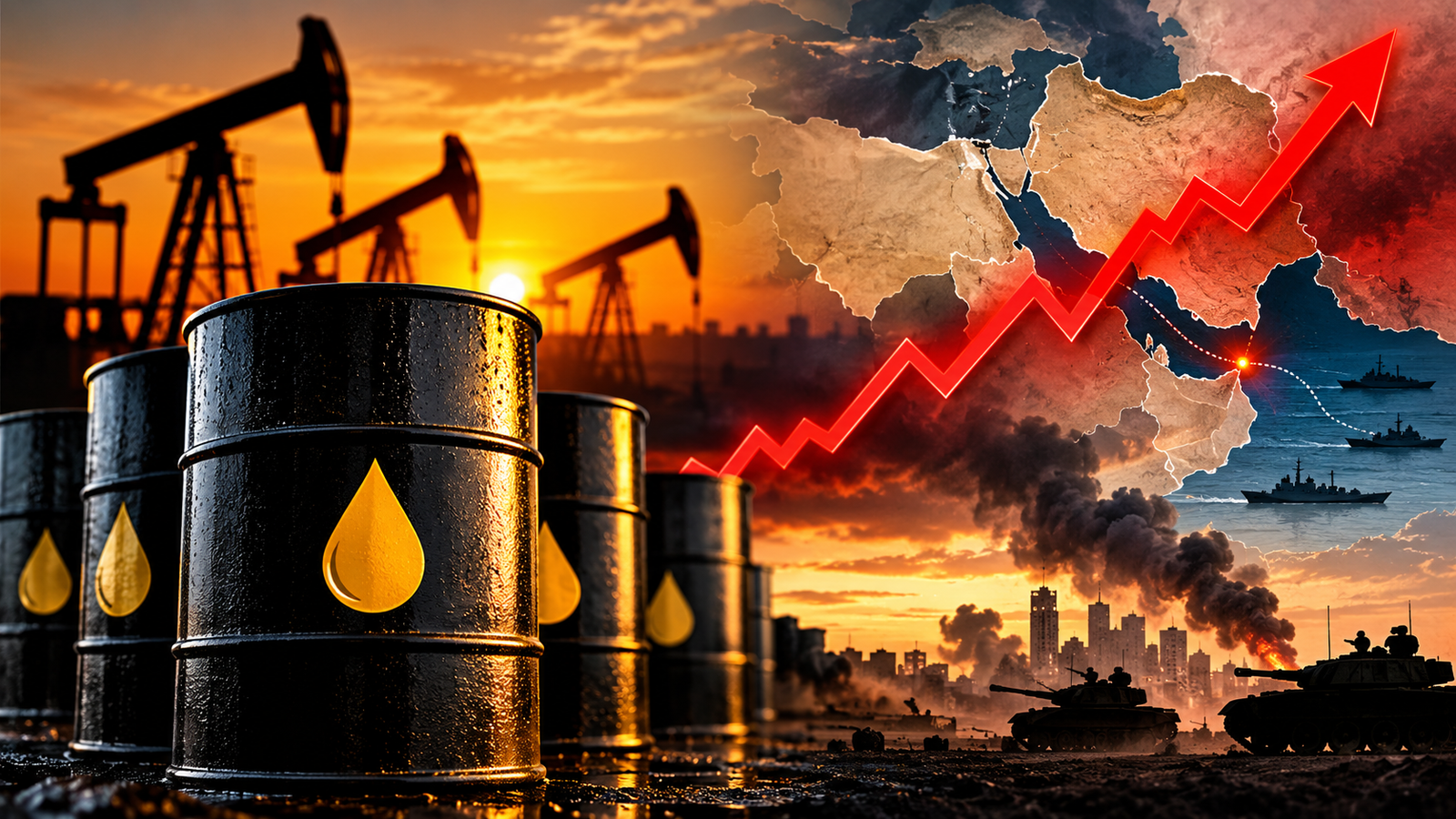
Oil remains a major concern for the global economy. Brent crude, the main international oil benchmark, remains around $104 a barrel in the latest market data. This keeps energy costs high and places fresh pressure on the global economic outlook.
The rise in oil prices comes at a time when markets are already focused on inflation and interest rates. Investors, companies and policymakers are watching crude prices closely because a long period of expensive oil can affect many parts of the economy.
The concern is simple. Higher oil prices can raise fuel costs, transport expenses and production costs. If these higher costs spread across the economy, inflation can stay above central bank targets for longer.
Middle East Risks Add to Oil Pressure
Developments in the Middle East remain a major reason for concern in the oil market. The region plays a central role in global energy supply, so any threat to production or transport can quickly affect crude prices.
The Strait of Hormuz is especially important. A large amount of the world’s oil trade passes through this narrow waterway. Any serious disruption there could create a major supply problem for global markets.
Oil prices have already shown how sensitive they are to news from the region. Brent moved above $100 a barrel as fears about supply problems grew. At one point, prices moved above $107 a barrel before later easing.
The market has also seen periods of relief when supply concerns became less severe. On September 21, Brent fell to $100.34 a barrel as some supply worries eased and hopes for talks between the United States and Iran improved.
However, the situation remains uncertain. Any new development that threatens oil supply could quickly push prices higher again.
Higher Oil Can Raise Inflation
Oil has a direct effect on inflation because energy is part of everyday life. When crude prices rise, fuel prices can also rise. This affects petrol, diesel, transport and air travel.
The impact does not stop there. Many businesses depend on fuel to move products and operate equipment. Higher fuel costs can therefore raise the cost of making and delivering goods.
Companies may pass some of these extra costs to customers. This can lead to higher prices for products and services.
A short rise in oil prices may not create a major problem. A long period of high prices is more serious because businesses and consumers have less time to adjust.
Recent economic forecasts have already shown greater inflation risks due to higher energy prices. The longer the energy shock lasts, the greater the chance that higher costs spread into other parts of the economy.
Interest Rates Are Back in Focus
High oil prices also matter for interest rates.
Central banks use interest rates to control inflation. When inflation remains high, they may keep rates high or raise them further. When inflation falls, they may have more room to reduce rates.
The latest rise in energy prices makes this decision more difficult.
The US Federal Reserve raised its benchmark rate by 25 basis points in September, taking its target range to 3.75% to 4%. The policy outlook remains closely tied to inflation and economic conditions.
If oil prices stay high, inflation could take longer to fall. This may reduce the room central banks have for rate cuts.
On the other hand, if oil prices fall and supply conditions improve, inflation pressure could ease. That would give central banks more flexibility.
For this reason, traders are watching oil prices almost as closely as they watch inflation data and central bank decisions.
Bond Markets Also Face Pressure
The oil shock can affect bond markets as well.
When investors expect inflation to remain high, they may expect interest rates to stay higher for longer. This can push government bond yields higher.
Higher bond yields increase borrowing costs for governments and companies. They can also affect mortgages and other forms of credit.
This creates a wider economic effect. Higher oil prices can lead to higher inflation expectations. Higher inflation expectations can affect interest-rate expectations. Higher rates can then increase borrowing costs.
The result can be more pressure on economic growth.
Economic Growth Could Slow
The biggest concern is not only inflation. High oil prices can also hurt economic growth.
When fuel costs rise, households may have less money available for other spending. Businesses can also face higher costs for transport, production and logistics.
If companies cannot fully pass these costs to customers, their profit margins may fall. Some businesses may then delay expansion or reduce investment.
Higher interest rates can add another problem. Loans become more expensive, which can reduce spending by households and businesses.
This creates a difficult situation for policymakers. They may have to deal with high prices at the same time as weaker economic activity.
Diesel and Transport Costs Matter
The impact of high crude prices can become clearer through refined fuel prices.
Diesel is especially important because it is widely used by trucks, farms, construction companies and other businesses. A rise in diesel prices can therefore affect the cost of moving food, raw materials and finished products.
Airlines can also face higher costs when jet fuel prices rise. Airlines may pass some of these costs to passengers through higher ticket prices.
This shows why oil is not just a market issue. Changes in crude prices can eventually affect everyday expenses.
What Markets Will Watch Next
The next stage will depend heavily on developments in the Middle East.
Markets will watch for changes in oil production, shipping routes and regional security. They will also pay close attention to diplomatic efforts that could reduce the risk of further supply problems.
If supply conditions improve, oil prices could come under pressure. If a major disruption occurs, prices could rise again.
The duration of the price increase will also matter. A brief period near $100 a barrel would have a different economic effect from several months at similar or higher levels.
Central banks will also look at whether higher energy costs remain limited to fuel or spread into other areas of the economy.
Why Oil Remains Critical
At around $104 a barrel, Brent crude remains a key factor for global markets. High oil prices can raise inflation, affect interest-rate expectations and create pressure on economic growth.
The main question is no longer just where oil prices are today. The bigger question is how long they remain elevated and whether the current energy shock spreads through the wider economy.
Oil, inflation, interest rates and bond markets are closely connected. A major change in one area can quickly affect the others.
For now, developments in the Middle East remain central to the outlook. As long as supply risks remain high, oil prices will continue to play an important role in the global economy.
ALSO READ: Markets Face a Big Week of Inflation, Jobs and Micron Data