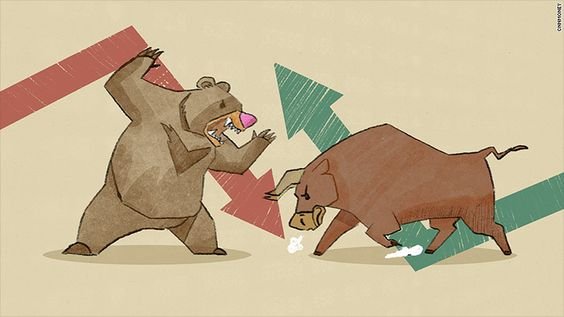
When markets rise for a long time, it is normal to feel nervous. Stock prices may look very high. News reports may talk about high valuations. You may start to wonder if a big fall is close.
At this point, many people make the same mistake. They stop all new investments and wait for a better time. Some even sell their current investments because they fear a market crash.
The problem is simple. Nobody knows exactly when the market will fall. Nobody knows how far it will fall. More importantly, nobody knows when it will rise again.
A market can look expensive for a long time and still move higher. It can also fall soon after you invest. This makes market timing very hard.
So, when markets feel too expensive, you do not have to choose between putting all your money into stocks and keeping all your money in cash. There is a middle path.
The better goal is to build a plan that does not depend on your ability to predict the next market move.
Do Not Confuse High Prices With a Coming Crash
A market can have high prices without an immediate crash. This is one of the most important things to understand.
When prices look high, it may be a sign that future returns could be lower than they were in the past. It does not mean that prices must fall tomorrow, next month, or even next year.
Valuations can help you understand what kind of return you may expect over a long period. They can also help you understand the level of risk in the market. But valuations are not a reliable tool for exact market timing.
Instead of asking, “Is the market going to crash?” it can be better to ask a different question.
Ask yourself, “At today’s prices, what return can I reasonably expect over the next 5–10 years, and how much risk can I handle?”
This question gives you a more useful view. It moves your attention away from short-term fear and toward your long-term plan.
Do Not Stop Your Whole Plan
If you have a regular income and invest every month, you do not need to stop just because the market looks costly.
A regular investment plan can help you deal with uncertain prices. You do not need to guess the perfect day to invest. You can put a set amount into the market at regular times.
This can be useful when prices move up and down. If prices fall, the same amount of money can buy more shares or fund units. If prices rise, your earlier investments can benefit from the higher prices.
This does not mean that regular investing will always give you the best possible return. It simply removes some of the pressure to make one large market call.
The main benefit can also be emotional. You do not have to keep asking yourself whether today is the right day to invest.
What to Do With a Large Amount of Money
The decision can be harder when you already have a large amount of cash.
Suppose you have ₹10 lakh ready to invest. You may feel uncomfortable putting the full ₹10 lakh into the market when prices look high.
One option is to invest the full amount at once. This gives your money more time in the market if prices continue to rise.
Another option is to spread the money across several months. For example, you could put ₹2 lakh into the market now, another ₹2 lakh next month, and another ₹2 lakh the month after. You could continue this process until the full amount is invested.
This approach can reduce the emotional risk of putting all your money into the market just before a major fall.
There is a trade-off, though. If the market keeps rising during those months, part of your money will remain outside the market. That means you may miss some of the rise.
For this reason, you should not keep your money in cash for too long just because you are waiting for the perfect entry point. The perfect entry point is very hard to find.
The right pace depends on your goals, risk level, time horizon, and comfort with market changes.
Think About Your Asset Mix
A strong investment plan does not depend only on stocks.
Your money can sit across different types of assets. These can include equities, bonds, and cash or short-term instruments.
For example, suppose your long-term target is 70% equities, 20% bonds, and 10% cash or short-term instruments.
You can use that mix as your guide even when the stock market looks expensive.
If a strong rise in stocks pushes your equity share from 70% to 80%, you can sell some equities and move the money back toward your target. This process is known as rebalancing.
Rebalancing gives you a simple rule to follow. You do not have to decide whether the market has reached its top. You only have to check whether your portfolio has moved too far away from your chosen mix.
This can make market changes easier to handle.
Why Asset Allocation Matters
Asset allocation is simply the way you divide your money among different assets.
The main idea is that you should not make your whole financial future depend on one part of the market.
Stocks can offer strong long-term growth, but they can also have large falls. Bonds can offer more stability, although their returns may be lower. Cash can protect money that you need soon, but too much cash can reduce long-term growth.
A mix can help balance these different risks.
Your ideal mix is not the same as someone else’s. A person who needs the money soon may need much less exposure to stocks. Someone with a very long time horizon may be able to accept more stock market risk.
The important point is to choose your mix before fear or excitement takes control.
Do Not Buy Something Just Because It Looks Cheap
A market can look expensive while some stocks look cheap. That does not mean every cheap stock is a good investment.
A low price can have a good reason behind it. A company may have weak profits, high debt, poor management, falling demand, or a business model that faces serious problems.
This is why a low price alone is not enough.
You should also look at the quality of the business and its future prospects. A strong company at a fair price may be a better choice than a weak company that looks cheap.
The same idea applies to different parts of the market. You should not move money into an asset only because its recent price looks lower than the rest of the market.
Price matters, but quality matters too.
Let Your Time Horizon Guide You
The amount of time you have before you need your money should have a major effect on your investment choices.
If you need the money in less than 3 years, capital protection should usually be a major concern. A large stock market fall at the wrong time could create a serious problem.
If your time horizon is 3–7 years, you may want a more balanced mix. Taking too much equity risk may not suit money that you will need within a few years.
If you have 7–15 years, a meaningful amount of equity exposure can make sense for many investors. You have more time to deal with market falls.
If you have 15 years or more, short-term market timing becomes much less important. A long time horizon gives you more room to handle periods of weak markets.
This does not mean that stocks are safe over every period. They are not. It means that a long time horizon can give you more time to recover from temporary declines.
Keep Cash for a Clear Reason
Cash has an important place in a financial plan.
You may need cash for an emergency fund. You may have a known expense in the near future. You may also keep some cash as part of a clear rebalancing plan.
The problem starts when cash has no real purpose except fear.
If your only reason for holding cash is, “I am waiting for the market to feel safe,” you may wait for a very long time.
Markets often do not feel safe when prices offer strong long-term opportunities. After a major fall, fear can be even stronger. Many people then wait for proof that the market has become safe before they invest.
By that time, prices may already have recovered.
Cash should have a job. It should protect money you need soon or support a clear part of your financial plan. It should not simply sit on the side because the market makes you uncomfortable.
Have a Plan for a Market Crash
A market crash can test even a good investment plan.
The best time to decide what you will do during a crash is before the crash happens.
You can create simple rules for different market falls. If the market falls 10%, you may decide to do nothing and continue your regular investments.
If the market falls 20%, you may use your rebalancing plan. If it falls 30%, you may decide to invest a set part of your available cash. If it falls 40%, you can follow the same rules instead of making a decision based on fear.
These numbers are not universal rules. Different people need different plans.
The important part is the discipline behind the plan.
Without clear rules, a falling market can make you feel that the situation is worse than it really is. You may sell after a large fall and then miss the recovery.
A written plan can help you stay calm when the market is not calm.
Do Not Try to Predict Every Move
It is tempting to search for signs that tell you when to buy and when to sell.
You may hear that valuations are too high. Then you may hear that earnings are strong. One expert may expect a crash while another expects another year of growth.
This can make investing feel like a constant prediction game.
But long-term investing does not require you to predict every market move.
You need a portfolio that fits your goals. You need a sensible asset mix. You need enough diversification. You need a time horizon that matches your investments. You also need rules for both good and bad markets.
These things are within your control.
The exact direction of the market next month is not.
A Simple Way to Think About Expensive Markets
When markets look expensive, the first step is not to panic.
Look at your time horizon. Look at your asset allocation. Look at the amount of cash you have. Look at the money you will need in the next few years.
Then decide whether your current portfolio still matches your long-term plan.
If you invest each month, you can continue with your regular plan. If you have a large amount of new money, you can choose between investing it at once and spreading it across several months, based on your risk tolerance and comfort.
If your stock allocation becomes too large after a market rise, rebalancing can bring it back toward your target.
If the market falls, follow the rules you made before the fall.
This approach is much simpler than trying to guess every major turn in the market.
The Main Idea
When markets feel too expensive, you do not need to make a dramatic decision.
You do not need to sell everything. You do not need to move everything into cash. You also do not need to invest every rupee at once if that makes you uncomfortable.
A better approach is to build a plan that can work in different market conditions.
For long-term money, a mix of equities and bonds can provide a useful balance. Regular investments can reduce the pressure to find the perfect time to buy. A clear asset allocation can help you control risk. Rebalancing can help you return to your target after large market moves.
Your cash should have a clear purpose. Your investment choices should match the time before you need the money. And your plan should include what you will do during a large market fall.
The goal is not to find the perfect moment to buy.
The goal is to build a portfolio that can handle being early, being late, and being wrong.
Markets will rise. Markets will fall. Sometimes they will stay expensive for much longer than expected. At other times, they will fall much faster than expected.
You cannot control those moves.
What you can control is how much risk you take, where your money goes, how long you plan to stay invested, and what you do when the market becomes difficult.
That is what makes a strong investment plan useful. It does not need you to predict the future. It only needs you to follow a sensible process through different market conditions.
ALSO READ: SIP Does Not Remove Theme Risk