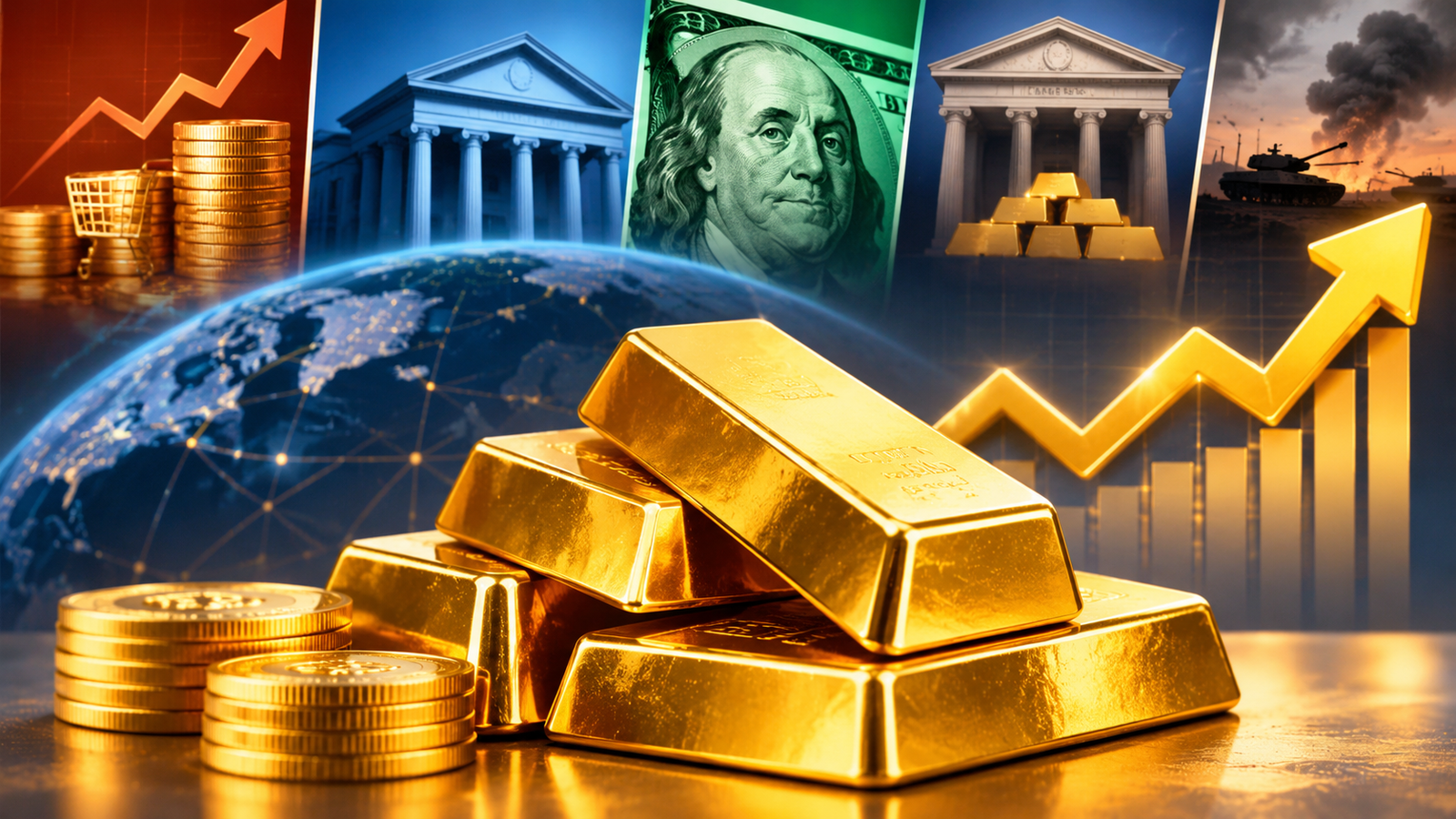
Gold has been a popular investment for many years. People buy it to protect their money, save for the future and reduce the risk of a loss in their wealth. Unlike stocks or bonds, gold does not pay interest or offer a fixed return. Its value depends on what buyers are ready to pay for it.
But gold prices do not rise just because people want to buy more of it. Several factors affect its value. Inflation, interest rates, the US dollar, central bank demand and global events all play an important role. If you understand these factors, you can make better choices before you invest in gold.
1. Inflation and the Value of Money
Inflation is one of the main reasons why people buy gold. It refers to a rise in the prices of goods and services over time. When inflation rises, the same amount of money buys fewer things than before.
For example, if the price of food, fuel and other daily needs goes up, people may worry about the value of their savings. Gold often becomes an option because many people see it as a way to protect their wealth.
However, gold prices do not always rise when inflation goes up. Other factors, such as interest rates and the strength of the US dollar, also affect its price. So, investors should not depend on inflation alone when they make a decision.
2. Interest Rates and Gold Prices
Interest rates have a strong effect on gold prices. Central banks, such as the US Federal Reserve, change rates to control inflation and support the economy.
Gold does not pay interest. This means that when bank deposits and government bonds offer higher returns, some investors may choose them instead of gold.
On the other hand, when interest rates fall, gold may become more attractive. Investors may look for other ways to protect or grow their wealth.
For this reason, changes in interest rates can affect demand for gold. It is also important to watch what central banks say about future rate changes, as these comments can affect market views.
3. The US Dollar and Its Effect on Gold
Gold prices around the world are usually set in US dollars. This makes the value of the dollar an important factor in the gold market.
When the US dollar becomes stronger, gold may become more costly for buyers who use other currencies. As a result, demand may fall, which can put pressure on gold prices.
When the dollar becomes weaker, gold may become cheaper for buyers in other countries. This can support demand and help prices rise.
For Indian investors, the rupee also matters. Even if the global price of gold stays the same, a weaker rupee against the US dollar can make gold more costly in India. This is why local gold prices may change even when global prices show little movement.
4. Central Banks and Their Gold Reserves
Central banks are major buyers and holders of gold. They keep gold as part of their national reserves along with foreign currencies and other assets.
Gold gives central banks another way to protect their reserves. It does not depend on the financial system of one country, which makes it useful during times of uncertainty.
When central banks buy large amounts of gold, demand in the market can rise. This may support gold prices over time.
Their decisions also send a message to other investors. When many central banks add gold to their reserves, it can increase trust in gold as a long-term store of value.
5. War and Global Uncertainty
Gold is often called a safe-haven asset. This means that people may turn to it when they feel worried about the economy or world events.
Wars, political tension, trade disputes and major financial problems can create fear in the markets. During such times, some investors move their money from risky assets to gold.
This rise in demand can push gold prices higher. However, this does not happen every time. Market conditions, interest rates and currency changes can affect the final result.
It is also worth note that gold prices can fall even during a crisis if investors need cash or choose other safe assets.
6. Supply and Demand in the Gold Market
Like other goods, gold prices depend on supply and demand. When demand is higher than the available supply, prices may rise. When supply is high and demand is weak, prices may fall.
Gold comes from mines, recycled jewellery and other sources. New gold mine supply does not change very quickly because it takes time, money and effort to find and develop new mines.
Demand comes from several areas. Jewellery makers, technology companies, investors and central banks all buy gold for different reasons.
For example, jewellery demand may rise during festivals and wedding seasons in countries such as India. At the same time, investment demand may rise when people worry about the economy. These changes can affect the market price.
7. Different Ways to Invest in Gold
There are several ways to invest in gold. Each option has its own benefits and risks.
Physical gold is one of the most common choices. People buy gold coins, bars and jewellery. It gives investors direct ownership, but they must think about storage, safety and extra costs. Jewellery may also have making charges and resale deductions.
Gold ETFs are another option. These funds track the price of gold and trade on stock exchanges. Investors can buy and sell them through a stock market account. They do not need to store physical gold at home, but fund fees and market risks still apply.
Sovereign Gold Bonds were also a popular option in India. These government-backed bonds offered returns linked to the price of gold, along with a fixed interest rate. However, fresh issues are subject to government decisions, and investors should check the current rules and available options before they invest.
8. The Risks of Gold Investment
Gold can help protect wealth, but it is not free from risk. Its price can rise and fall due to changes in interest rates, currency values and market demand.
It also does not provide regular income like a bond or a fixed deposit. Investors earn a return only if they sell their gold at a price higher than their total cost.
Another risk is the cost of physical gold. Storage, insurance, making charges and resale deductions can reduce the final profit.
Investors should also avoid the idea that gold prices will always rise. There can be long periods when gold gives low or negative returns.
9. How to Make Better Gold Investment Choices
Before you buy gold, be clear about why you want to invest in it. Some people buy gold to protect their wealth, while others want to benefit from a rise in its price.
Do not put all your money into one asset. Gold can form part of a balanced portfolio, but it should not replace every other type of investment.
It is also wise to check interest rates, inflation, the US dollar and global events before you make a decision. These factors can help you understand why gold prices move.
Most importantly, think about your time frame. Gold may suit people who want to hold an asset for several years, but short-term price changes can be hard to predict.
Conclusion
Gold returns depend on several factors, not just market demand. Inflation, interest rates, the US dollar, central bank purchases, global events and mine supply all affect its price.
Gold can play a useful role in a long-term investment plan. It may help protect wealth during uncertain times, but it also has risks and does not offer a guaranteed return.
The best approach is to understand what drives gold prices, choose the right form of investment and avoid quick decisions based on market fear. A clear plan and a balanced portfolio can help investors make better choices over time.
ALSO READ: Index Funds vs Active Funds: Which One Is Right for You?