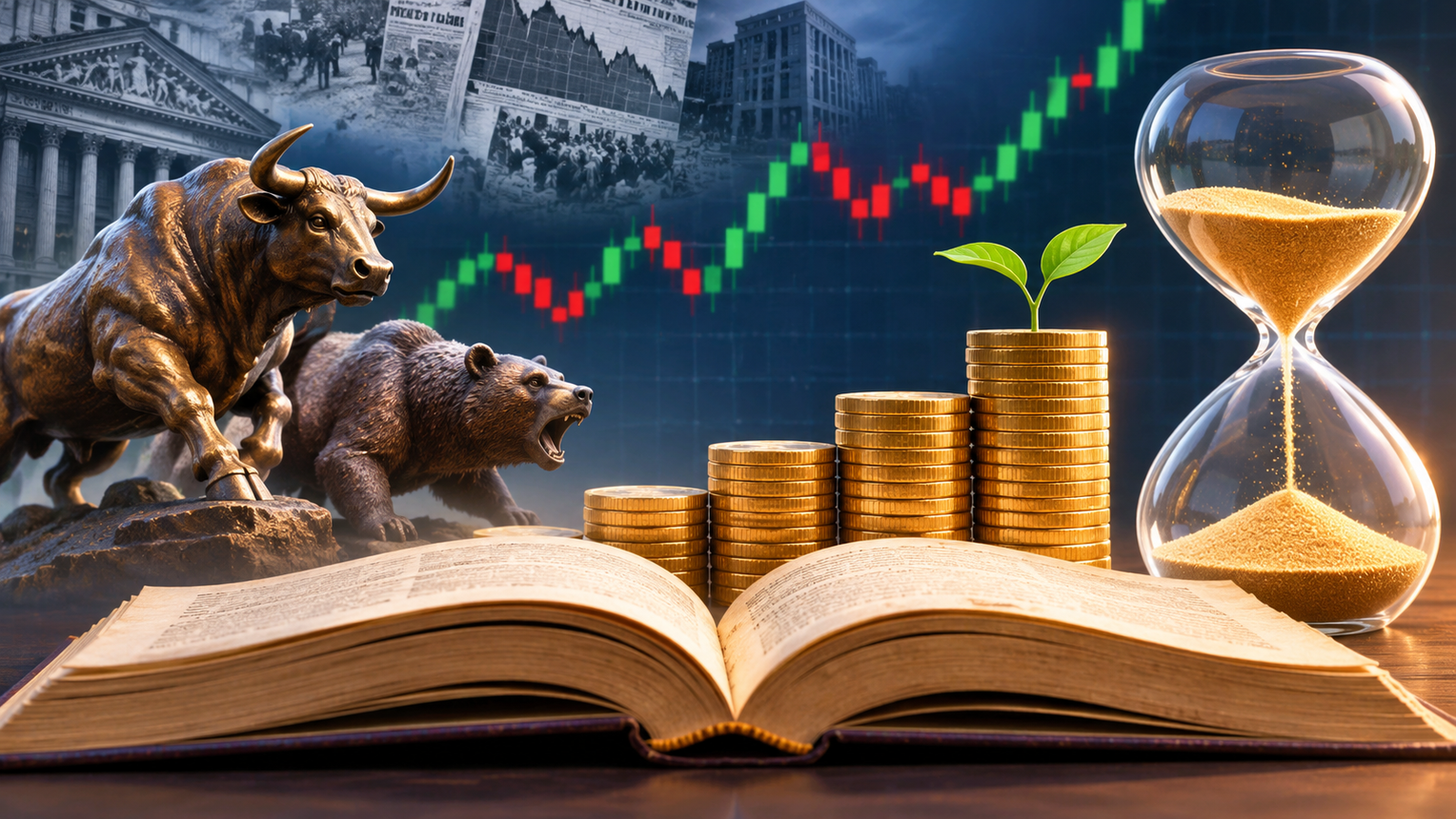
Market history can teach us a lot about money and investing. Over the years, stock markets have seen big rises, sharp falls, financial crises, and major changes. Yet, one thing has stayed the same: human behaviour. People often act out of fear, greed, and excitement when they make money choices.
These actions can lead to poor decisions and heavy losses. By study of past market events, investors can learn how to avoid common mistakes and make better choices. Here are 10 simple lessons from market history that every investor should know.
1. Markets Always Move in Cycles
The stock market does not move in one direction forever. It goes through good and bad times. A bull market is a period when share prices rise, and people feel positive about the future. A bear market is a period when prices fall, and investors become worried.
History shows that both phases are normal. A period of growth can end, and a market fall can be followed by a recovery. No market stays at its peak or bottom forever.
The lesson: Do not assume that prices will rise forever or that a market fall will never end. Stay calm and keep a long-term view.
2. Time in the Market Beats Timing the Market
Many investors try to buy shares at the lowest price and sell them at the highest price. This sounds like a good plan, but it is very hard to do. Even experts cannot predict every market move.
History shows that people who stay invested for long periods often benefit from market growth and compound returns. On the other hand, those who enter and exit the market too often may miss some of its best days.
The lesson: Focus on how long you stay invested rather than trying to predict every rise and fall. Patience can help build wealth over time.
3. Compounding Is the Eighth Wonder of Investing
Compounding is one of the most powerful tools in wealth creation. It means that you earn returns on your original investment as well as on the returns you have already earned.
For example, if you invest money and earn returns, you can add those returns back to your investment. Over time, your money can grow at a faster rate. The longer you allow this process to work, the greater its effect can be.
The lesson: Start early, invest on a regular basis, and give your money enough time to grow. Even small amounts can create good wealth over many years.
4. Valuations Matter More Than Market Excitement
A company may be popular, have a strong brand, and attract a lot of attention. But that does not mean its shares are always worth the price people pay for them.
Market history has shown that very high share prices can lead to poor future returns. During periods of great excitement, investors may pay far more than a company’s actual value. When the excitement fades, prices can fall sharply.
The lesson: Do not buy a share just because everyone talks about it. Study the company’s value and decide whether its share price is fair.
5. Diversification Protects Against the Unexpected
No company or sector is safe from every risk. A successful business can face problems, and even large companies can lose value. History has shown how sudden events and business failures can cause major losses for investors.
Diversification means that you spread your money across different companies, sectors, and asset classes. This helps reduce the effect of a poor result from one investment.
The lesson: Do not put all your money into one company, sector, or type of asset. A balanced portfolio can help protect your wealth from unexpected events.
6. Fear and Greed Are Expensive Emotions
Fear and greed have played a major role in many market events. When share prices rise fast, people often buy more because they fear they will miss a chance to make money. When prices fall, the same people may sell in panic.
The dot-com bubble and the 2008 financial crisis show how strong emotions and poor decisions can cause huge losses. Many investors bought assets at high prices due to excitement and sold them at low prices due to fear.
The lesson: Have a clear investment plan and follow it with discipline. Do not let fear or greed control your money decisions.
7. Cash Flow and Fundamentals Matter
A company may attract a lot of attention in the market, but its real strength depends on its business performance. Share prices can rise due to public interest or market excitement, but these factors may not last.
Over time, a company’s earnings, cash flow, debt, management, and ability to compete become very important. These facts help investors understand whether a business has a strong base.
The lesson: Before you buy a share, study the company’s earnings, debt, cash flow, management quality, and business strength. Do not depend only on market news or public opinion.
8. Market Crashes Create Opportunities for Patient Investors
Market crashes can be stressful. Share prices fall, investors fear further losses, and many people rush to sell their assets. But history also shows that major market falls can create chances to buy good assets at lower prices.
This does not mean every share that falls in value is a good buy. Some companies may have serious business problems. Investors must study each company before they make a choice.
The lesson: Keep enough cash for future needs and possible market opportunities. Do not sell good assets in panic just because prices fall for a short period.
9. Leverage Can Destroy Wealth Quickly
Leverage means the use of borrowed money to make an investment. It can increase profits when the market moves in your favour. But it can also increase losses when prices move in the opposite direction.
Market history has many examples of investors and financial firms that faced huge losses due to excessive debt. In some cases, they lost far more than they could afford.
The lesson: Avoid too much debt when you invest. Do not take large risks just to earn higher returns. Protect your money first.
10. Survival Is More Important Than Extraordinary Returns
Many investors focus only on high returns. They want to find the next multibagger or make quick profits from the market. But successful investing is not about winning every trade or making huge profits in a short time.
It is about making sensible choices, managing risk, and staying financially strong through good and bad market periods. Investors who protect their money can stay in the market for many years and benefit from future opportunities.
The lesson: Focus on long-term wealth creation rather than short-term excitement. Control risk, stay disciplined, and protect your capital.
Final Thoughts
Market history teaches us that no one can predict the future with full accuracy. Prices can rise or fall due to many reasons, and even the best investment plans can face unexpected problems.
The key is to stay patient, understand what you buy, avoid excess risk, and keep your emotions under control. Invest for the long term, pay attention to valuations, diversify your money, and protect your capital.
At the end of the day, a successful investor is not someone who predicts every market move. It is someone who makes sensible choices and stays strong through different market cycles. The goal is not to get rich overnight but to build wealth with time, care, and discipline.
ALSO READ: How FOMO Can Reduce Investment Returns for Investors