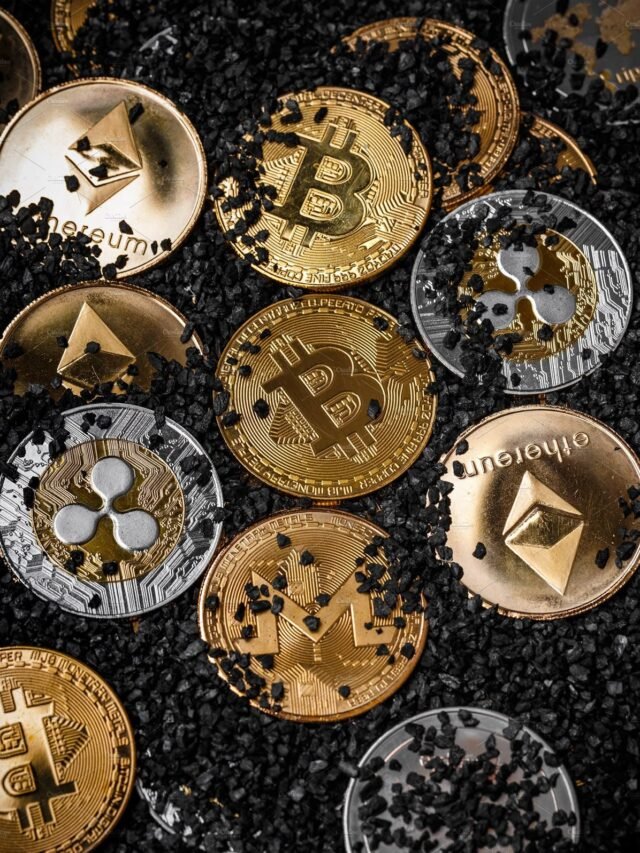
The cryptocurrency market in 2025 has evolved far beyond its speculative early years. What once seemed like a fringe experiment now stands firmly in the crosshairs of global finance. Bitcoin exchange-traded funds (ETFs) opened the floodgates for institutional participation, and Ethereum followed with its own wave of regulated products. But as the market matures, investors are increasingly shifting their attention to infrastructure-level tokens—projects that power blockchain’s real-world utility. Among these, Chainlink (LINK) has emerged as a frontrunner.
This momentum reached a new milestone in December 2025 with news that the first Chainlink-backed ETF in the United States is under active discussion, marking a potential turning point not only for LINK, but for next-generation blockchain infrastructure assets. The move signals that institutions are beginning to recognize the fundamental importance of decentralized oracle networks and the role Chainlink plays in bridging traditional systems with Web3.
However, the excitement is accompanied by uncertainty. The broader crypto market remains volatile, and LINK’s price has faced bearish pressure despite rising institutional interest. This article explores what the Chainlink ETF could mean for investors, why institutions are paying attention now, and what challenges still lie ahead.
Why a Chainlink ETF Matters: Beyond Simple Price Exposure
An ETF, by design, allows investors to gain exposure to an asset without directly owning it. This reduces custody risks, simplifies compliance, and makes the asset accessible to retirement accounts, banks, and regulated investment platforms.
A Chainlink ETF, however, represents something more fundamental:
1. Institutional recognition of utility-focused crypto
While Bitcoin is seen as digital gold and Ethereum as decentralized infrastructure, Chainlink serves as the data backbone of blockchain applications. Its decentralized oracle network feeds off-chain data—like price feeds, weather data, interest rates, and real-world events—into smart contracts.
With more than 1,800 integrations, Chainlink has quietly become one of the most essential projects in blockchain. Institutions considering an ETF shows they are no longer viewing crypto only as currency alternatives, but as components of global digital infrastructure.
2. Increased demand through regulated investment vehicles
If approved, the ETF would enable exposure to LINK without requiring investors to manage wallets or navigate crypto exchanges. Similar to Bitcoin ETFs, this could generate new demand from:
-
wealth managers
-
pension funds
-
hedge funds
-
institutional buyers restricted from holding unregulated digital assets
Chainlink could, for the first time, experience consistent inflows from long-term investors rather than purely speculative demand.
3. Validation of Chainlink’s role in real-world asset (RWA) tokenization
The fastest-growing blockchain trend in 2025 is the tokenization of real-world assets—bonds, real estate, equities, commodities, and even treasury products. Chainlink’s Cross-Chain Interoperability Protocol (CCIP) has become a core infrastructure layer enabling communication and settlement across public and private blockchains.
An ETF built around LINK strengthens the narrative that Chainlink is central to the digital transformation of global finance.
Why Now? Understanding the Timing of Chainlink’s Institutional Shift
Despite the current bearish pressure on LINK’s price, the timing for an ETF discussion is not random. Several macro and industry factors have converged:
1. The regulatory climate is stabilizing
2023–2024 saw aggressive debates over crypto regulation in the U.S. But by late 2025, clearer frameworks emerged around:
-
digital asset classification
-
custody requirements
-
reporting standards for ETFs
-
transparency obligations for oracle providers
This regulatory maturation has allowed ETF issuers to explore assets beyond Bitcoin and Ethereum.
2. Chainlink’s adoption in capital markets accelerated in 2025
Chainlink announced major partnerships throughout 2024 and 2025, including collaborations with:
-
major banks testing tokenized settlements
-
global financial messaging networks
-
insurance providers automating data-driven claims
-
commodity networks tracking supply chain inputs
These real-world integrations moved LINK from “crypto speculation” to enterprise-grade technology.
3. Growing interest in diversified crypto exposure
Institutional investors are shifting from simple BTC/ETH allocation models toward multi-asset crypto strategies. They are drawn to:
-
infrastructure tokens
-
interoperability protocols
-
oracle networks
-
data-layer solutions
Chainlink falls neatly into all of these categories.
Market Reaction: Excitement Meets Bearish Pressure
Ironically, the announcement of discussions around a Chainlink ETF did not lead to an immediate surge in price. Instead, LINK has been constrained by:
1. Broader market volatility
Bitcoin’s pullback from $100,000 to the lower $90,000 range has tightened liquidity across altcoins. LINK, historically sensitive to market cycles, is no exception.
2. Profit-taking after a strong multi-month rally
Chainlink saw significant appreciation earlier in 2025 due to:
-
the launch of CCIP
-
renewed staking demand
-
increased oracle revenue flows
Traders taking profits in uncertain conditions contributed to downward pressure.
3. Market skepticism about ETF approval
Regulators may request:
-
stricter transparency on oracle economics
-
detailed risk assessment of decentralized data feeds
-
clearer disclosures on token utility versus security classification
Until approval becomes more certain, cautious investors are avoiding over-leveraged positions.
What an Approved Chainlink ETF Could Mean for the Market
If the ETF eventually receives approval, the effects could be transformative.
1. LINK could experience sustained institutional inflows
Unlike typical retail-driven rallies, ETF flows are often:
-
systematic
-
consistent
-
long-term
This type of capital could reduce volatility and support a higher price floor.
2. Chainlink’s role in real-world asset tokenization would gain credibility
Institutions would see LINK as a strategic technological investment rather than a speculative asset.
This could attract:
-
enterprise blockchain partners
-
financial institutions experimenting with tokenized systems
-
governments exploring blockchain-based settlement rails
3. Other infrastructure tokens may follow
A successful Chainlink ETF may pave the way for ETFs based on:
-
interoperability protocols like Polkadot or Cosmos
-
data layers like The Graph
-
staking-based systems beyond Ethereum
It could initiate a new phase of utility-token institutionalization.
Risks and Challenges Ahead
Despite its potential, several challenges remain:
-
Regulatory hurdles may delay or block ETF approval.
-
Oracle centralization debates may resurface, requiring Chainlink to increase transparency.
-
Market corrections could suppress LINK even with positive fundamentals.
-
ETF inflows are not guaranteed, especially in a risk-off macro environment.
Chainlink must continue strengthening network security, decentralization, and enterprise adoption to maintain its leadership position.
Conclusion: A Defining Moment for Chainlink and the Broader Crypto Ecosystem
The potential launch of the first Chainlink-backed ETF in the U.S. represents more than a milestone for a single token. It reflects a shift in how traditional finance views blockchain infrastructure. Chainlink is not just another cryptocurrency—it is a critical data and interoperability layer powering the next evolution of digital finance.
If approved, the ETF could introduce new institutional capital, reinforce Chainlink’s central position in the tokenization economy, and broaden the scope of regulated crypto investment products. Even though short-term price action remains bearish, the long-term implications are structurally bullish.
Whether 2025 becomes the breakout year for Chainlink will depend on regulatory progress, market stability, and continued real-world adoption. But one thing is clear: institutional eyes are now firmly on Chainlink, and that attention is unlikely to fade anytime soon.
Also Read – Fake analyst accounts on social media