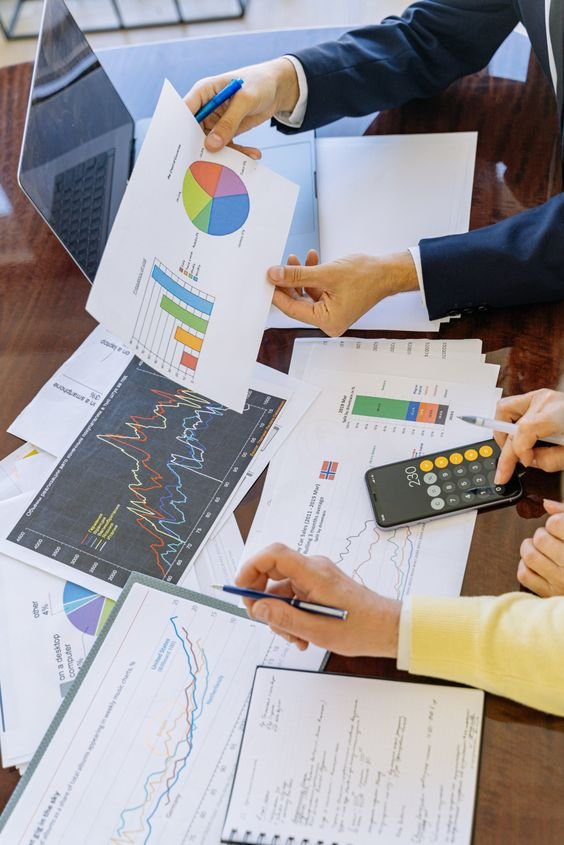
Commodity markets have always been complex. Prices respond to weather, geopolitics, supply disruptions, demand cycles, currency movements, and investor behavior—often all at once. Traditionally, traders relied on experience, intuition, and limited data to interpret these forces.
By 2026, artificial intelligence has fundamentally changed how commodity prices are analyzed. AI algorithms process vast datasets in real time, identify patterns invisible to humans, and adapt continuously as market conditions change. Instead of reacting to price moves, AI increasingly anticipates them.
This article explains how AI algorithms analyze commodity prices, the data they use, the models behind them, and why they are reshaping commodity trading and forecasting.
Why Commodity Markets Are Ideal for AI Analysis
Commodity markets generate massive amounts of structured and unstructured data. Prices are influenced by repeatable patterns, physical constraints, and macroeconomic cycles.
AI excels in environments where:
-
Multiple variables interact simultaneously
-
Historical patterns repeat with variation
-
Data arrives continuously and at high frequency
Because commodities are driven by measurable real-world factors, AI can model them more effectively than purely sentiment-driven assets.
Core Data Inputs Used by AI in Commodity Analysis
AI models rely on diverse data streams. The quality and breadth of data often matter more than the algorithm itself.
Price and Volume Data
Historical and real-time price data form the foundation. AI analyzes:
-
Spot prices
-
Futures curves
-
Volume and open interest
-
Intraday price movements
These inputs help models detect trends, breakouts, and regime changes.
Supply-Side Data
Supply is critical in commodities. AI systems ingest:
-
Production levels
-
Output forecasts
-
Inventory and stockpile data
-
Shipping and logistics information
For energy and metals, even refinery activity and mine output trends are incorporated.
Demand and Consumption Indicators
AI models track demand through:
-
Industrial production data
-
Manufacturing indices
-
Transportation and freight activity
-
Energy consumption patterns
In agriculture, population trends, dietary shifts, and biofuel demand also matter.
Weather and Climate Data
Weather is one of the most powerful commodity price drivers. AI systems process:
-
Temperature and rainfall data
-
Seasonal climate models
-
Extreme weather forecasts
Machine learning identifies how specific weather patterns historically affected prices and applies that knowledge forward.
Macroeconomic and Financial Data
Commodity prices respond strongly to macro conditions. AI integrates:
-
Inflation data
-
Interest rates
-
Currency movements
-
Economic growth indicators
This allows models to adjust expectations as financial conditions shift.
Geopolitical and News Data
Modern AI systems analyze unstructured data such as:
-
News headlines
-
Policy announcements
-
Geopolitical developments
Natural language processing allows algorithms to assess sentiment, urgency, and potential market impact in real time.
Pattern Recognition Through Machine Learning
One of AI’s biggest advantages is pattern recognition. Machine learning algorithms identify relationships that are too complex for manual analysis.
These models do not assume linear relationships. Instead, they learn how variables interact under different market regimes, such as supply shocks or demand booms.
Over time, models improve by learning from both successes and failures.
Time-Series Forecasting Models
Commodity prices are time-series data, making forecasting models essential.
AI uses advanced techniques to:
-
Detect cyclical behavior
-
Identify trend persistence
-
Measure volatility clustering
Unlike traditional statistical models, AI adapts dynamically when patterns change, improving robustness.
Neural Networks and Deep Learning
Neural networks simulate how the human brain processes information, but at far greater scale.
In commodity markets, deep learning models:
-
Combine dozens or hundreds of inputs
-
Capture non-obvious relationships
-
Adjust weights continuously
These models are particularly effective at identifying turning points and regime shifts.
Reinforcement Learning in Commodity Trading
Some AI systems use reinforcement learning, where algorithms learn by interacting with the market environment.
They test strategies, evaluate outcomes, and adjust behavior to maximize long-term rewards rather than short-term accuracy.
This approach is especially useful for trading strategies that require dynamic position sizing and risk management.
Sentiment Analysis and Narrative Detection
Commodities are influenced by narratives such as shortages, supercycles, or energy transitions.
AI uses natural language processing to:
-
Measure sentiment across news and reports
-
Track changes in market narratives
-
Identify hype versus reality
This helps detect speculative excess and early signs of bubble formation.
Futures Curve and Structure Analysis
AI algorithms analyze the shape of futures curves to understand market expectations.
By tracking contango, backwardation, and roll dynamics, models infer:
-
Supply tightness
-
Storage constraints
-
Hedging pressure
These insights help predict near-term price behavior beyond spot movements.
Volatility Modeling and Risk Forecasting
AI does not focus only on price direction. It also forecasts volatility.
By modeling how volatility behaves under different conditions, AI helps traders:
-
Adjust position sizes
-
Set dynamic risk limits
-
Avoid forced liquidations
Risk forecasting is often more valuable than directional accuracy.
Cross-Asset and Correlation Analysis
Commodity prices interact with currencies, equities, and bonds.
AI models track shifting correlations, identifying when relationships strengthen or break down. This improves macro-level positioning and hedging strategies.
Understanding correlation regimes reduces surprise risk.
Detecting Market Regime Changes
One of AI’s most powerful uses is identifying regime shifts, such as transitions from oversupply to shortage.
These shifts often drive the biggest commodity moves. AI detects early signals by monitoring changes across multiple variables simultaneously.
Humans often recognize regime changes only after prices move significantly.
Reducing Emotional Bias in Trading
Human commodity trading is prone to emotional errors: fear, greed, and overconfidence.
AI systems follow predefined logic, reducing emotional decision-making. While models can still fail, they do not panic or chase narratives.
This discipline improves consistency over time.
How AI Differs From Traditional Commodity Analysis
Traditional analysis often relies on:
-
Static models
-
Limited variables
-
Linear assumptions
AI differs by being adaptive, nonlinear, and data-intensive. It updates continuously as new data arrives.
This flexibility is critical in volatile commodity markets.
Limitations of AI in Commodity Markets
Despite its power, AI has limitations.
Models depend on historical data, which may not fully capture unprecedented events. Structural breaks, policy shocks, or extreme geopolitical events can overwhelm models.
AI complements human judgment rather than replacing it entirely.
Data Quality and Model Risk
Poor data leads to poor predictions. Commodity markets often suffer from delayed or revised data.
AI systems require constant validation and monitoring to avoid overfitting or false confidence.
Model risk is a key concern for institutional users.
Explainability and Transparency Challenges
Complex AI models can be difficult to interpret.
Understanding why a model makes a prediction is important for risk management and regulatory oversight. Efforts to improve explainability are ongoing.
Transparency builds trust in AI-driven decisions.
AI and High-Frequency Commodity Trading
AI plays a major role in high-frequency trading, where speed and pattern recognition are critical.
These systems exploit microstructure signals such as order flow and liquidity changes, often operating on very short timeframes.
This activity increases efficiency but can also amplify volatility.
AI for Long-Term Commodity Forecasting
Not all AI applications are short-term. Long-term models focus on:
-
Supply investment cycles
-
Resource depletion
-
Demographic demand trends
These models help investors and policymakers plan years ahead rather than days.
Role of AI in Hedging and Risk Management
Producers and consumers use AI to optimize hedging strategies.
By forecasting price distributions rather than single outcomes, AI helps firms choose better hedge ratios and timing.
This reduces earnings volatility and financial risk.
AI Adoption by Institutions vs Retail Traders
Large institutions lead AI adoption due to access to data, computing power, and expertise.
Retail traders increasingly access simplified AI tools, but institutional systems remain more advanced.
The gap is narrowing but still significant.
Ethical and Market Stability Considerations
Widespread AI use raises concerns about market stability.
If many models respond similarly to signals, feedback loops can amplify price moves. Regulators and exchanges monitor these risks closely.
Responsible AI design is essential.
How AI Is Changing Commodity Market Efficiency
AI improves information processing speed, reducing mispricing.
While this can reduce some inefficiencies, it also creates new forms of volatility as markets react faster to information.
Efficiency does not mean stability.
The Human Role in an AI-Driven Market
Humans remain essential for:
-
Defining objectives
-
Interpreting unusual events
-
Managing risk and governance
AI provides tools, not judgment.
The most successful approaches combine both.
What This Means for Traders and Investors
Understanding AI analysis helps traders:
-
Interpret faster-moving markets
-
Avoid outdated assumptions
-
Focus on strategy rather than prediction
AI changes how markets move, not just how fast.
The Future of AI in Commodity Markets
By 2026 and beyond, AI systems will become more integrated, explainable, and adaptive.
They will incorporate satellite data, real-time logistics tracking, and increasingly sophisticated climate models.
The edge will come from integration, not complexity alone.
Final Thoughts
AI algorithms analyze commodity prices by combining vast data, adaptive learning, and pattern recognition at a scale impossible for humans. They do not eliminate uncertainty, but they reshape how uncertainty is managed.
Commodity markets remain volatile and driven by real-world forces. AI does not change that reality—it helps participants understand it faster and act more consistently.
In the modern commodity market, the question is no longer whether AI will be used, but who uses it best and how responsibly.
ALSO READ: The Offshore Phantom Bond Market