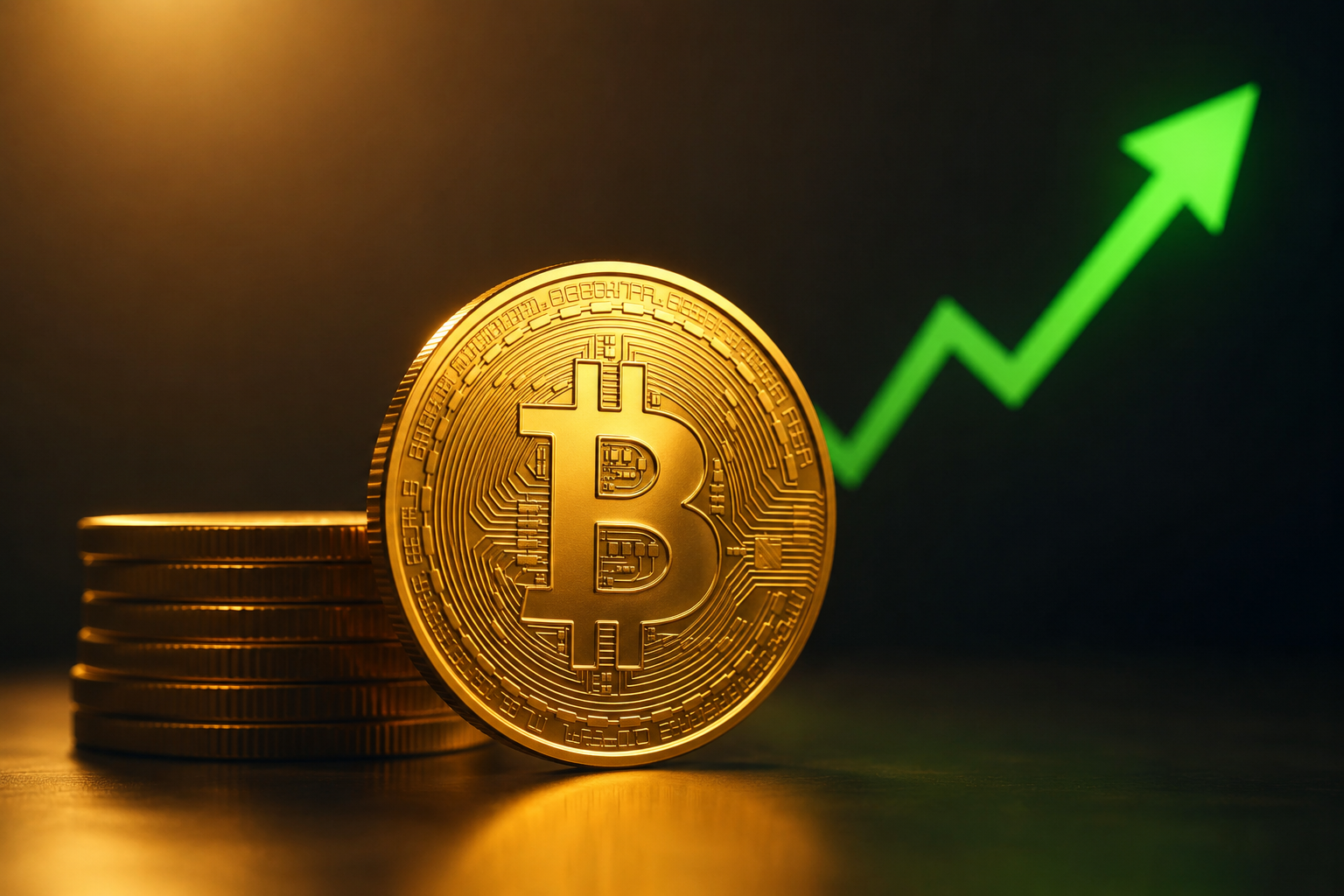
The crypto market stayed calm on May 15, 2026, even after several days of price swings. Bitcoin held close to the important $80,000 level, while Ethereum moved in a smaller range. Many traders now watch market signals very closely because global economic news and new crypto laws may shape the next move.
The total crypto market value stayed between $2.6 trillion and $2.7 trillion. This showed that investors still trusted the market even after recent pressure. Bitcoin also kept a strong share of the total market, with dominance near 60%. This means most investors still prefer Bitcoin over smaller coins.
Experts said the market mood looked careful but positive. Large investors continued to support crypto, but traders avoided very risky positions. Many people waited for stronger signs before making big moves.
Bitcoin Stays Near Key Level
Bitcoin remained the biggest focus in the crypto world. The coin traded between $79,000 and $81,000 during the day. Traders watched the $80,000 mark very carefully because it carried strong emotional and technical value.
Several market experts believed Bitcoin still had support from large investors and spot Bitcoin ETFs. These investment products continued to attract money from institutions and wealthy buyers. This support helped Bitcoin remain stronger than most other digital coins.
At the same time, some traders sold positions after recent gains. This caused short periods of weakness. Leveraged traders also closed risky trades after price swings earlier in the week. Even with this pressure, Bitcoin stayed stable compared to many altcoins.
Many analysts said Bitcoin still looked healthy in the long term. They believed the market structure improved compared to earlier years. Some experts also pointed to stronger adoption from banks and financial firms as a positive sign.
Another important reason behind Bitcoin strength came from political developments in the United States. Investors closely followed talks around the proposed CLARITY Act. Many people hoped the law would create clear rules for crypto companies and investors. A better legal system could help more institutions enter the market in the future.
Ethereum Faces Slower Momentum
Ethereum did not perform as strongly as Bitcoin during this period. The coin traded around $2,250 to $2,300 and failed to show major strength. Analysts from large financial firms said Ethereum still lacked enough momentum to match Bitcoin.
One reason behind this slower movement came from weaker network activity. Some experts said decentralized finance projects no longer grew at the same speed seen in earlier crypto cycles. Trading activity on the Ethereum network also stayed lower than expected.
Despite this slower pace, Ethereum still held strong interest from long-term investors. Many traders believed Ethereum could recover later in 2026 if network use improved again. Developers also continued work on upgrades and scaling systems that may support future growth.
Ethereum remained the second largest cryptocurrency in the world, but current market conditions clearly favored Bitcoin. Investors looked for safety and stability during uncertain periods, and Bitcoin benefited more from that trend.
Altcoins Show Mixed Results
The altcoin market showed selective movement instead of a full rally. Some coins performed very well, while others stayed weak. Traders did not put money into every project at the same time. Instead, they focused only on coins with strong stories or active ecosystems.
Solana stayed among the better performers in the market. The network continued to attract attention because of fast transaction speed and strong user activity. Many traders also remained active in meme coin projects built on Solana.
BNB also performed well compared to many major cryptocurrencies. The coin gained support from steady exchange activity and investor confidence in the Binance ecosystem.
XRP, Chainlink, and Cardano also showed signs of strength. Investors looked at these projects as long-term plays with active communities and growing use cases.
At the same time, traders focused heavily on specific market trends. AI-related crypto projects attracted strong interest because artificial intelligence remained a major global topic. Telegram-linked projects also gained attention after growth in social trading and crypto communities.
Real-world asset projects, often called RWA projects, became another important market theme. These platforms aimed to connect traditional financial assets with blockchain technology. Many investors believed this sector could grow strongly in the coming years.
Meme coins also remained active, though traders treated them with caution. Some short-term investors chased quick profits, while long-term investors preferred safer projects.
Regulation Remains Major Focus
Regulation became one of the biggest stories in the crypto market during May 2026. Investors around the world closely watched the United States because new crypto laws could shape the future of the industry.
The proposed CLARITY Act stayed at the center of attention. Many market participants hoped the bill would create clearer rules for crypto exchanges, token issuers, and blockchain companies. Better regulation could reduce fear among institutional investors and support wider adoption.
Some experts believed unclear rules had slowed growth in parts of the market for years. A stronger legal framework could help major banks, hedge funds, and companies invest more freely in crypto assets.
Asia also saw major developments in the crypto industry. In South Korea, tech giant Kakao agreed to sell a large stake in crypto exchange operator Dunamu to Hana Bank. The deal carried a value near $670 million.
This event showed how traditional financial firms continued to move deeper into digital assets. Banks and financial institutions no longer viewed crypto as a small experiment. Instead, many firms now saw blockchain and digital currencies as part of the future financial system.
Investor Mood Stays Careful but Positive
The overall mood in the crypto market remained balanced. Traders no longer showed panic like earlier bear markets, but they also avoided excessive excitement.
Bitcoin received the strongest support because investors viewed it as the safest major cryptocurrency. Ethereum and altcoins still attracted interest, though traders became more selective with their choices.
Many investors also paid close attention to inflation data and signals from the US Federal Reserve. Interest rate decisions often affected crypto prices because higher rates could reduce investor appetite for risky assets.
ETF flow data also remained important. Strong inflows into Bitcoin ETFs often supported market confidence, while weaker demand could pressure prices.
Market experts said the next few weeks may become very important for crypto. If Bitcoin holds above $80,000 and regulation becomes clearer, the market could see stronger momentum later in 2026.
For now, traders continue to watch carefully as crypto enters another critical phase.
ALSO READ: Best Emerging Markets ETFs for Global Growth