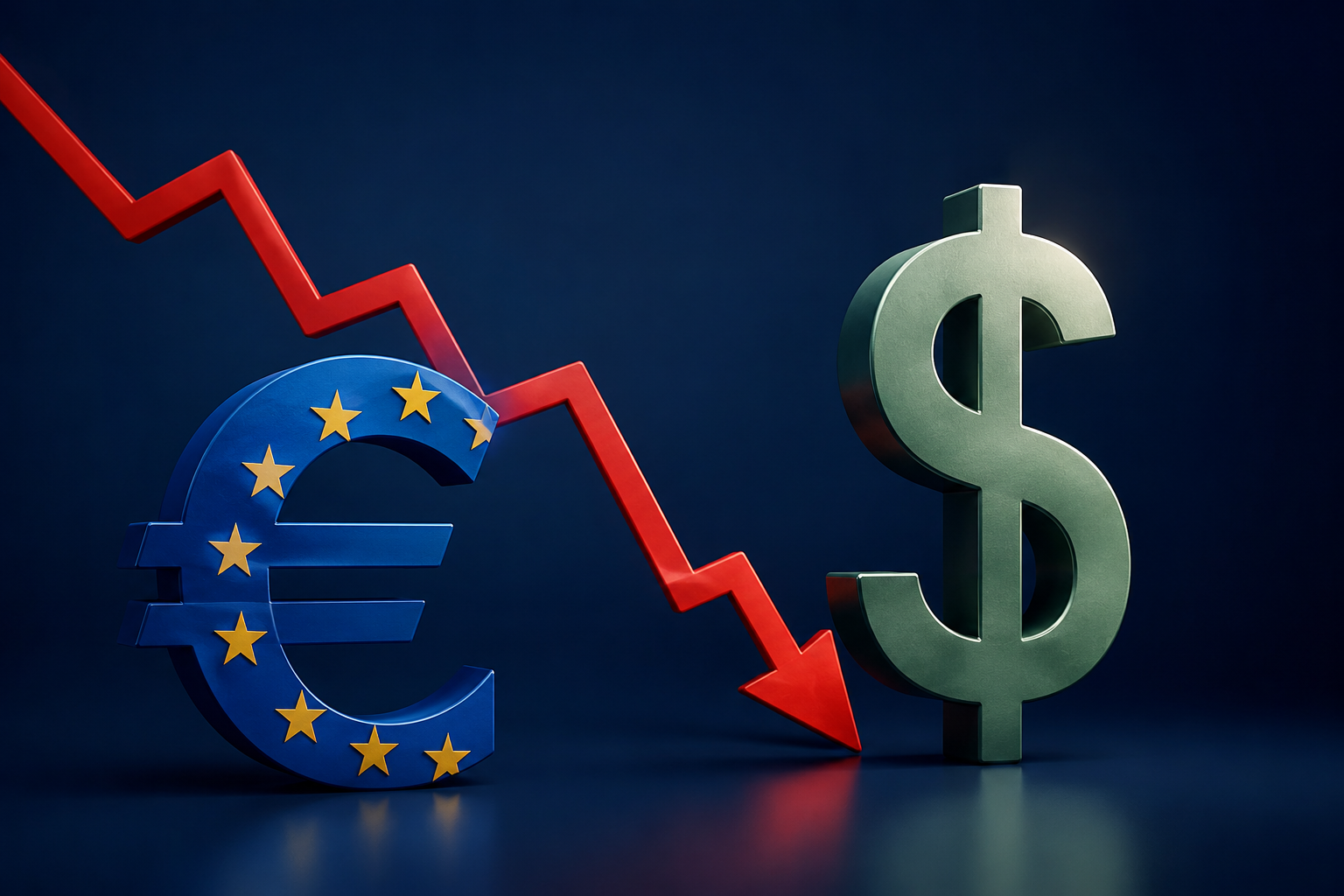
The foreign exchange market saw a major move on June 24, 2026, after the euro dropped sharply against the US dollar. The euro fell near 1.1340, which marked its lowest level in the last twelve months. This sudden fall caught the attention of traders across the world because the euro is one of the most traded currencies in the global forex market.
At the same time, the US dollar became stronger and reached fresh highs against many major currencies. The main reason behind this move came from growing expectations that the US Federal Reserve could raise interest rates again sooner than markets expected. As investors reacted to this possibility, demand for the dollar rose quickly, while the euro came under heavy pressure.
This market move created fresh concern for euro traders and also changed short-term expectations for the EUR/USD currency pair, which now shows a strong bearish trend.
Euro Drops to Its Lowest Point in One Year
The euro traded close to 1.1340 against the US dollar, which became its weakest level in nearly a year. Over the last several months, the euro remained under pressure, but the latest drop showed a much stronger shift in market sentiment.
Currency traders closely watch major support levels because these levels often decide future market direction. When the euro touched this one-year low, many traders saw it as a signal that more weakness could follow in the coming days.
The euro had already struggled earlier this month, but stronger dollar demand pushed the currency even lower and caused fresh selling pressure across the market.
Federal Reserve Rate Hike Expectations Support Dollar
One of the biggest reasons behind the stronger dollar came from changing expectations around the US Federal Reserve, also called the Fed.
The Fed controls monetary policy in the United States. One of its main tools involves interest rates. When rates rise, global investors often move money into dollar-based assets because higher rates usually offer better returns.
On June 24, market data showed that traders now believe the Fed may become more aggressive than expected. Reports suggest there is now about a 36 percent chance of a July rate hike and more than a 70 percent chance of a September rate hike.
As these expectations grew stronger, investors rushed toward the dollar, which caused sharp buying pressure.
This directly pushed the euro lower against the greenback.
Policy Difference Between Europe and America Creates Pressure
Another major factor behind the euro decline came from what experts call policy divergence.
Policy divergence happens when two central banks take different approaches toward interest rates and economic policy.
In this case, the European Central Bank (ECB) and the US Federal Reserve appear to move in opposite directions.
The Fed now appears more prepared to raise rates again if inflation remains high. Meanwhile, the European Central Bank has shown a much softer position.
This difference creates an imbalance in the market.
Investors prefer currencies linked to higher interest rates because those currencies often bring better returns. Since the US currently offers stronger yield potential, many investors have started shifting capital away from the euro and into the dollar.
This gap between the ECB and the Fed became one of the biggest reasons behind the euro weakness.
Strong Dollar Creates Pressure Across Global Markets
The euro was not the only currency affected by the dollar rally.
The US Dollar Index (DXY) rose to 101.69, which became its highest level in nearly thirteen months. This index measures dollar strength against several major world currencies.
As the dollar gained strength, other currencies also showed weakness.
The British pound fell close to 1.319 USD. The Japanese yen weakened toward 161.7 per dollar, which brought fresh concerns about possible intervention from Japanese authorities.
The Australian dollar also moved lower after weaker confidence around future interest rate decisions.
This shows that the dollar rally has become a global market event rather than a move limited only to Europe.
Investors Move Toward Safe Assets
Another important reason behind dollar strength came from rising fear in global financial markets.
A recent technology stock selloff created fresh uncertainty among investors. Large declines in AI and semiconductor stocks pushed many traders into defensive positions.
When markets become uncertain, investors usually move money into safer assets. The US dollar often acts as one of the world’s strongest safe-haven currencies.
As this risk-off sentiment spread across global markets, demand for dollars increased even faster.
This added more downward pressure on the euro.
Why EUR/USD Pair Looks Bearish Right Now
The EUR/USD pair remains one of the most traded currency pairs in the world. It reflects the strength relationship between Europe and the United States.
Right now, market sentiment strongly favors the US dollar.
The euro has already fallen to a one-year low near 1.1340, while expectations around future Fed action continue to support dollar demand.
As long as traders believe the Federal Reserve may raise rates again, the dollar could remain strong.
At the same time, if the European Central Bank does not show a tougher stance, the euro may struggle to recover.
Because of this, analysts currently describe the EUR/USD market outlook as strongly bearish.
What Traders Should Watch Next
The next few weeks could become very important for the forex market.
Traders will closely watch new inflation data from the United States because inflation numbers often influence Federal Reserve decisions.
Any fresh statement from Fed officials could create sharp moves in the dollar.
At the same time, investors will pay close attention to comments from the European Central Bank.
If the ECB signals stronger action ahead, the euro could find some support.
But if current conditions remain unchanged, the euro may continue to stay under pressure against the dollar.
Final Market Outlook
June 24, 2026 became an important day for forex markets after the euro fell near 1.1340, its lowest point in the last year.
The move mainly came from stronger expectations of future Federal Reserve rate hikes, combined with clear policy differences between the ECB and the Fed.
At the same time, global market uncertainty increased demand for safe-haven assets, which gave extra strength to the US dollar.
For now, the market clearly favors the dollar, while the euro faces growing pressure.
Unless economic conditions shift sharply, traders may continue to see weakness in the euro and further bearish momentum in the EUR/USD pair over the short term.
Also Read – Payment Tips for Indians Visiting Thailand, France and Japan