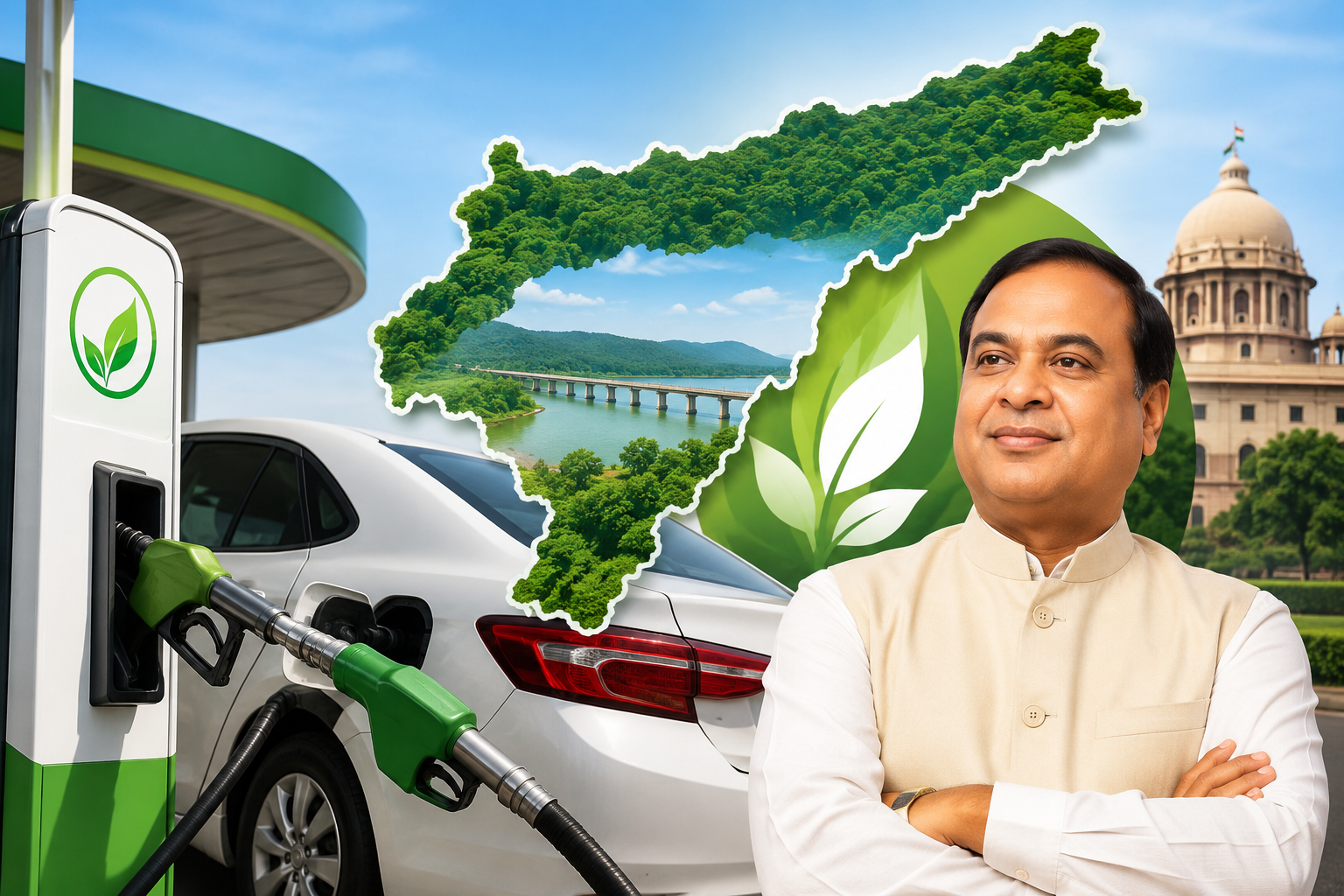
The Assam Government has decided to reduce the Value Added Tax (VAT) on Compressed Natural Gas (CNG) from 14.5% to 5%. This major decision aims to make clean fuel cheaper for people across the state. The new tax rate will remain in effect until March 31, 2027.
The announcement came after a meeting of the Assam Cabinet. The state believes that lower taxes will help more people choose CNG instead of petrol or diesel. Since CNG produces less pollution, the move also supports cleaner air and a healthier environment.
This decision shows that the government wants to balance economic growth with environmental protection. By making CNG more affordable, Assam hopes to encourage a larger shift toward cleaner transport.
Why the Government Reduced VAT
Fuel prices have a direct effect on the daily lives of people. When fuel costs rise, transport expenses also increase. This affects families, businesses, and public transport services.
The Assam Government wants to reduce this burden. A lower VAT means less tax on every unit of CNG. As a result, the final price that consumers pay at CNG stations is expected to fall, although the exact amount may vary because fuel prices also depend on supply costs and other market factors.
The government believes that lower prices will attract more people to use CNG. This can help reduce dependence on petrol and diesel, which usually create more harmful emissions.
What Is CNG?
Compressed Natural Gas, commonly known as CNG, is a cleaner fuel used in cars, buses, taxis, auto-rickshaws, and other vehicles. It comes from natural gas that has been compressed for easy storage and transport.
Many vehicle owners prefer CNG because it usually costs less than petrol or diesel. It also releases fewer harmful gases into the air. This makes it a better choice for both drivers and the environment.
Many cities across India have already expanded the use of CNG. Assam now wants to increase its use by making it more affordable through lower taxes.
How the Tax Cut Can Help Consumers
The reduction in VAT is expected to lower the retail price of CNG. While the exact savings may differ from one place to another, consumers should benefit from lower fuel costs.
People who use CNG every day, such as taxi drivers, auto-rickshaw drivers, and commercial vehicle operators, may see noticeable savings over time. Lower fuel expenses can also help businesses that depend on transport.
Private vehicle owners who already use CNG can also enjoy lower running costs. At the same time, people who plan to buy a new vehicle may find CNG models more attractive because of the lower fuel price.
Better Support for Public Transport
Public transport plays an important role in every state. Many buses and commercial vehicles travel long distances every day. Fuel costs make up a large part of their operating expenses.
A lower CNG price can reduce these costs. This may help transport operators manage their expenses more effectively. Although ticket prices depend on many factors, lower fuel costs can provide financial relief for transport services.
This step can also encourage more transport companies to choose CNG vehicles in the future. Such a shift can benefit both passengers and the environment.
A Cleaner Environment for Assam
Air pollution has become a growing concern in many cities. Vehicles that use petrol and diesel release gases and tiny particles that affect air quality.
CNG produces much lower emissions than conventional fuels. As more people switch to CNG, harmful pollution from vehicles can decrease. Cleaner air can improve public health and create a better environment for future generations.
The Assam Government hopes that lower fuel prices will encourage this positive change. Every additional CNG vehicle on the road has the potential to reduce overall emissions.
Support for Assam’s Clean Energy Goals
The VAT reduction is not an isolated decision. It matches Assam’s broader efforts to expand clean energy use across the state.
Natural gas infrastructure has grown in recent years. City gas distribution networks continue to reach more homes, businesses, and fuel stations. Better infrastructure makes it easier for consumers to access CNG.
As the network expands, more people may consider switching to vehicles that use cleaner fuel. Lower taxes can make that decision even easier.
Economic Benefits Beyond Fuel Savings
Lower fuel prices do more than help individual drivers. They can also support local businesses and the wider economy.
Companies that rely on transport may spend less on fuel. Delivery services, taxi operators, and logistics businesses can reduce operating costs. These savings may improve business performance and support future growth.
Affordable transport can also benefit consumers because lower operating costs may help businesses manage prices more effectively.
While fuel prices depend on several factors, the tax reduction is a positive step that can create financial benefits across different sectors.
Valid Until March 2027
The reduced VAT rate of 5% will remain in effect until March 31, 2027. This gives consumers and businesses a clear period during which they can benefit from the lower tax.
A long-term policy also provides confidence to vehicle buyers and transport operators. People who plan to purchase CNG vehicles can make decisions with greater certainty, knowing that the reduced tax will remain available for several years.
The government may review the policy after March 2027 based on market conditions, fuel demand, and other economic factors.
A Positive Move for the Future
Assam’s decision to reduce VAT on CNG from 14.5% to 5% reflects a strong commitment to cleaner transport and affordable fuel. The policy aims to lower costs for consumers, encourage the use of CNG, reduce pollution, and support the state’s long-term clean energy goals.
Although the exact reduction in retail fuel prices may vary because of market conditions and other pricing factors, the lower tax is expected to provide meaningful relief to many vehicle owners and transport operators.
With the reduced VAT set to remain until March 31, 2027, Assam has created an opportunity for more people to choose cleaner fuel. If more consumers make that switch, the state could see lower emissions, better air quality, and a stronger clean transport network in the years ahead.
ALSO READ: IEA Raises 2026 Oil Supply Forecast, Cuts Demand Outlook