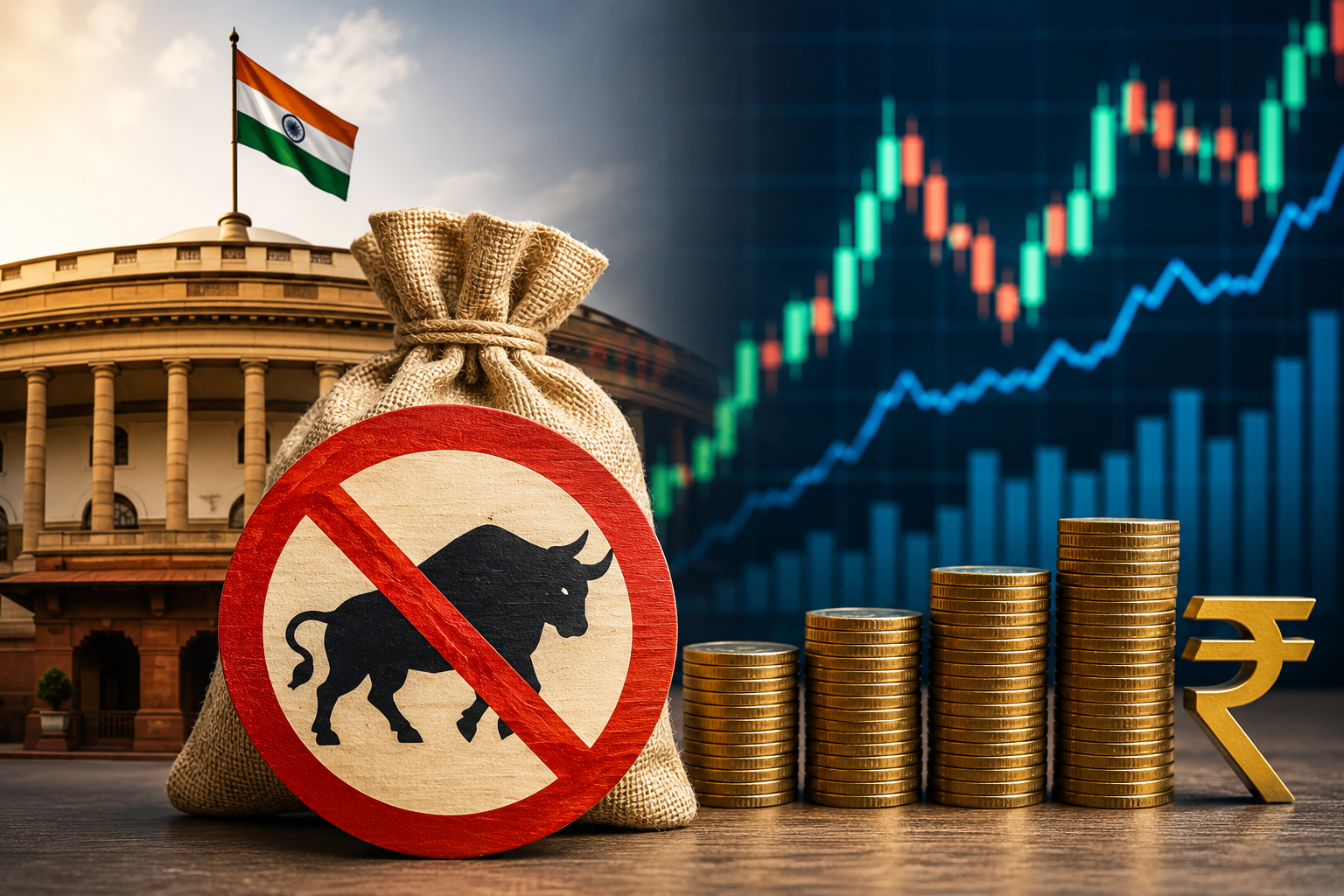
The Government of India has made its position clear on the long-term capital gains (LTCG) tax for equities. It has confirmed that there is no proposal to remove this tax. This statement ends the recent market talk that the government may abolish the LTCG tax on shares.
The announcement has caught the attention of investors, traders, and market experts. Many people hoped that the tax could go away in the future. However, the government has now said that no such plan exists. Along with this update, it also shared the amount of tax collected from LTCG during the last two financial years. The total collection reached Rs 2.01 lakh crore across FY24 and FY25.
Government Gives a Clear Answer
For the last few months, many reports and discussions talked about the future of the LTCG tax on equities. Some investors believed that the government could remove the tax to support the stock market. Others felt that such a step would encourage more people to invest in shares.
The latest statement has now removed all doubts. The government has clearly said that there is no proposal under consideration to abolish the LTCG tax on listed equities. This means the present tax system will continue unless a future policy change takes place.
This clarification also helps stop false reports and market rumours. Investors now have a clear picture of the government’s current stand.
Large Tax Collection Shows Its Importance
The government also released figures that show how much money came from the LTCG tax during FY24 and FY25. The total collection stood at Rs 2.01 lakh crore.
This is a very large amount. It shows that the LTCG tax has become an important source of revenue for the government. Such a strong collection also explains why there is no proposal to remove the tax at this time.
Tax revenue helps the government pay for many public services and development projects. Money collected from different taxes supports spending on roads, railways, education, healthcare, defence, and many other sectors.
The latest figures show that the LTCG tax has made a major contribution to government finances during the last two financial years.
What Is LTCG Tax?
LTCG stands for Long-Term Capital Gains. A capital gain means the profit a person earns after the sale of an investment at a higher price than the purchase price.
In the case of listed equity shares, a gain becomes a long-term capital gain after the investment stays for more than one year before the sale.
At present, long-term capital gains on listed equities attract a tax of 12.5% after the exempt limit. The first Rs 1.25 lakh of eligible long-term gains in a financial year remains tax free. Tax applies only to gains above this limit.
These rules remain the same because the government has confirmed that no proposal exists to abolish the tax.
Current Rules Continue
The latest government statement means investors do not have to expect any immediate change in capital gains taxation.
The current LTCG tax rate on listed equities remains at 12.5% for gains above Rs 1.25 lakh in a financial year.
Short-term capital gains on listed equities also continue under the present tax rules. The short-term capital gains tax rate stands at 20%.
Since no policy change has been announced, investors should continue to follow the existing tax structure while they plan their investments.
Why Investors Wanted the Tax to End
Many investors and market experts have spoken against the LTCG tax in recent years. They believe that a lower tax burden could encourage more investment in the stock market.
Some experts also argue that equity investments already support business growth and economic development. According to this view, lower taxes could attract more retail investors and increase market participation.
Because of these opinions, market rumours about the possible removal of LTCG tax became stronger.
The government’s latest statement has now settled the issue for the time being. There is no official proposal to abolish the tax.
What This Means for Stock Market Investors
The announcement does not introduce any new tax. It also does not increase the present tax rates.
Instead, it simply confirms that the existing system will continue.
For investors, this means financial plans do not need major changes because of this announcement. Anyone who buys and sells listed equities should continue to calculate tax under the current rules.
Long-term investors still receive the benefit of the tax-free limit of Rs 1.25 lakh in a financial year. Gains above that amount attract the applicable LTCG tax.
Investors should also remember that tax rules form only one part of investment decisions. Company performance, business quality, financial goals, and investment period remain equally important.
Government Focuses on Stable Tax Policy
A clear government statement helps remove uncertainty in the financial markets. Investors usually prefer stability because it allows better financial planning.
By confirming that there is no proposal to abolish the LTCG tax, the government has provided clarity on its present tax policy.
This does not stop future governments from making changes later. Tax laws may change through future Budgets or policy decisions. However, as of now, there is no indication that the LTCG tax on equities will disappear.
This clear communication also helps reduce confusion among investors who may have expected a major tax announcement.
Revenue Remains a Key Factor
The collection of Rs 2.01 lakh crore across FY24 and FY25 highlights the importance of this tax.
Such a large amount plays a valuable role in government finances. Revenue from taxes supports many welfare schemes and public projects across the country.
When a tax produces strong collections, governments usually examine its financial impact before any major policy decision.
The latest figures suggest that the LTCG tax has become an important part of India’s tax revenue system.
Investors Should Stay Focused on Long-Term Goals
Tax rules may change from time to time, but successful investment usually depends on patience, careful planning, and disciplined decisions.
Experts often advise investors not to make investment decisions only because of tax expectations. A strong investment plan should match personal financial goals, risk level, and investment period.
The government’s latest clarification means investors should continue with the current tax rules while they review future opportunities in the stock market.
Conclusion
The Government of India has officially confirmed that there is no proposal to abolish the long-term capital gains tax on listed equities. This statement removes recent speculation about a possible tax change and provides clarity for investors.
The government also reported that LTCG tax collections reached Rs 2.01 lakh crore during FY24 and FY25. These figures show the tax has become an important source of revenue for the country.
For now, the existing tax structure remains unchanged. Long-term capital gains on listed equities continue to attract a 12.5% tax on gains above Rs 1.25 lakh in a financial year, while short-term capital gains remain taxable at 20%.
The announcement does not bring any new tax burden. Instead, it confirms that the present rules will continue, which allows investors to plan their finances with greater certainty.
ALSO READ: Iran Seeks US Deal as Strikes Continue and Oil Prices Rise