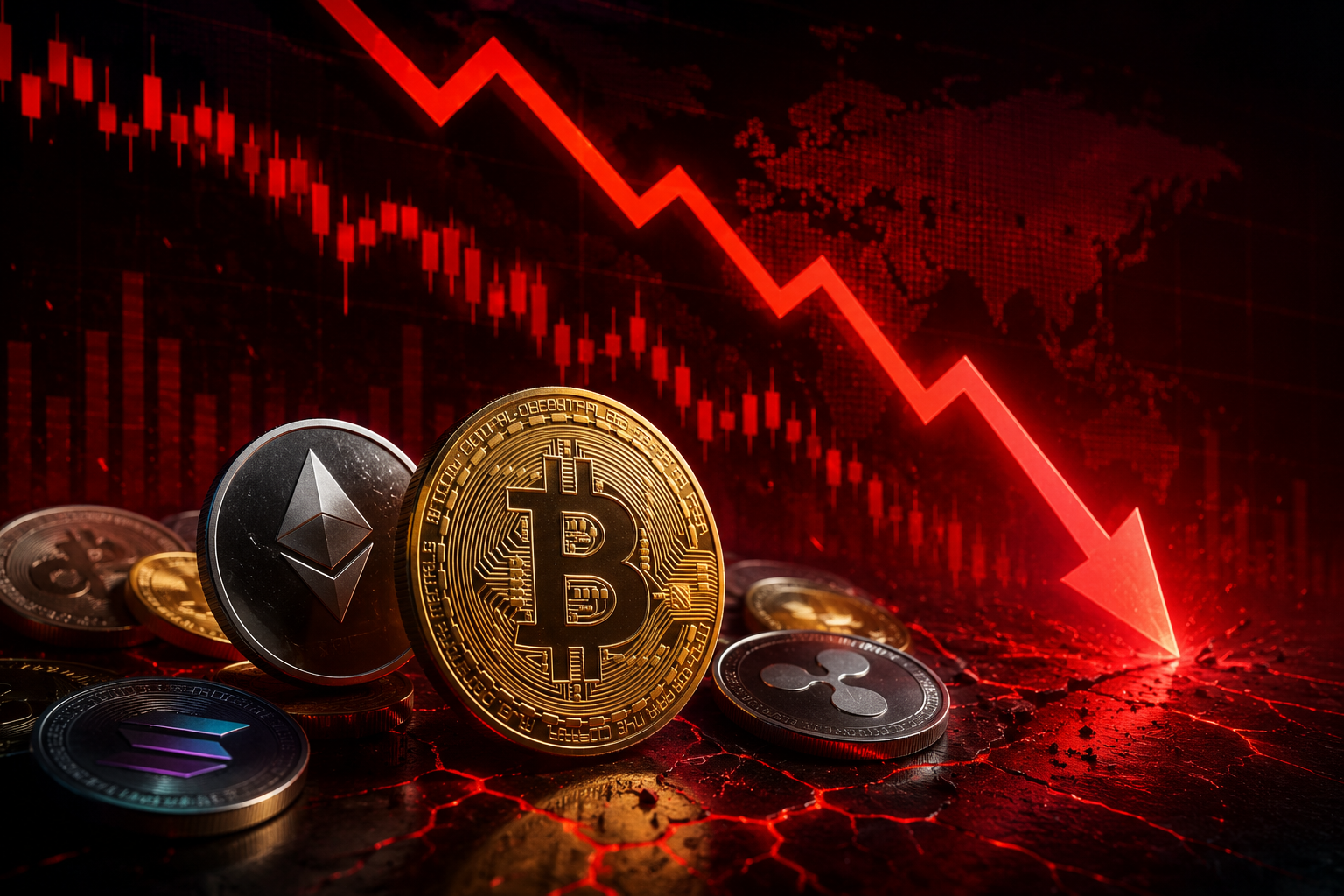
The cryptocurrency market has entered a quiet phase as trading activity continues to fall. New data shows that market liquidity has dropped to one of the lowest levels seen in 2026. This has raised fresh questions about the health of the digital asset market. Investors, traders, and analysts now watch every market move closely as lower activity often leads to higher price swings.
Crypto Trading Activity Reaches a Low Point
The latest market report shows that trading volume across cryptocurrency exchanges has fallen sharply. Spot trading, where people buy and sell digital assets for immediate delivery, has become much weaker than before. This decline places daily trading activity among the lowest levels recorded this year.
Lower trading volume usually means fewer buyers and sellers take part in the market. When this happens, it becomes harder to complete large trades without affecting prices. Even a single large order can move the market more than usual.
Experts believe this slowdown reflects the cautious mood among investors. Many people now prefer to wait instead of making fresh investments. As a result, the market lacks the strong buying and selling activity that often supports healthy price movement.
What Low Liquidity Means for the Crypto Market
Liquidity is one of the most important parts of any financial market. It shows how easily an asset can be bought or sold without a major change in price. High liquidity usually creates a stable market because buyers and sellers remain active throughout the day.
The current situation tells a different story. Liquidity has become much weaker across many cryptocurrencies. This means prices can move quickly even when the total amount of money involved is not very large.
For traders, this creates extra risk. They may pay higher prices while buying or receive lower prices while selling. Price gaps also become more common because there are fewer orders available in the market.
Long-term investors also pay attention to liquidity because it reflects the overall strength of market participation. Weak liquidity often shows that many investors have decided to stay on the sidelines until conditions improve.
Major Exchanges Hold Most of the Market
Another important part of the latest report focuses on the role of centralized exchanges. The six largest centralized exchanges now handle more than 60 percent of all spot trading activity.
This means that most crypto trades now take place on only a handful of platforms. Smaller exchanges continue to lose market share as users move toward larger companies that offer deeper markets and higher trust.
Large exchanges usually provide better security, stronger infrastructure, and faster trade execution. These features attract both retail and institutional investors.
However, this trend also shows that the market has become more concentrated. A small number of companies now play a much bigger role in daily cryptocurrency trading than before. Their performance and stability could have a greater impact on the overall market.
Why Investors Have Become More Careful
Several factors have encouraged investors to adopt a cautious approach. Many people remain uncertain about the direction of the global economy. Interest rate decisions, inflation data, and government policies continue to influence financial markets around the world.
The crypto sector also faces regulatory discussions in several countries. New rules could affect exchanges, investment products, and digital asset companies. Until there is more clarity, some investors prefer to wait before making major decisions.
Price volatility has also added to the cautious mood. Although cryptocurrencies often experience large price changes, many investors now look for stronger signs of market stability before they increase their exposure.
This careful approach has reduced overall market participation and contributed to lower trading activity.
Lower Volume Can Lead to Bigger Price Swings
Many people believe that lower trading volume automatically means a quiet market. In reality, the opposite can happen. A market with weak liquidity often experiences sharper price changes because there are fewer active orders.
When a large investor enters the market with a major buy or sell order, prices can move much faster than expected. This creates sudden gains or losses within a short period.
Such conditions also increase uncertainty for traders. Technical analysis becomes less reliable because small trades may have a greater effect on market prices.
This is one reason why professional investors continue to monitor liquidity data alongside price charts. It provides another way to measure market strength beyond simple price movements.
What This Means for the Crypto Industry
The current slowdown does not necessarily signal a long-term decline for cryptocurrencies. Financial markets often move through periods of high activity followed by quieter phases.
Many experts believe the crypto market may recover once investor confidence improves. Better economic conditions, clearer regulations, and stronger institutional participation could help increase trading activity again.
The concentration of trading on major exchanges may also continue if users keep choosing platforms with larger trading volumes and better services. At the same time, smaller exchanges may need to improve their products to remain competitive.
For now, market participants continue to watch daily trading data closely because it offers valuable insight into investor confidence and overall market health.
Outlook for the Months Ahead
The cryptocurrency market remains in a waiting phase. Trading activity has fallen to one of the lowest levels of 2026, while liquidity continues to weaken across many digital assets. At the same time, the six largest centralized exchanges now account for more than 60 percent of all spot trading activity, highlighting the growing concentration of the market.
Investors now look for signs that could bring fresh momentum. Economic developments, regulatory decisions, and broader market confidence will likely shape the next chapter for cryptocurrencies.
Until stronger participation returns, the market may continue to experience lower liquidity and occasional sharp price movements. Even so, many analysts believe these quieter periods are a normal part of market cycles. The coming months will reveal whether fresh capital and renewed investor confidence can help restore stronger trading activity across the crypto ecosystem.
Also Read – VRL Logistics Posts Record Q1 Profit, Announces ₹2,800 Cr Buyback