Bitcoin began as a bold idea. It gave people a way to hold and send digital money without a bank at the center. For many early users, it also stood for freedom from large financial firms.
That picture has changed. Bitcoin is now a major global asset. Its price can move by large amounts in a short time. Big funds, companies, wealthy buyers, and professional market firms now have a much larger role. Everyday investors can still buy Bitcoin, but they no longer enter a small market where most players have a similar level of access and influence.
Big Money Has Changed the Market
In its early years, Bitcoin had a much smaller market and far less capital behind it. Today, major funds, companies, and wealthy investors can place very large sums into Bitcoin. Their choices can affect price and market mood.
Large players also have teams of experts. They can study price data, global markets, company news, policy changes, and risk. They can pay for advanced tools and fast systems. An everyday investor may have only a phone app, basic charts, and public news. The two sides do not have the same tools.
This difference matters because Bitcoin can react very fast to large orders and major market decisions. A large investor can enter or leave a position with huge sums. A small investor usually has very little power over the wider market.
Bitcoin Is Closer to Wall Street
Bitcoin was once sold as a way to stay outside the old financial system. That idea still matters to many supporters, but the market itself is now much closer to traditional finance.
Professional funds can gain Bitcoin exposure through regulated investment products. Companies can hold Bitcoin as an asset, while large financial firms can offer services tied to it. Interest rates, market fear, policy changes, and major fund decisions can all affect Bitcoin.
This creates a difficult situation for everyday investors. A person may buy Bitcoin because of its long-term promise, yet its short-term price can depend on forces far outside that person’s control.
Bitcoin was once seen as an asset that could exist apart from banks and Wall Street. Today, it has strong links with the same financial world it once stood against.
The Price Creates a New Barrier
Bitcoin can be bought in small parts, so a person does not need tens of thousands of dollars to own some Bitcoin. That makes access easier. Still, the high price of one full Bitcoin has changed how people view the asset.
A person who bought Bitcoin many years ago could have bought a large amount at a very low price. A new buyer faces a very different market. Even a small purchase can feel costly when the price is high and price swings are sharp.
This can push new buyers to take larger risks because they want a bigger return. A person may feel that a small amount of Bitcoin will not make a real difference, so they may put more money into it than they can safely afford to lose.
A high price can also create a false sense of safety. People may see a famous asset with a huge market value and assume it must be safe. Market size does not remove risk. Bitcoin can still fall by a large amount.
Emotion Can Hurt Small Investors
Small investors often react to fear and excitement. This is not a weakness unique to Bitcoin. It is a common part of personal finance.
When Bitcoin rises fast, news and social media can create a sense of urgency. People may fear that they will miss their chance and buy after a large rise.
That can be dangerous. An investor who buys after a major price jump may enter the market at a very high level. If the price then falls, the loss can come quickly.
The same problem can happen in the opposite direction. When Bitcoin falls hard, fear can lead people to sell after a major drop. This can lock in a loss that may have been avoided with a calmer plan.
Large investors can also face fear, but they often have more tools and more room to wait. An everyday investor may make a decision alone after a sharp price move.
The Access Gap Matters
The biggest gap may not be the ability to buy Bitcoin. It may be the ability to understand and manage the market.
Large investors can use research teams, expert advice, advanced data, secure custody, and complex financial tools. They can also spread risk across many assets. A small investor may have most of their money in a few places.
Anyone can still buy a small share of a bitcoin. The problem is that equal access to an asset does not mean equal access to knowledge, tools, capital, or protection from risk.
This is an important change in the Bitcoin story. The asset may be open to everyone, but the market around it is not equal in every way.
Bitcoin Is No Longer Just a Rebel Asset
Bitcoin still has a unique place in finance. It is not controlled by one central bank, and its supply follows rules built into its system. Those features remain important to its supporters.
But Bitcoin is no longer only a small digital experiment outside the main financial world. It now sits close to major funds, companies, exchanges, and financial products.
That shift has brought more attention and more capital. It has also linked Bitcoin more closely to the same forces that affect other major assets.
This does not mean Bitcoin has lost its original purpose. It means the asset has changed in scale. What was once a small and unusual market is now part of a much larger financial system.
What This Means for Ordinary Investors
The main lesson is simple: Bitcoin is open to everyday investors, but the market is not built around them anymore.
A person can still buy a fraction of a bitcoin with a small amount of money. But access does not guarantee a fair result. The price can move fast, large investors can affect the market, and outside events can cause sudden changes.
For this reason, Bitcoin may make more sense as a high-risk asset than as an easy path to wealth. Anyone who buys it needs to understand that large price losses are possible.
A person should not assume that a past rise will repeat itself. Bitcoin has had periods of huge gains, but it has also had severe falls. Past success cannot promise the same result in the future.
Bitcoin can still have a place in a personal portfolio, but the reason to own it should be clear. It should not be bought only because other people say that the price will rise.
The End of the Easy Bitcoin Story
Bitcoin’s early story was simple: ordinary people could enter a new financial system without banks or Wall Street. That story helped Bitcoin grow from a small idea into a major global asset.
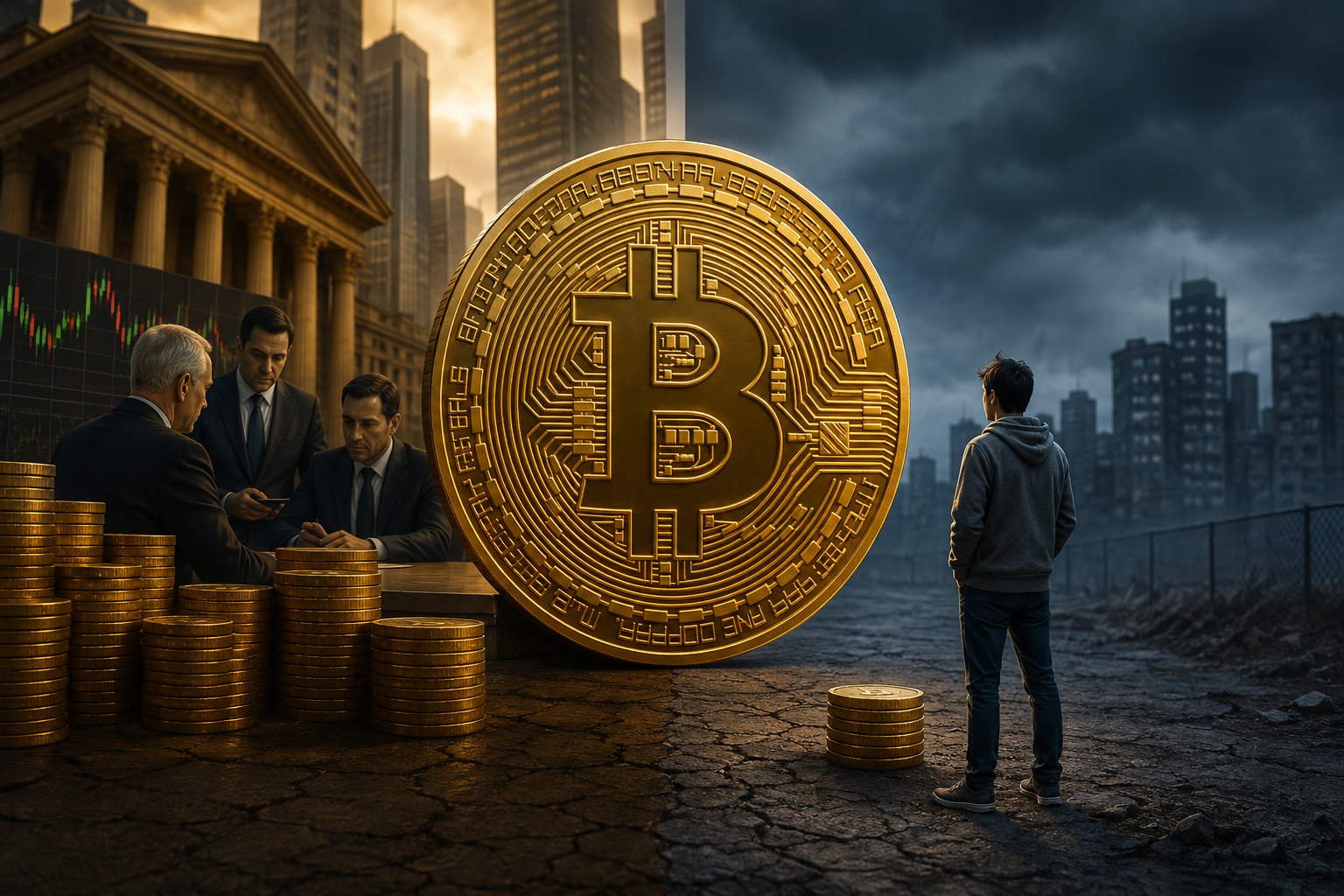
Today, everyday investors still have a seat at the table, but they share that table with large funds, companies, wealthy buyers, and professional market experts.
Bitcoin has not become impossible for ordinary people to own. What has changed is the level of competition, risk, and market power around it.
The door is still open, but the room is no longer small. Bitcoin now belongs to a much larger financial world.
For everyday investors, this means the old idea of easy access to easy wealth no longer fits the reality of the market. Bitcoin may still offer opportunity, but that opportunity comes with serious risk.
Ordinary buyers must enter that world with clear expectations, careful risk control, and a full view of what they may lose as well as what they may gain.
ALSO READ: How to Get Hired at Google: Resume, Interview & Insider Tips