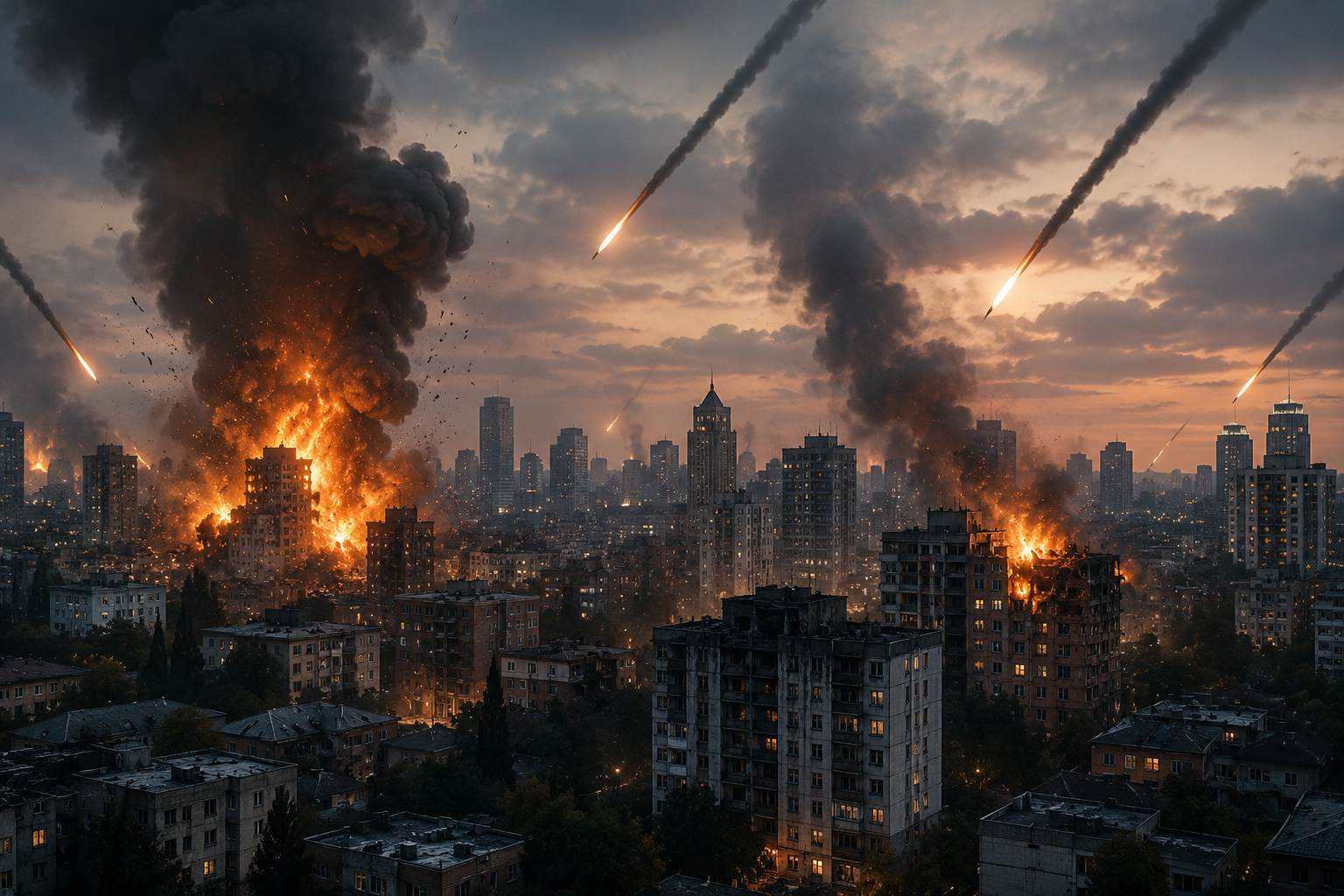
Kyiv came under a major Russian ballistic missile attack early Thursday, August 20, 2026, according to Kyiv Mayor Vitali Klitschko. Several loud blasts were heard across the Ukrainian capital as air raid alerts warned people of a serious threat. Klitschko told residents to stay inside shelters while emergency crews moved to areas hit by the attack.
The attack added to a sharp rise in Russian missile strikes on Kyiv this month. The latest assault came only days after other Russian attacks hit the capital and other Ukrainian cities. The repeated use of ballistic missiles has put fresh pressure on Ukraine’s air defense system and on people who live in the capital.
Early reports said Russia launched at least 10 ballistic missiles at Kyiv. The exact number of missiles, their types, and the full scale of the damage were still under review at the time of the first reports. Ukrainian officials also warned that more details could emerge after rescue teams reached all affected sites.
Blasts Reported Across the Capital
Several parts of Kyiv felt the effects of the attack. Initial reports cited damage in the Sviatoshynskyi district, while fires were reported in the Darnytskyi district. Other reports also pointed to damage near the city center.
The attack came at a time when many residents were asleep or had only just begun their day. Ballistic missiles can reach their targets at very high speed, which gives people and air defense crews little time to react. For residents of Kyiv, the sound of the warning sirens has become a familiar part of life after more than four years of full-scale war.
Klitschko urged people to remain in shelters and follow official safety advice. Emergency workers then moved to several sites to assess damage, put out fires, and search areas that may have had people trapped inside.
The first reports did not provide a final picture of the damage. Officials often need hours to check buildings, roads, homes, warehouses, and public facilities after a large missile attack. The number of people hurt can also change as rescue teams reach areas that were hard to access.
Children’s Hospital Damaged
One of the most serious details from the early reports was damage to a children’s hospital. The facility was affected by the attack, adding to fears about the safety of medical sites in Kyiv.
A children’s hospital had also been affected by a Russian missile attack on August 11. In that earlier assault, a missile hit hospital grounds in Kyiv’s Shevchenkivskyi district. Two craters were found at the site, while windows, a dormitory, warehouse areas, and a gas pipe suffered damage. Children and medical staff were safe because they were inside shelters at the time.
The latest damage to a children’s hospital shows how repeated attacks can place vital public services at risk even when the main target may be elsewhere. Hospitals need power, staff, roads, water, and safe access at all times. Any strike close to such a site can create a serious threat for patients and medical workers.
Officials had not yet released a final report on casualties at the hospital from the latest attack. For that reason, early claims about deaths or injuries should be treated with care until Ukrainian authorities confirm them.
Fires and Rescue Work
Fires broke out at several locations after the missile attack. Emergency teams moved toward affected sites as smoke rose above parts of the capital. Some reports said non-residential areas were hit, with warehouses and other structures among the damaged sites.
Rescue work after a ballistic missile strike can be difficult. A missile can destroy a building in seconds and leave broken concrete, metal, glass, and fire behind. Rescue workers must also make sure that a damaged structure is safe enough to enter.
The first hours after an attack are also a period of uncertainty. Officials may know where a missile hit but may not yet know whether anyone was inside a damaged building. This is why early casualty figures can change as rescue teams search each site.
At the time of the initial reports, no final casualty figure had been confirmed for the latest Kyiv attack. Ukrainian authorities were still checking the affected areas. This means social media claims about deaths or injuries should not be treated as confirmed facts unless they come from trusted officials or reliable news agencies.
Why Ballistic Missiles Matter
Ballistic missiles are among the hardest weapons for Ukraine to stop. They can travel at very high speed and may approach a target on a steep path. This creates a short window for air defense systems to detect, track, and intercept them.
Russia has used ballistic missiles against Kyiv several times in recent weeks. The pattern has placed heavy pressure on Ukraine, which has repeatedly asked its partners for more air defense systems and interceptor missiles.
A major attack on August 4 showed the scale of that pressure. At least 14 people were killed and 27 were hurt in a Russian ballistic missile attack on the Kyiv region, according to Ukrainian officials cited by Reuters and AFP. Seven sites came under attack, while a warehouse near the city center was destroyed. Two people were pulled from the ruins, and officials warned that others could still be under the rubble.
Another attack on August 11 hit the grounds of a children’s hospital, while fires broke out at other sites. One person was hurt in that assault, according to Ukrainian reports.
A Month of Heavy Attacks
The latest assault is part of a wider rise in Russian air attacks on Ukraine. Kyiv has faced repeated missile and drone attacks throughout the summer, with several assaults causing deaths, injuries, fires, and major damage.
On August 18, a Russian missile attack in Ukraine’s Kharkiv region killed 10 people and hurt at least 18 others. The strike hit a central area near a post office, shops, homes, and other civilian sites. Ukrainian officials said two Banderol cruise missiles were used in that attack.
The attacks show that the danger is not limited to one part of Ukraine. Russian forces have continued to use missiles and drones against cities and infrastructure, while Ukraine has also carried out long-range attacks against targets inside Russia.
For Kyiv, however, each new missile alert brings a direct threat to millions of residents. The capital remains the political center of Ukraine and one of the most important cities in the war.
Casualty Figures Still Unclear
As of the first reports on Thursday, the full human cost of the latest attack was not yet clear. Authorities were still checking damaged sites and rescue teams were still at work.
That point is important because early reports can change. A building may look empty from outside but may contain people inside. Injured people may also reach hospitals after the first official statements. Officials may therefore issue revised figures later in the day.
What is clear is that the attack caused damage across several parts of Kyiv, set off fires, affected a children’s hospital, and forced residents to seek shelter. At least 10 ballistic missiles were reported as part of the assault, although officials had not yet provided a complete final account of the weapons used.
Kyiv Faces Another Dangerous Day
For Kyiv, the latest missile attack is another reminder that the war remains close to the heart of the country. Even after years of conflict, residents still face sudden air alerts and the threat of missiles that can arrive within minutes.
Emergency workers now face the task of checking damaged buildings, helping those who need medical care, and making affected areas safe. Authorities will also need to assess the wider damage and provide more information about the victims.
The situation remains fluid. Further details about casualties, missile types, damage, and the full extent of the attack are expected as Ukrainian authorities complete their checks.
For now, the confirmed picture is stark: Russia launched a major ballistic missile assault on Kyiv early Thursday, at least 10 missiles were reported, several districts suffered damage, fires broke out, and a children’s hospital was affected. The final human cost was still not known when the first reports emerged.
ALSO READ: Nasdaq Composite Ends Higher After Sharp Tech Selloff