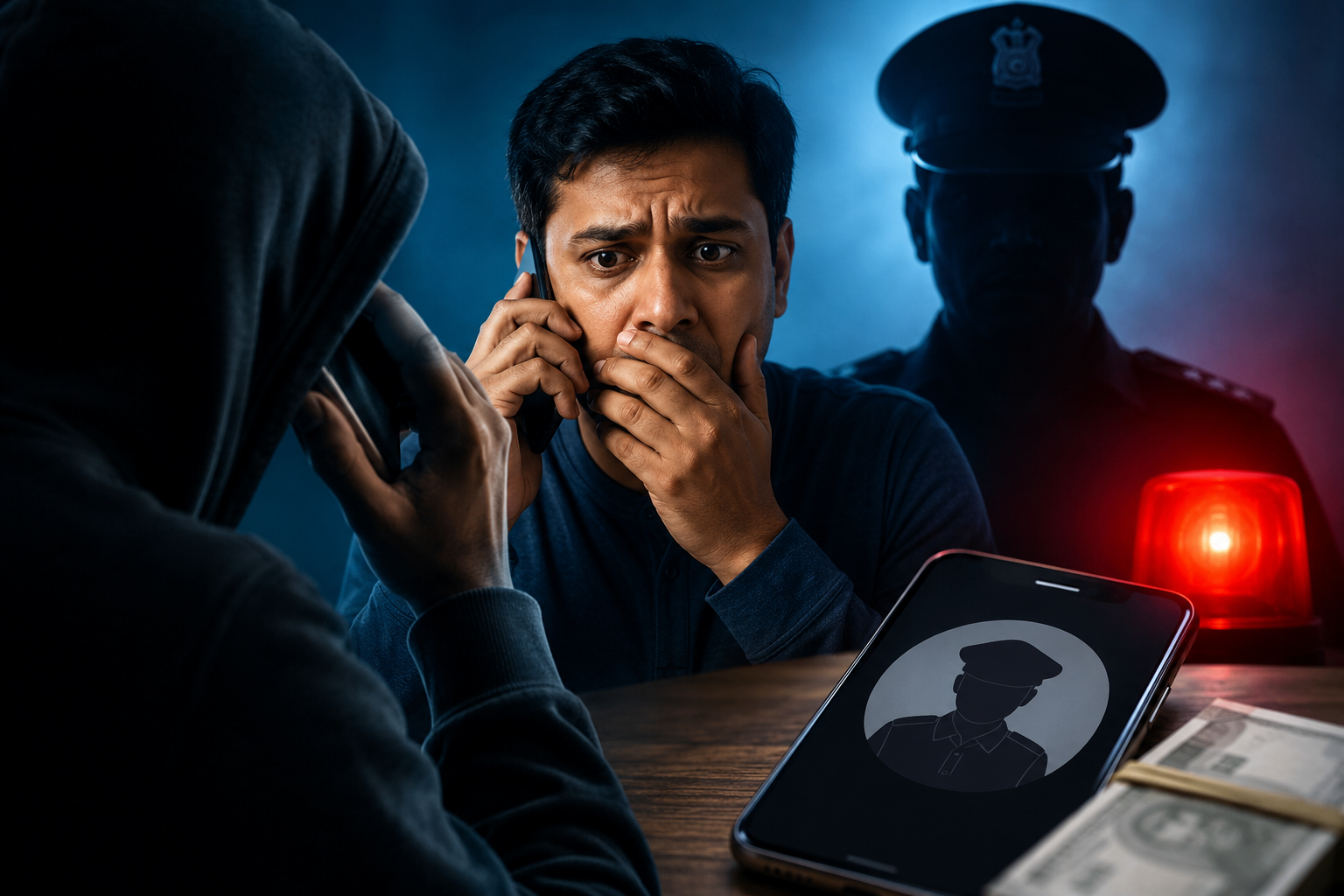
Fraudsters have found a new way to scare people and take their money. In this case, the criminals posed as officers from the Mumbai Police. They told the victim that the person was linked to a money-laundering case.
The fraudsters used the name and image of the police to make their story sound real. They did not simply ask for money. Instead, they first created fear. They told the victim that a serious criminal case was linked to their name.
The threat of a money-laundering case can cause great fear because such cases are linked to serious financial crimes. The fraudsters used this fear to control the victim and make the person believe that immediate action was needed.
This type of fraud has become a serious concern because criminals often use the names of trusted government bodies. A victim may find it hard to know if the person on the other side of a call is a real officer or a criminal.
A Fake Money-Laundering Case
The main trick in this case was the false claim about money laundering. The fraudsters told the victim that their name had come up in a case related to illegal money.
For an ordinary person, such an accusation can be deeply stressful. A person may worry about police action, arrest, court cases and damage to their reputation. The criminals use these fears to push the victim into quick decisions.
The fraudsters may also claim that the victim’s bank account or identity details have a link with suspicious financial activity. Such claims can sound convincing when they come from someone who says they are a police officer.
The goal is to make the victim feel that there is no time to check the facts. Once fear takes control, the person may follow the fraudster’s instructions without proper checks.
Why Police Impersonation Works
Police officers have legal power, so people usually take their words seriously. Criminals know this. By using a police identity, they try to give their false story an official look.
A fraudster may use a police officer’s name, rank or department details. The caller may also use formal language and speak in a strict tone. These small details can make the call appear genuine.
The criminal may say that the victim must prove their innocence. This turns the situation around. Instead of asking why a stranger has accused them, the victim starts to worry about how to avoid trouble.
This is one of the most dangerous parts of such scams. The victim is not only faced with a false claim but also with strong mental pressure.
Fear Becomes the Main Weapon
Money scams often depend on trust, but this type of fraud depends heavily on fear. The criminals do not need to build a friendly relationship with the victim. They try to create panic within a short time.
A fake police officer can tell the victim that an arrest is close or that a criminal case will follow unless the person obeys certain instructions. The victim may then feel trapped.
The threat of arrest can be especially powerful. Many people do not know what a real police officer can ask them to do over a phone call. Criminals take advantage of this lack of knowledge.
The victim may also fear that family members, friends or work colleagues will learn about the alleged case. This can make the person less likely to ask others for help.
The Money Trap
After the fear is in place, the criminals can move towards the financial part of the scam. They may tell the victim that money must be paid to clear their name or protect their bank account.
In some cases, criminals may claim that a payment is needed for verification or that funds must be moved to a so-called safe account. Such demands have no legal basis.
A real police investigation does not work through secret payments to strangers. A police officer does not have the power to make a person transfer money simply to avoid an alleged case.
The victim may not realise this at first because the criminal has already created a story around a serious offence. Every new demand can appear to be part of that false investigation.
The Rise of Digital Arrest Scams
The case also shows the wider problem of so-called digital arrest scams. In these frauds, criminals tell people that they are under investigation for a serious crime.
The victim may be told to stay on a phone or video call. The criminals can pretend to conduct an official inquiry. They may use fake documents, uniforms, police station backgrounds or official-looking details.
The purpose is to make the victim believe that the threat is real. The longer the person remains under the criminal’s control, the harder it may become to think clearly.
The term “digital arrest” is used because the victim is made to feel as if they are under arrest through a digital device. There is no real legal arrest in the way the criminal claims.
Criminals Use Official Names
The use of the Mumbai Police name adds another layer of trust to the scam. A well-known police force can make a false call appear more believable.
Criminals can collect basic details about a person from different sources. They may then use those details during a call to make their claims sound personal.
For example, a caller who already knows the victim’s name or other basic information may appear to have access to police records. In reality, that information may have come from a public source or an earlier data leak.
This is why people should not treat personal details as proof that a caller is a genuine police officer.
How Victims Can Stay Safe
The most important step is to remain calm. A person who receives such a call should not make a payment because of a threat.
People should also avoid sharing bank details, passwords, one-time passwords or other private information. They should not install unknown apps or give strangers access to their phone or computer.
If a caller claims to be a police officer, the person should end the call and contact the police through an official channel. The person should not use a phone number or website link provided by the suspected fraudster.
A family member or trusted person can also help. A second opinion can make it easier to spot false claims at a time when fear makes clear thought difficult.
A Serious Warning for the Public
The Mumbai Police impersonation case is a clear warning about how far fraudsters can go to steal money. They can use fear, authority and false legal claims instead of a simple request for cash.
A money-laundering accusation can sound serious enough to make a person panic. That is exactly what the criminals want.
People should remember that a phone call does not turn them into a criminal suspect, and a stranger cannot demand money to make a legal case disappear.
The safest response is to stop, check the claim and contact the real authorities through official channels. No one should transfer money just because a caller claims to be a police officer.
As such scams become more sophisticated, public awareness remains one of the strongest forms of protection. Knowing that criminals can impersonate police officers can help people recognise the warning signs before fear leads to a costly mistake.
ALSO READ: Global NFT Market Growth in 2026: Gaming Takes Center Stage