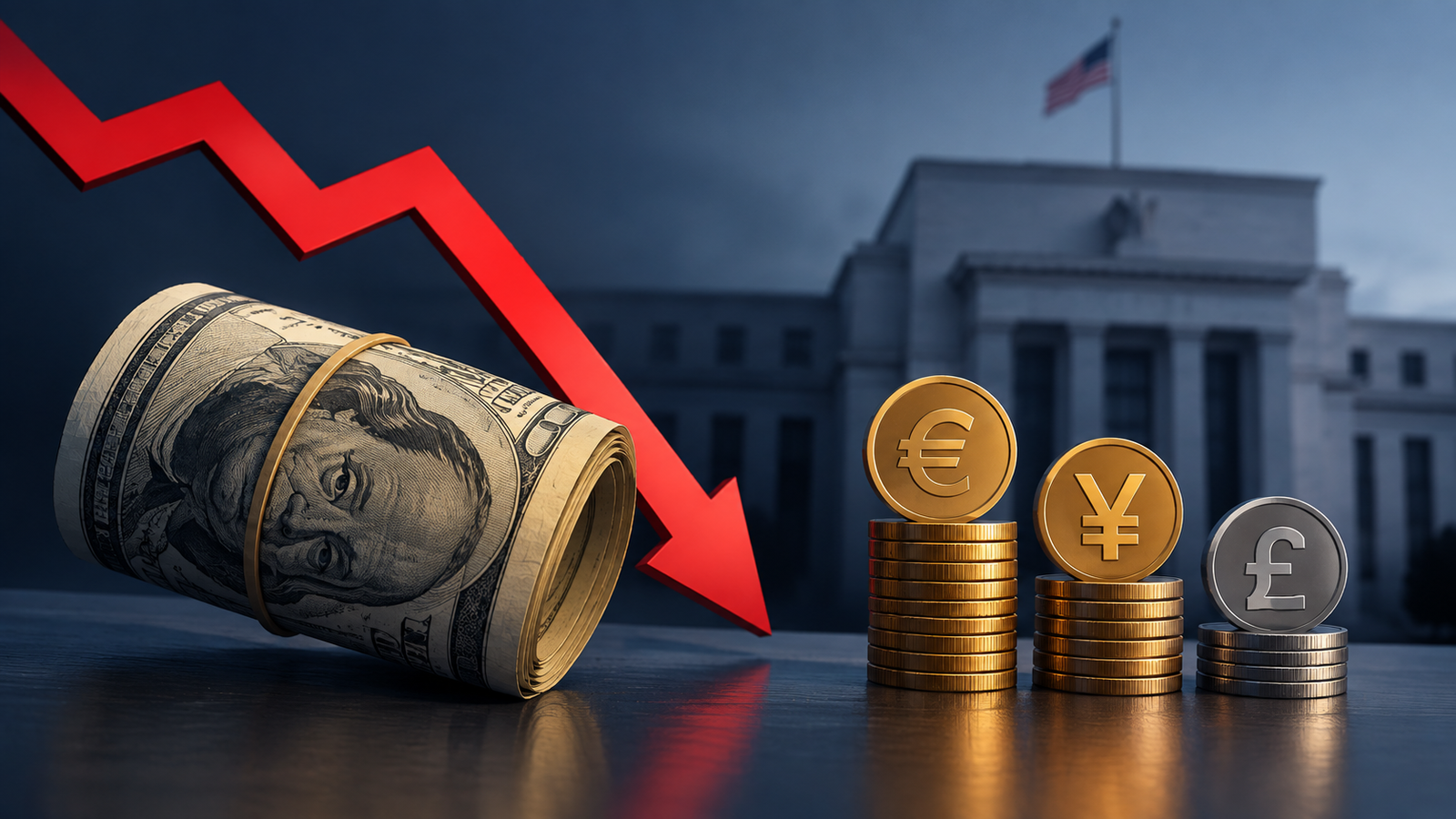
The US dollar came under pressure on September 4, 2026, as traders reduced their bets on a US Federal Reserve rate hike later this month. The shift came after comments from Fed Governor Christopher Waller, who gave a softer view on the next policy move.
Waller said recent economic data showed signs of lower inflation. He also said he would support a decision to keep interest rates unchanged at the September meeting if new inflation data showed further progress.
This view changed market expectations very quickly. Traders had earlier placed the chance of a 25-basis-point Fed rate hike at about 63%. That figure fell to around 50% after Waller’s comments. The change put fresh pressure on the dollar and gave support to other major currencies.
Why Waller’s View Matters
The Federal Reserve uses interest rates as one of its main tools to control inflation. Higher rates can support a currency because they can make assets in that currency more attractive. Lower rate expectations can have the opposite effect.
That is why Waller’s latest comments matter so much for the Forex market.
His message was not a clear promise of lower rates. Instead, he said the decision would depend on fresh economic data. If inflation continues to cool, he would prefer to keep rates where they are. If inflation proves stronger than expected, he could still support a rate hike.
This leaves the market in a very sensitive position. Traders now have to study every major US data release before the Fed’s September meeting.
Rate Hike Odds Drop From 63% to 50%
The biggest market change came from the sharp fall in rate hike expectations. According to the CME FedWatch Tool, the chance of a 25-basis-point increase at the upcoming Fed meeting fell to about 50% from roughly 63% earlier in the week.
That is a major shift for the Forex market.
At 63%, traders had a stronger reason to hold or buy the dollar. A higher US interest rate can improve the return on dollar assets. When that chance fell to 50%, part of that support disappeared.
The dollar index was near 99.00 on Friday after a fall of more than 0.5% on Thursday. It was also set for a weekly decline of about 0.7%.
The move shows how fast currency markets can react when traders change their view of central bank policy.
US Jobs Data Takes Center Stage
The next major test for the dollar is the US employment report for August. The report is due on September 4 and includes Nonfarm Payrolls, the unemployment rate and wage data.
Economists expect US employers to add about 56,000 jobs in August. That would mark a rebound after July’s unexpected decline of 23,000 jobs. The unemployment rate is expected to stay at 4.1%.
The jobs report matters because the Fed also looks closely at the health of the labor market.
A weak jobs report could make a September rate hike look less likely. That could put more pressure on the US dollar.
A strong report could have the opposite effect. It could give traders a reason to raise their rate hike expectations again. That could help the dollar recover.
However, a strong jobs report alone may not be enough to change the Fed’s view. Market analysis from TD Securities says a strong payrolls result would be necessary but not sufficient for a September hike. Inflation data remains very important.
Inflation Remains the Key Issue
The Fed still has a difficult task. Inflation remains above its 2% target, even though recent data has shown some improvement.
Waller said recent figures gave signs of disinflation. In simple terms, this means price growth is starting to slow.
That does not mean inflation has disappeared. The Fed still needs more evidence before it can feel comfortable with a long-term policy change.
The next major inflation report is due on September 11. Waller has said that data will help shape his view before the Fed’s September 15–16 meeting.
This means the dollar could remain sensitive to US inflation news over the next week.
EUR/USD Gets Some Support
The weaker dollar has helped the euro. EUR/USD rose more than 0.3% on Thursday and closed above 1.1600. On Friday, the pair stayed below 1.1650 during the early European session.
The euro has also gained some support from lower US Treasury yields. When US yields fall, the gap between US and European returns can narrow. That can make the dollar less attractive compared with the euro.
The euro was also set for a weekly gain of about 0.3%, according to market data cited on September 4.
Still, EUR/USD faces another important event soon. The European Central Bank is due to meet on September 10. That decision could give the euro its own source of volatility.
Yen Becomes a Major Focus
The Japanese yen has been one of the biggest winners in the latest dollar move.
USD/JPY fell sharply during the week. The yen gained about 2.6% against the dollar and traded near 155.7 per dollar in Friday market data. The yen was on course for its strongest weekly performance since late July.
Two factors are helping the yen.
The first is the weaker US dollar. Lower expectations for a Fed rate hike reduce one source of support for the greenback.
The second is the growing chance of tighter policy from the Bank of Japan. Markets were pricing a 75% chance of a September rate increase, while a rate increase by October was fully priced, according to the latest market report.
Japan has also kept close watch on the currency market. Officials have warned that they remain alert to sharp currency moves. This has made traders more careful about large short positions in the yen.
What It Means for Forex Traders
The main Forex story on September 4 is not simply that the dollar is weak. The bigger story is the change in expectations for US interest rates.
The market had moved toward a higher chance of a Fed rate hike. Waller’s comments then pushed that chance back down from about 63% to 50%.
Now, traders have a new question: will the US jobs report support Waller’s softer view, or will it bring back rate hike expectations?
The answer could cause a sharp move in major currency pairs.
A weak jobs report could hurt the dollar further and support EUR/USD and other major currencies. It could also give more support to the yen.
A strong jobs report could help the dollar recover, especially if wage data also shows firm growth. But inflation data will still matter before the Fed makes its final decision.
A Market Driven by Data
The Forex market now faces several important US data points before the September Fed meeting. The August jobs report is the immediate focus, while the August inflation report on September 11 could have an even greater effect on the final rate decision.
For now, the dollar remains under pressure because traders have reduced the chance of a September rate hike from about 63% to 50%.
Waller’s message has made the Fed outlook less clear, rather than fully changing it. He still leaves the door open to a rate increase if inflation proves too strong.
That is why the next few US data releases could be very important for the dollar.
For Forex traders, the key pairs to watch are USD/JPY and EUR/USD. USD/JPY reflects both changing Fed expectations and rising Bank of Japan rate bets. EUR/USD, meanwhile, shows the effect of weaker US rate expectations on the dollar.
The market now waits for the US jobs report. Its result could decide whether the dollar’s latest decline continues or starts to reverse.
Also Read – XRP ETFs Hit a New Milestone as Demand Stays Strong