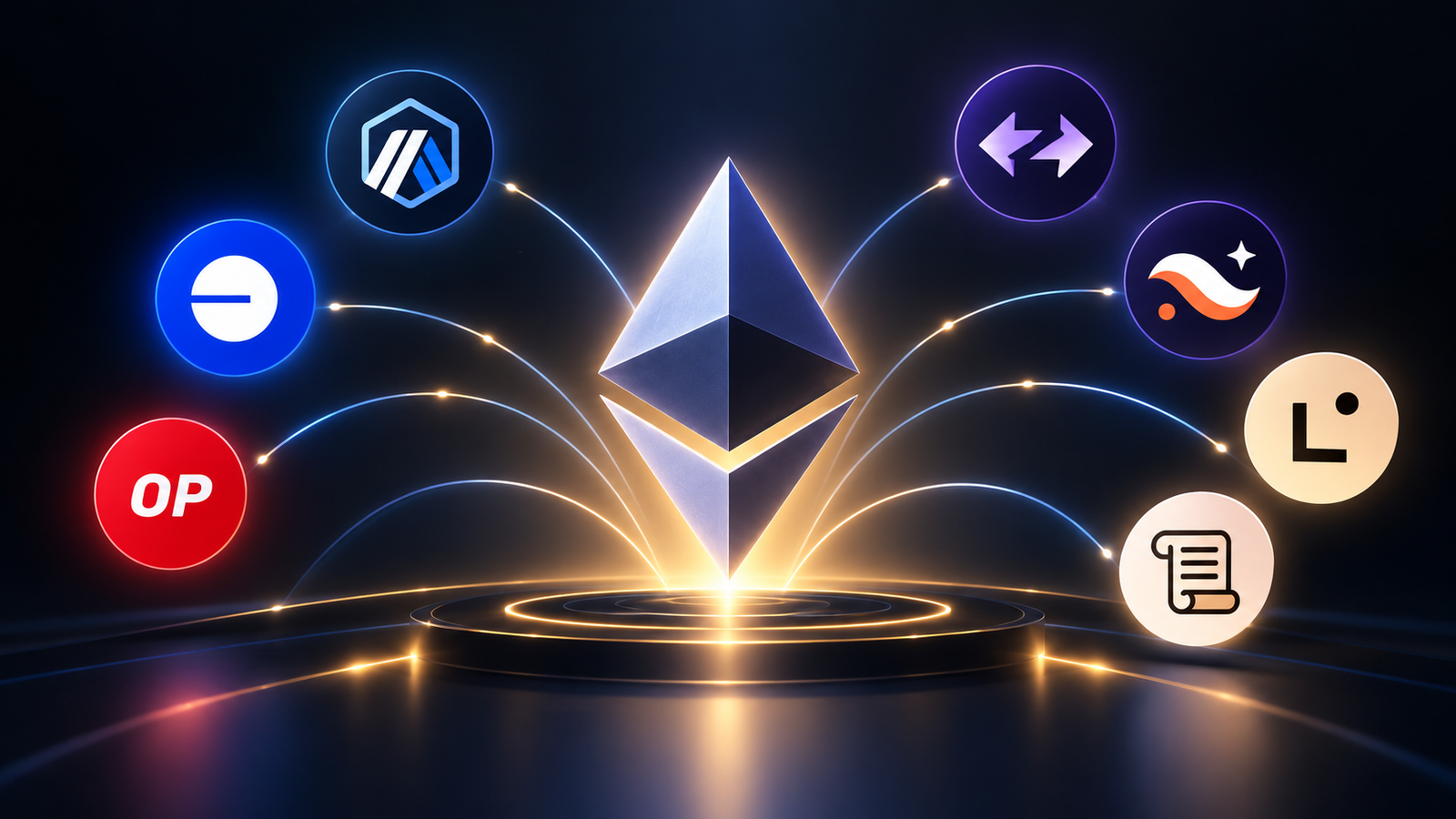
Ethereum has a major scaling challenge. The main Ethereum network offers strong security and decentralization, yet high demand can raise costs and limit transaction capacity. Layer 2 networks solve much of this problem by handling transactions away from Ethereum mainnet and then sending transaction data or proofs back to Ethereum for final settlement. This approach gives users lower fees and faster transactions while keeping Ethereum as the base layer.
The Layer 2 market now has many serious contenders. Arbitrum, Base, Optimism, zkSync Era, Starknet, Linea, and Scroll all take different technical and business paths. Ethereum.org lists dozens of networks and notes that many still remain young or experimental. The best choice therefore depends on liquidity, application support, technical design, security progress, and the type of activity a network targets.
Arbitrum: The DeFi Leader
Arbitrum One remains one of the strongest choices for decentralized finance. Its ecosystem has deep liquidity, major decentralized exchanges, lending markets, derivatives platforms, and a large developer base. The network uses an optimistic rollup design and offers full EVM compatibility, which makes Solidity-based applications relatively easy to move from Ethereum.
Arbitrum stands out most for users who trade, lend, borrow, provide liquidity, or use advanced DeFi products. Its large capital base also helps new protocols attract users and liquidity. Current market comparisons continue to place Arbitrum among the leading Ethereum Layer 2 networks by value locked.
The main drawback comes from the optimistic rollup model. Standard withdrawals to Ethereum can require a challenge period, although fast bridges can offer a quicker route. Arbitrum also still has areas of network decentralization that continue to develop.
Base: The Strongest Consumer Network
Base has become one of the most important Layer 2 networks for mainstream users. Coinbase supports the network, giving Base a major distribution advantage. That connection makes it easier for users to move into onchain applications, while developers can target a large existing crypto audience.
Base uses an optimistic rollup design and offers low transaction costs. Its ecosystem has grown across decentralized finance, social applications, payments, NFTs, and consumer-focused products. Optimism’s own statistics show Base as the largest chain within its reported OP Stack ecosystem by daily transactions and TVL in its May 2026 figures.
Base makes the strongest case for applications that need a large retail audience rather than only specialist DeFi users. Its biggest advantage is not just low fees. Distribution, wallet access, exchange support, and a broad consumer ecosystem give Base a distinct position among Ethereum Layer 2 networks.
Optimism: The Superchain Approach
Optimism takes a different route. Rather than focus only on OP Mainnet, the project has built the OP Stack as infrastructure for many chains. This model creates a wider network of connected chains under a common technical framework.
The OP Stack has more than 30 chains that contribute revenue to the Optimism ecosystem, according to Optimism’s current statistics. The wider ecosystem includes Base and several other chains with different applications and user groups.
OP Mainnet itself has a smaller TVL position than Arbitrum and Base, yet Optimism remains important for developers who want access to the wider Superchain ecosystem. Its strength lies in shared infrastructure, Ethereum alignment, governance tools, and a broad chain strategy rather than a single dominant application category.
zkSync Era: A Major ZK Bet
zkSync Era belongs to the zero-knowledge rollup group. Instead of relying on a long fraud-proof window, ZK systems use cryptographic proofs to show that transactions were processed correctly. This design can offer a different path toward Ethereum scaling and faster finality.
zkSync Era also focuses on EVM compatibility, which helps developers use familiar Ethereum tools. The network has attracted attention from projects that want ZK technology without abandoning the broader Ethereum development environment.
Its main weakness remains ecosystem size compared with the largest optimistic rollups. Current Ethereum data places zkSync Era well below Base and Arbitrum in market share and capital.
Starknet: Built Around ZK Technology
Starknet takes a more distinct technical path. It uses STARK proofs and its own Cairo programming language rather than following the same EVM approach as Arbitrum, Base, or Optimism. This creates more work for developers who come from standard Ethereum development, yet it also gives Starknet greater freedom to build around ZK technology.
Starknet suits applications that place strong value on cryptographic proofs and ZK-native features. Its ecosystem remains smaller than the leading general-purpose Layer 2 networks, but its technology gives it a clear identity. Ethereum.org currently lists Starknet among the major networks while also noting that Layer 2 maturity varies across the ecosystem.
Linea and Scroll: Strong ZK Alternatives
Linea and Scroll provide two more important ZK rollup options. Both aim to stay close to Ethereum’s EVM environment, which reduces the technical gap for developers who already build with Ethereum tools.
Scroll has gained attention for its Ethereum-focused approach and ZK architecture. Linea also combines ZK technology with EVM compatibility and has built an ecosystem around Ethereum applications. Neither currently matches the capital depth of Arbitrum or Base, yet both remain relevant choices for projects that value ZK proofs and Ethereum compatibility.
Ethereum.org lists both networks among its Layer 2 ecosystem and tracks their fees, market share, and maturity. Its current data shows the large gap between the biggest networks and smaller ZK platforms.
Optimistic Rollups vs ZK Rollups
The biggest technical divide sits between optimistic and ZK rollups. Arbitrum, Base, and Optimism use optimistic rollup designs. These systems assume transactions are valid unless someone challenges an incorrect result. ZK rollups use cryptographic proofs to verify transaction execution.
For everyday users, the difference can feel small. Major Layer 2 networks now offer very low fees, often below one cent for simple transactions. Ethereum.org currently lists average fees near $0.001 for Base, $0.003 for Arbitrum One, $0.004 for Starknet, and $0.002 for Scroll, although actual costs can change with network conditions.
The larger differences appear in liquidity, application support, withdrawal design, developer tools, and technical maturity. Fees alone no longer provide enough information for a serious comparison.
Which Ethereum Layer 2 Is Best?
Arbitrum stands out for DeFi and deep liquidity. Base offers the strongest case for consumer applications and mainstream access. Optimism makes sense for projects that want the wider OP Stack ecosystem. zkSync Era suits projects that want an EVM-compatible ZK environment. Starknet offers a more specialized ZK platform with Cairo and STARK technology. Linea and Scroll provide additional EVM-friendly ZK choices.
No single Layer 2 dominates every category. Ethereum itself describes the ecosystem as a collection of networks rather than a system with one official Layer 2. That structure allows different chains to target different technical and commercial needs.
For most users, the practical choice should start with the application rather than the chain’s name. DeFi activity points toward Arbitrum, consumer applications point toward Base, while ZK-focused projects can look toward Starknet, zkSync Era, Linea, or Scroll. The Layer 2 market has therefore moved beyond a simple race for lower fees. Network liquidity, user access, technical design, security progress, and ecosystem strength now matter far more.
Also Read – RBI Intervention Calms Rupee: What It Means for Trade