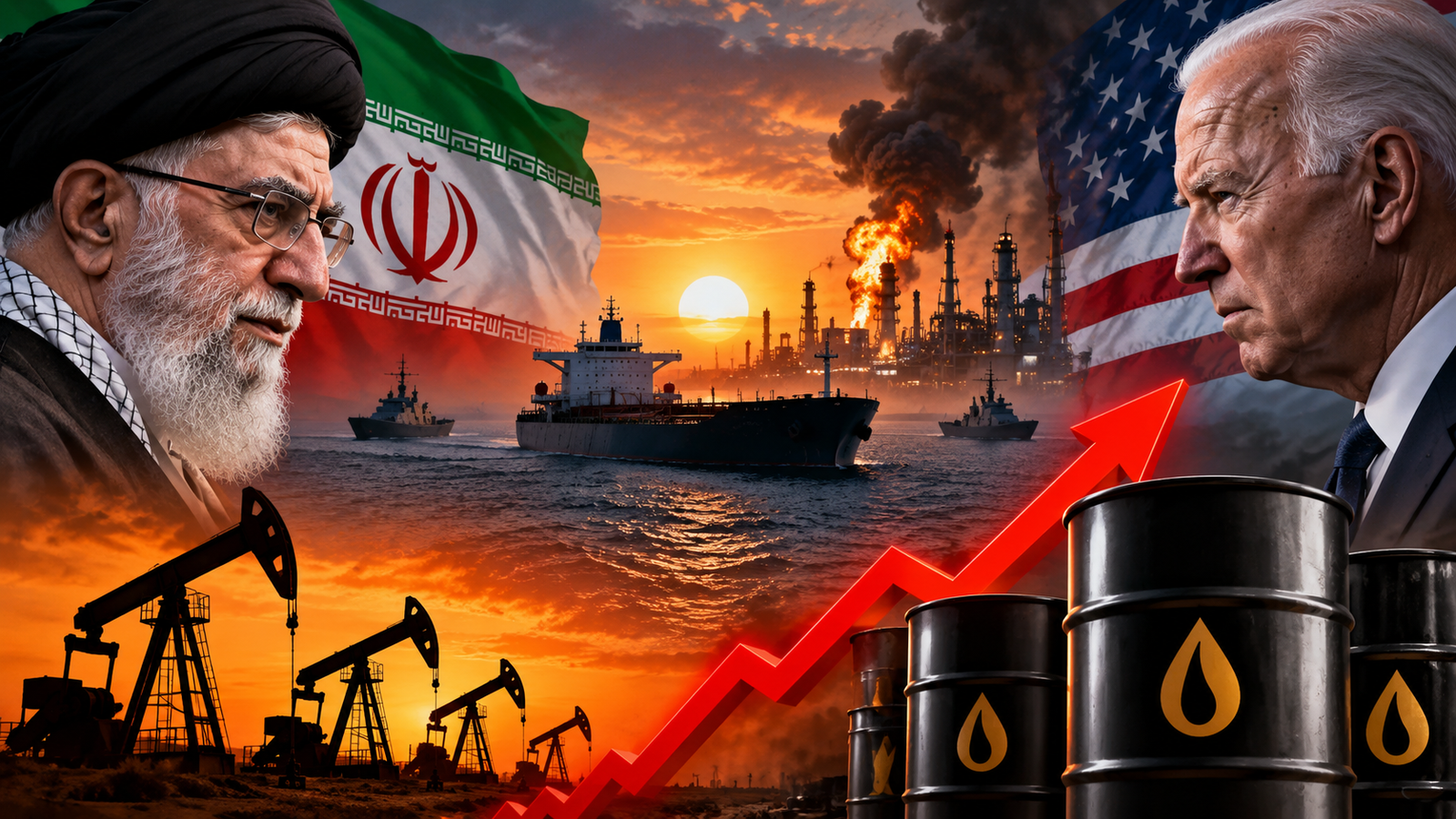
Oil prices have moved close to $100 a barrel as fresh tensions between Iran and the United States raise fears about global fuel supply. Brent crude, the main global oil price, stood at about $97 a barrel after a sharp rise in recent days. On September 8, Brent futures rose 34 cents, or 0.35%, to $97.34 a barrel. U.S. West Texas Intermediate, also known as WTI, stood at $92.63 a barrel, up $1.15, or 1.26%.
The latest rise has a clear reason. Iran has warned that U.S. energy assets across the Gulf could face retaliation if the United States launches more attacks on Iranian assets. The warning has made oil traders more nervous because the Gulf is one of the most important energy areas in the world.
The main fear is not only damage to oil fields. The bigger concern is the Strait of Hormuz, a narrow water route through which a huge amount of oil and gas normally moves. Any serious problem there could reduce global supply and push prices much higher.
Iran Sends a Strong Warning
Iranian officials have issued a direct warning to the United States. Mohammad Baqer Qalibaf, the speaker of Iran’s parliament, said that the region’s energy production chain is exposed and that U.S. oil and gas companies in the Gulf share that risk.
His message came after a series of attacks between the two sides. The United States struck three Iranian oil tankers on Saturday, according to U.S. Central Command. One of the tankers was near Kharg Island, a major Iranian oil export hub.
Iran has promised a response to further U.S. attacks. This has created a new risk for oil markets. Traders now have to consider the possibility that the conflict could hit oil fields, tankers, ports or other energy sites.
The situation has also raised concern about the safety of commercial ships. When ships face a higher risk at sea, some companies may avoid certain routes. Others may demand higher insurance costs before they send ships through risky waters. That can make the movement of oil slower and more expensive.
The Strait of Hormuz Is the Main Risk
The Strait of Hormuz is at the centre of the current oil concern. Before the war, about one-fifth of global oil and gas shipments passed through the waterway, according to Reuters.
Iran has already reduced traffic through the strait. Tehran has also said it plans to create a new restricted zone in the Gulf and approve a new shipping route through the Strait of Hormuz.
That is a serious concern for oil markets. The world has other oil routes, but they cannot easily replace all the trade that moves through Hormuz.
Recent shipping data shows how much traffic has already fallen. An average of only 10 commodity ships passed through the Strait each day over the past 10 days. That was the lowest level since May, according to Kpler data cited by Reuters.
If ship traffic falls much more, the oil market could face a much larger supply shock.
Brent Has Already Made a Big Move
Brent crude has had a sharp rise as the conflict has become worse. Brent rose about 8% last week. WTI gained nearly 10% during the same period. On Monday, September 7, Brent settled at $97.31 a barrel after it reached as high as $98.06.
That was Brent’s highest level since July 24. WTI rose as high as $93.29 and later stood near $92.65.
The market is now very close to an important psychological level: $100 a barrel.
A move above $100 would not by itself mean that the world faces an oil crisis. But it would show that traders place a much higher value on the risk of supply loss.
Oil prices can rise very fast when traders fear that future supply may fall. They do not have to wait for a large physical shortage before prices react. Fear itself can add what traders call a risk premium to the price.
Why Gulf Energy Sites Matter
The Gulf is home to some of the world’s biggest oil producers, exporters and energy companies. Saudi Arabia, the United Arab Emirates and other Gulf states have major oil facilities, ports and refineries.
Any attack on these sites could have an effect far beyond the region.
Iran has already warned that energy facilities across the Gulf could face retaliation. That has raised concern about a wider conflict that could affect several oil-producing countries at the same time.
Saudi Arabia has also faced a fresh energy-related threat. Reports said the Jazan oil refinery was attacked on Monday, with the full extent of the damage still under review.
If more energy sites come under attack, the market could move much higher.
Goldman Sachs Sees a Bigger Risk
Some analysts now see a possible path toward $120 oil if attacks on shipping become worse.
Goldman Sachs has warned that oil prices could rise as high as $120 a barrel if attacks on Middle East shipping increase.
That does not mean Brent will reach $120. It is a risk case, not a certain forecast.
The difference is important. Oil could stay near $95 to $100 if the conflict remains serious but shipping continues at a reduced level. A much larger move could occur if major oil facilities suffer damage or if the Strait of Hormuz becomes far harder for commercial ships to use.
For now, traders are watching each military move very closely.
Fuel Prices Could Rise Too
Higher crude prices do not stay inside oil markets. They can also affect petrol, diesel, airline fuel and transport costs.
The United States has already seen higher fuel prices. The average price of regular gasoline stood at about $4.14 per gallon before the Labor Day weekend. That was almost $1 higher than a year earlier and a record for a Labor Day weekend.
If crude stays close to $100 or moves above it, fuel prices could remain high for longer.
Higher fuel costs can then affect many parts of the economy. Transport becomes more expensive. Airlines face higher fuel bills. Companies may pay more to move goods. Some businesses can pass those costs to customers through higher prices.
This can make the fight against inflation harder for central banks.
OPEC+ Has Not Changed Its Policy
Another important factor is the response from OPEC+. The producer group kept its oil output policy unchanged for October at its latest meeting.
That means the market does not have a fresh promise of a large supply increase that could quickly offset a major loss from the Gulf.
At the same time, countries are already using oil stocks to deal with lower supply from the region. This gives the market some protection, but stockpiles are not unlimited.
If the conflict lasts for months, the pressure could become greater.
What Happens Next?
The next stage of the conflict will decide where oil prices go from here.
If there is a diplomatic breakthrough, the risk premium could fall. More ships could return to normal routes, and oil prices could move back from their current highs.
If attacks continue but avoid major energy sites, Brent could remain near the $95 to $100 area for some time.
The most serious case would be a major attack on Gulf energy infrastructure or a sharp fall in shipping through the Strait of Hormuz. Such a move could create a much larger supply problem and push Brent toward levels that now look extreme.
For that reason, $100 is not the only number that matters. Traders will also watch tanker traffic, oil exports, refinery activity and any new threats from Iran or the United States.
A Market at a Critical Point
The oil market has reached a sensitive point. Brent is already around $97, WTI is above $92, and the risk of a wider Gulf conflict remains high.
Iran’s threats against U.S. energy interests have added a new layer of fear. The fall in ship traffic through the Strait of Hormuz has added to that concern. Any new attack could make the situation worse very quickly.
For now, the world is not yet facing a complete oil supply shutdown. But the risk has become much more serious.
The next few days could be very important. If the conflict grows, $100 Brent may become only the next step rather than the final target. If tensions ease, some of the recent price rise could disappear.
The key issue is simple: as long as oil can leave the Gulf safely, the market can cope. If that flow faces a major break, oil prices could rise far faster than expected.
ALSO READ: REC’s ₹500 Crore Tokenised Bond: A New Debt Market Step