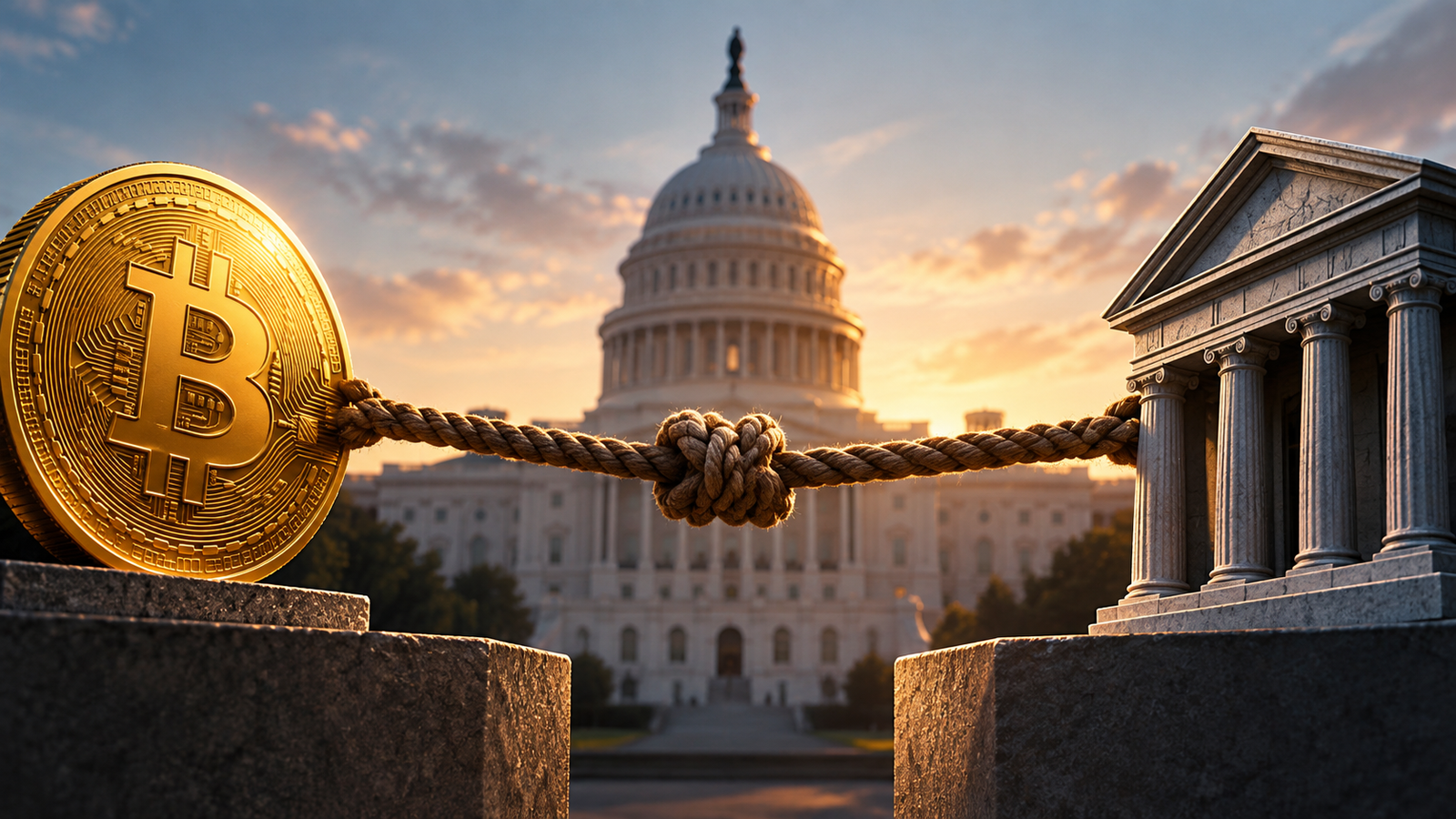
The fight over crypto rules in the United States has reached a key stage. On September 9, 2026, crypto companies and banking groups took their campaign directly to U.S. senators in their home states. Both sides want lawmakers to support their position before a major Senate vote next week.
At the center of this fight is the Clarity Act, a major bill that seeks to set clearer rules for digital assets in the United States. The Senate has a procedural vote set for September 15. This vote could decide whether the bill moves ahead in the Senate. It is not a final vote on the bill itself.
The crypto sector sees the bill as a major chance to bring more legal certainty to the market. Banks and some lawmakers, however, say the current text may not offer enough protection for consumers and the traditional financial system.
The result is a strong political battle at a time when the future of crypto rules in the U.S. remains uncertain.
Why the Clarity Act Matters
For years, crypto companies in the United States have faced questions about how digital assets should be treated under federal law. A major issue is whether a token should fall under securities rules or commodities rules.
The Clarity Act aims to make this difference clearer. It would define which digital assets qualify as securities and which may fall under the commodities framework. It would also help define which U.S. regulator should oversee different parts of the crypto market.
This matters because the Securities and Exchange Commission and the Commodity Futures Trading Commission have different roles. Crypto firms argue that unclear boundaries make it harder for companies to plan, invest and build products in the United States.
Supporters say clear rules could also help keep jobs, capital and new technology inside the country. They warn that unclear laws could push crypto companies and skilled workers to other countries.
For the crypto industry, the bill is therefore about more than regulation. It is also about the future of the U.S. digital asset market.
Crypto Groups Take Their Campaign to the States
The latest push has taken place outside Washington. Since Congress entered its summer recess on August 8, crypto groups have focused on senators in their home states.
The strategy is simple. Crypto advocates want local voters, business owners and technology supporters to contact their senators and ask them to support the bill.
Stand With Crypto, an advocacy group backed by Coinbase, says it has about 3 million advocates. The group says its supporters made almost 50,000 calls and emails to members of Congress during August. It has also held events in states such as Iowa and Michigan.
The group has used local newspapers as well. Its supporters have placed opinion articles in states such as Oklahoma, Kentucky and Kansas. The message is that crypto supporters live across the country and want lawmakers to take their concerns seriously.
The Blockchain Association has also pushed for public support. In late July, it launched a website that helps people contact their senators about the Clarity Act.
The campaign shows how important the bill has become for the crypto industry.
More Than $190 Million in Political Spending
The crypto sector has also put major financial power behind its political efforts.
According to Reuters, the industry has spent at least $190 million on political activity linked to the wider effort. The money has helped fund campaigns, public events and efforts to influence lawmakers.
Crypto groups see this as a rare chance to shape U.S. policy at a national level. They are also aware that the political situation could change after the November midterm elections.
Some polls suggest Democrats could regain control of the House. If that happens, supporters of the bill fear that the current chance for major crypto legislation could disappear or face a long delay.
That makes the September vote especially important.
Banks Raise Their Own Concerns
The banking industry does not share the same view.
Some banks and banking groups say the bill does not have strong enough safeguards. They are especially concerned about stablecoins and the effect that some digital assets could have on traditional bank deposits.
The Independent Community Bankers of America has asked local bankers to meet with senators in their home states. The group wants lawmakers to understand its concerns before the Senate vote.
Some Republican senators have also raised concerns. Senators James Lankford of Oklahoma and Mike Rounds of South Dakota are among those who have questioned parts of the bill.
Their concern is that certain digital tokens could compete with bank deposits. If customers move money from banks into digital assets, banks could have less money available for loans.
This could affect the traditional banking model, especially for smaller banks that rely heavily on customer deposits.
Democrats Want Stronger Safeguards
Democrats also have concerns about the current version of the legislation.
Reuters reports that Democrats want stronger rules on money laundering and ethics. Their support matters because the bill would need 60 votes to clear the Senate’s procedural hurdle.
This creates a difficult path for supporters.
Crypto companies want a clear and simple legal system. Banks want stronger protection for their business model. Democrats want tighter safeguards. Some Republicans also want changes.
So while there is broad interest in creating crypto rules, there is no clear agreement on what those rules should look like.
Raphael Warnock Becomes a Key Target
One example of the political fight comes from Georgia.
Crypto advocates have focused on Senator Raphael Warnock, a Georgia Democrat. Tia Williams, president of the Stand With Crypto Georgia chapter, said she met with staff at Warnock’s local office during the recess.
Warnock voted against advancing the Clarity Act from the Senate Banking Committee. His office did not respond to Reuters’ request for comment.
The Georgia crypto group plans to bring local college students who support crypto and blockchain technology to his office. It has also held events in Athens and Augusta.
The goal is to show that crypto is not only a Wall Street issue. Supporters want lawmakers to see digital assets as a subject that matters to voters, students, technology workers and local businesses.
The September 15 Vote Is Not Final Passage
One important point needs to be clear.
The September 15 Senate vote is a procedural vote, not a final vote to turn the Clarity Act into law. The Senate must first decide whether to move ahead with consideration of the bill.
The scheduled vote relates to cloture on the motion to proceed. A successful vote would help clear the way for further Senate action.
This means the crypto market should not treat September 15 as the date when the bill either becomes law or dies forever.
There would still be more work after that step.
Why Crypto Companies Want Action This Year
The timing is important for another reason.
The November midterm elections could change the balance of power in Congress. Crypto companies believe that a change in control could make the bill much harder to pass.
That is why the industry has increased its political pressure now. The sector wants lawmakers to act while there is still a chance for a major bipartisan crypto framework.
The industry also wants to avoid a repeat of years of uncertainty. Without clearer rules, companies may continue to face questions about which regulator has authority over their products and tokens.
For crypto businesses, that uncertainty can raise costs and slow new projects.
What Comes Next
The next major date is September 15, 2026.
Until then, both sides are likely to keep pressure on senators. Crypto groups will continue to argue that the Clarity Act can give the industry a stable legal base. Banking groups will continue to warn about risks to deposits, lending and consumer protection.
The Senate vote will show whether supporters have enough backing to move the bill forward.
For the crypto market, the outcome could have a wide effect. A clear legal framework could give companies more confidence to build and invest in the U.S. A failure to move the bill ahead could extend the uncertainty that has shaped the American crypto sector for years.
For now, the main battle is not about whether crypto needs rules. It is about what those rules should be, who should enforce them, and how much protection the system should provide.
The September 9 lobbying push shows that both crypto companies and banks understand what is at stake. With the September 15 Senate vote close, the fight over America’s crypto future has moved from Washington offices into the states — and the pressure on senators is only set to grow.
Also Read – SIP vs STP in a Volatile Market: Which Fits a Lump Sum?