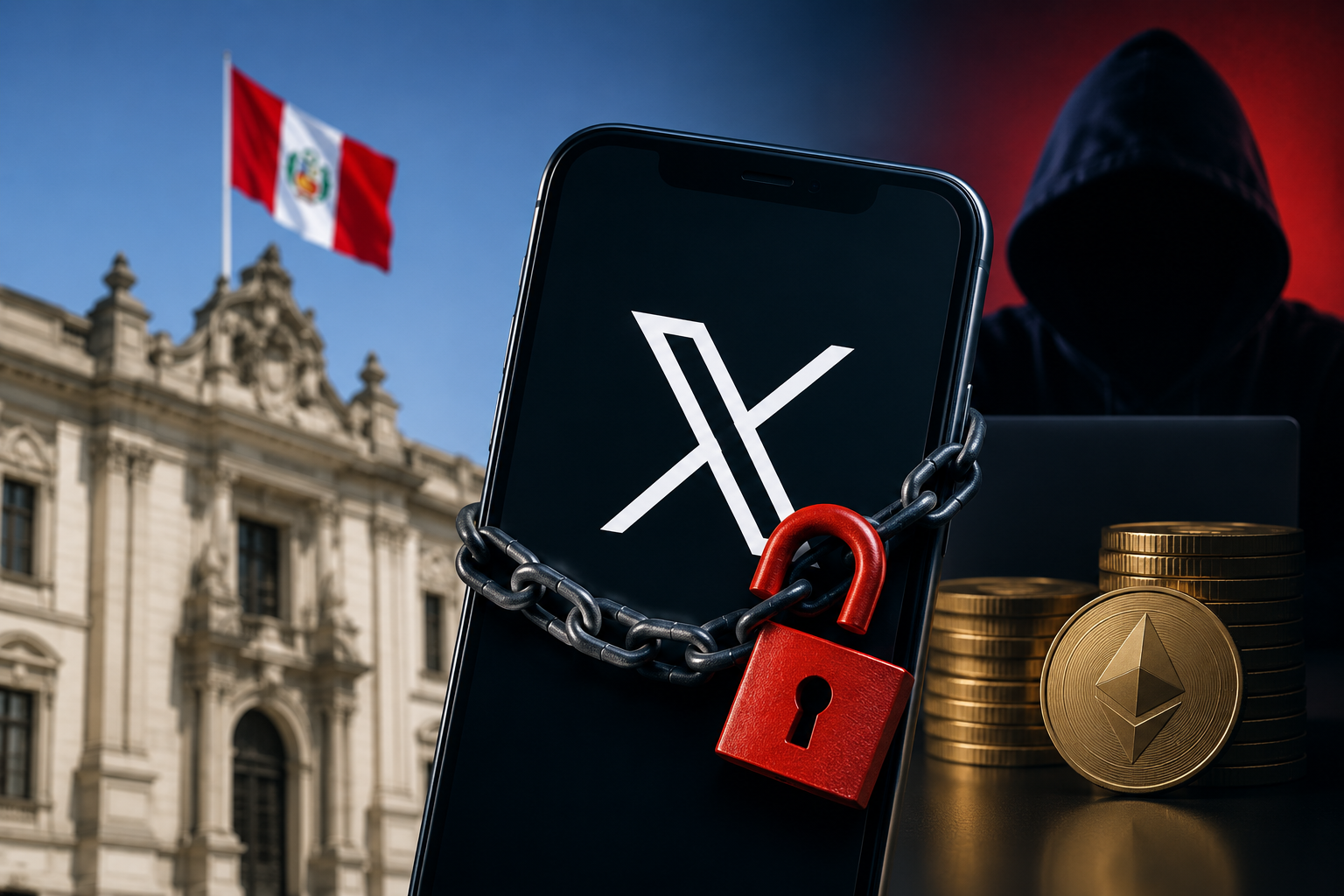
Peru’s Ministry of Economy and Finance faced a serious social media security problem on September 14, 2026, after hackers took control of its official account on X, the platform once known as Twitter.
The account was then used to promote a cryptocurrency called $HYLO. The posts gave the impression that the token had an official link to the Peruvian government. They told people in Peru that they could check how many tokens had been assigned to them. The messages also said that users could claim and trade the token from September 25.
The ministry later confirmed that its official X account had been compromised. It said that it had activated its security protocols in an effort to regain control of the account. The ministry also made clear that messages posted from the account during the breach did not represent official government communication.
Dozens of Posts Promoted $HYLO
The scale of the activity made the incident more serious. Dozens of posts appeared one after another through the ministry’s official X account. These messages promoted $HYLO and urged people to check their supposed token allocation.
The posts also gave September 25 as the date for token claims and trading. This detail could make the offer appear more real because it gave users a clear date and a reason to act quickly.
However, the Ministry of Economy and Finance did not announce any such cryptocurrency. The posts came from a compromised account, not from an approved government plan.
The messages were later removed. The ministry warned the public that anything posted through the account while it was under the control of the attackers should not be treated as an official statement.
Why a Government Account Matters
A government social media account has a level of trust that a normal account may not have. People often expect official pages to carry real information about taxes, budgets, public policy and other matters.
Peru’s Ministry of Economy and Finance has a major role in the country. Its responsibilities include public budgets, treasury matters, debt, accounting, fiscal policy, public investment and economic policy. That gives its official channels a strong position as a source of public information.
When criminals gain control of such an account, they can use that trust to make a false message look real.
That appears to be the main value of the attack in this case. The available reports point to a social media account takeover rather than a confirmed breach of Peru’s financial systems or public funds.
There is no confirmed report that the ministry’s internal financial infrastructure was attacked. There is also no confirmed figure for money lost by victims in this specific case. The known incident concerns the ministry’s X account and the false crypto promotion that appeared on it.
The Ministry Warns the Public
After the breach came to light, the ministry told people that the posts from the affected account were not official communications.
The ministry also said that it had started its security process to recover access. It said it would provide an update once control of the account had been recovered.
The warning was important because people who saw the posts could have assumed that the token had government support. A post from an official ministry account can carry far more weight than a message from an unknown crypto account.
The ministry did not say who was behind the attack. It also did not explain how the attackers gained access to the account. Reports did not establish whether any other ministry systems or social media accounts were affected.
How the Crypto Scam Could Work
The reported method is simple. First, an attacker gains control of a trusted account. Next, the attacker uses that account to promote a digital token. The message then tells people that they have received or can claim free tokens.
This type of message can attract attention because the idea of free cryptocurrency is easy to sell. A person may click a link, connect a crypto wallet or provide information without first checking whether the offer is real.
The September 25 date also added pressure. A fixed date can make people feel that they must act before they lose an opportunity.
In this case, there is no evidence that the Peruvian government approved $HYLO or that the ministry had any role in its promotion. The reports instead describe the token promotion as part of the account compromise.
A Wider Problem With Online Trust
The Peru incident shows why hacked official accounts can become useful tools for fraud. A criminal does not always need to break into a bank or government computer system to cause harm. Access to a trusted public account can be enough to reach a large audience.
Crypto scams are especially suited to this method because social media is a major place where people discover new tokens, projects and investment offers.
The false $HYLO posts also show how a scam can use familiar government language and an official account to create a sense of safety. The account itself may look genuine even when the person behind the message is not.
This makes account security important for public agencies. Strong passwords, secure login methods, careful access control and fast response plans can reduce the chance that a stolen account becomes a platform for fraud.
No Confirmed Victim Losses Yet
At this stage, the available reports do not provide a confirmed number of victims or a confirmed amount of money lost because of the Peru incident.
That point matters. The fact that scammers promoted a token does not prove that people sent money or lost funds. It also does not prove that no one was affected.
The available information only confirms that the account was compromised, that dozens of posts promoted $HYLO, that the posts referred to a September 25 claim and trading date, and that the ministry said the posts were not official. The messages were later removed.
What People Should Take From the Incident
The biggest lesson is that an official social media account is not proof that every message on it is genuine.
If an account suddenly promotes a new cryptocurrency, promises free tokens or asks users to take financial action, people should stop and verify the claim through another official source. They should not connect a crypto wallet or send money simply because the message appears on a verified government account.
In the Peru case, the ministry itself gave the clearest warning: posts made while the account was compromised did not represent its official communications.
A Warning for Governments and Users
The hack of Peru’s Economy Ministry account is a reminder that online trust can be abused in a matter of minutes. The attackers did not need to create a new government-looking account. They used the real account of a major public institution.
That made the false $HYLO promotion appear more credible than it would have on an unknown profile.
For Peru, the immediate task is to secure the account and prevent another unauthorized takeover. For the public, the lesson is just as clear: a government name or official social media profile should never replace basic checks before any financial action.
The incident remains a social media security breach with a reported crypto scam at its center. There is no confirmed evidence that Peru’s government endorsed $HYLO, launched the token or suffered a breach of its financial systems. Until more facts emerge, any claim that the Peruvian government supports the token should be treated as false.
Also Read – Yen Holds Near 7-Month High as BOJ Rate Hike Bets Rise