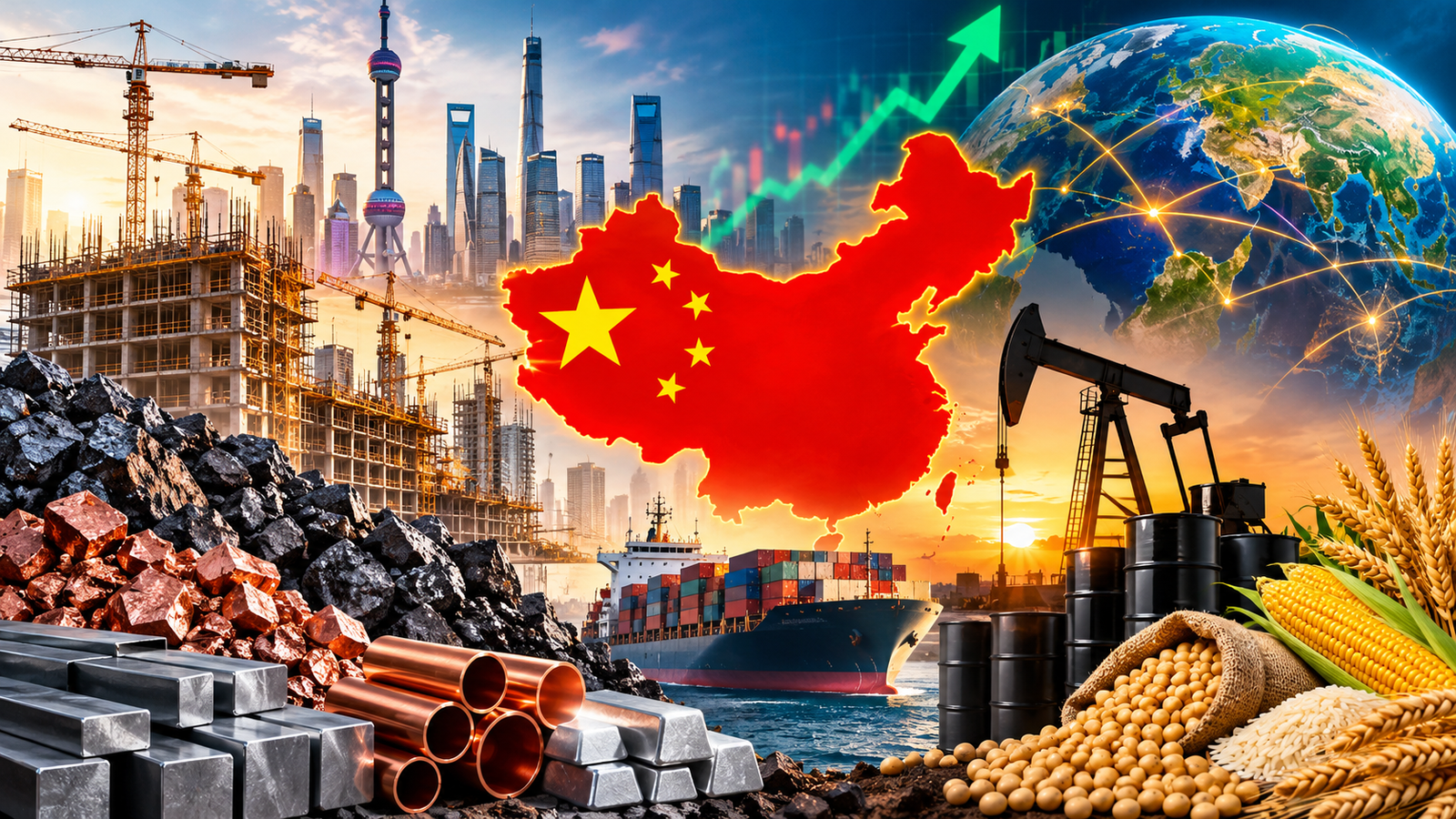
China is one of the world’s largest buyers of raw materials. These materials include iron ore, copper, crude oil, coal, soybeans, and other farm products. Many countries sell these goods to China and depend on its demand for income.
When China’s economy grows, its need for raw materials may rise. This can push prices up across the world. When its economy slows down, demand may fall, which can lead to lower prices. These changes affect businesses, workers, governments, and people in many countries.
However, the effect depends on the type of growth in China. A rise in factory output may boost demand for metals and oil, while a fall in home sales may hurt demand for steel and iron ore.
Effect on Industrial Metals
China uses large amounts of iron ore, copper, aluminium, and zinc. These metals are vital for homes, roads, bridges, factories, cars, and power systems.
When China spends more on roads, railways, homes, and other projects, it needs more steel and other metals. This can raise demand for iron ore and copper in world markets. As demand rises, prices may also rise if supply does not keep pace.
Countries such as Australia, Chile, and Peru can gain from this trend. Australia is a major iron ore exporter, while Chile and Peru are key copper producers. Higher metal prices can boost their export income and support their economies.
However, if China’s property market remains weak, demand for steel and iron ore may fall. This can put pressure on global metal prices and reduce income for firms that rely on Chinese buyers.
Effect on Energy Prices
China is a major user of crude oil, coal, and natural gas. Its factories, power plants, transport systems, and chemical industries need large amounts of energy.
When its economy grows fast, the need for energy may rise. More factory output and road travel can lift oil demand. Higher demand may push oil prices up, especially when global supply is tight.
When China’s growth slows, its need for energy may rise at a slower pace or even fall. This can put pressure on oil and other energy prices.
These changes matter to oil exporters, especially in the Middle East. Higher oil prices can raise export income and government revenue. Lower prices can have the opposite effect.
Still, China is not the only force that sets energy prices. Wars, supply cuts, stock levels, and changes in demand from other countries also play a major role.
Effect on Farm Products
China also buys large amounts of farm goods from other countries. These include soybeans, grains, and products used as animal feed.
As incomes rise, people may buy more meat and other food products. Farmers and food firms then need more animal feed, which can raise demand for soybeans and some grains.
Brazil is a major soybean exporter and can gain from strong Chinese demand. Higher demand may support farm prices and raise export income.
Yet this link is not always clear. China has its own farms, and its food policies can affect imports. Weather, crop size, and prices from rival suppliers also shape the market.
Effect on Clean Energy Minerals
China has a large role in the global markets for electric cars, batteries, solar panels, and wind power. These sectors need materials such as copper, lithium, graphite, nickel, and rare earth elements.
If China expands its clean energy sector, demand for some of these materials may rise. Copper is vital for power lines and electrical systems, while lithium and graphite are key battery materials.
This can create new trade and business chances for mineral producers. It can also raise prices when supply cannot meet demand.
However, China is also a major producer and processor of many of these materials. If its firms raise output, supply may grow faster than demand. This can push prices down even as the clean energy sector expands.
Why the Type of Growth Matters
China’s total economic growth does not tell the full story. The source of that growth is just as important.
If growth comes from homes, roads, and large public projects, demand for steel, iron ore, and copper may rise. If growth comes from factories and exports, demand for metals and energy may also increase.
But if the property market stays weak, demand for construction materials may fall. If services play a larger role in the economy, growth may not create the same level of demand for raw materials as a major rise in construction would.
This means that even when China’s economy grows, not every commodity will benefit in the same way.
Effect on Other Countries
China’s demand for raw materials affects many countries that rely on exports. Australia may earn more from iron ore, Chile and Peru may gain from copper, and Brazil may benefit from soybean sales when Chinese demand is strong.
Middle Eastern oil exporters may also gain when Chinese oil demand supports global prices. Higher export income can help these countries fund public services and other projects.
On the other hand, countries that buy large amounts of oil, metals, and food may face higher costs when commodity prices rise. Their import bills can increase, which may put pressure on businesses and national budgets.
These changes can also affect currency values. Strong export income may support the currency of a commodity-exporting country, while a higher import bill may put pressure on the currency of a country that buys more than it sells.
Effect on Inflation and Business
Commodity prices affect the cost of many everyday goods. When oil prices rise, transport and factory costs may increase. When metal prices rise, the cost of cars, machines, and buildings may also rise.
Firms may pass these extra costs on to buyers. As a result, people may pay more for goods and services. This can add to inflation across many countries.
Lower commodity prices can help firms cut costs and may reduce price pressure. But they can also hurt firms and workers in countries that rely on the sale of raw materials.
Mining and energy firms also base their plans on expected demand. If they expect China to buy more, they may invest in new mines and other projects. If they expect demand to fall, they may delay or cut such plans.
What to Watch
To understand how China may affect commodity markets, it is useful to track its factory output, home sales, property investment, road and rail projects, and imports of key raw materials.
Government support measures also matter. New plans for homes, transport, factories, or clean energy can change demand for specific goods.
Global supply must also be part of the picture. Even if China buys more, prices may not rise much if producers can supply enough goods. In the same way, a supply shortage can push prices up even when demand is weak.
Conclusion
China’s economic growth has a major effect on global commodity markets because the country buys large amounts of metals, energy, and farm products. Strong demand can lift prices and help exporters such as Australia, Chile, Peru, and Brazil. Weak demand can lower prices and hurt countries and firms that rely on these sales.
The effect depends on where growth comes from, how much China imports, and how much the world can supply. For this reason, China’s growth rate alone is not enough to predict commodity prices. Its property market, factory output, energy needs, clean energy plans, and trade data also matter.
In simple terms, when China buys more raw materials, many global prices may rise. When it buys less, prices may fall. But supply, world events, and demand from other countries can change the final result.
ALSO READ: European Markets: The Key Signals Every Investor Must Watch