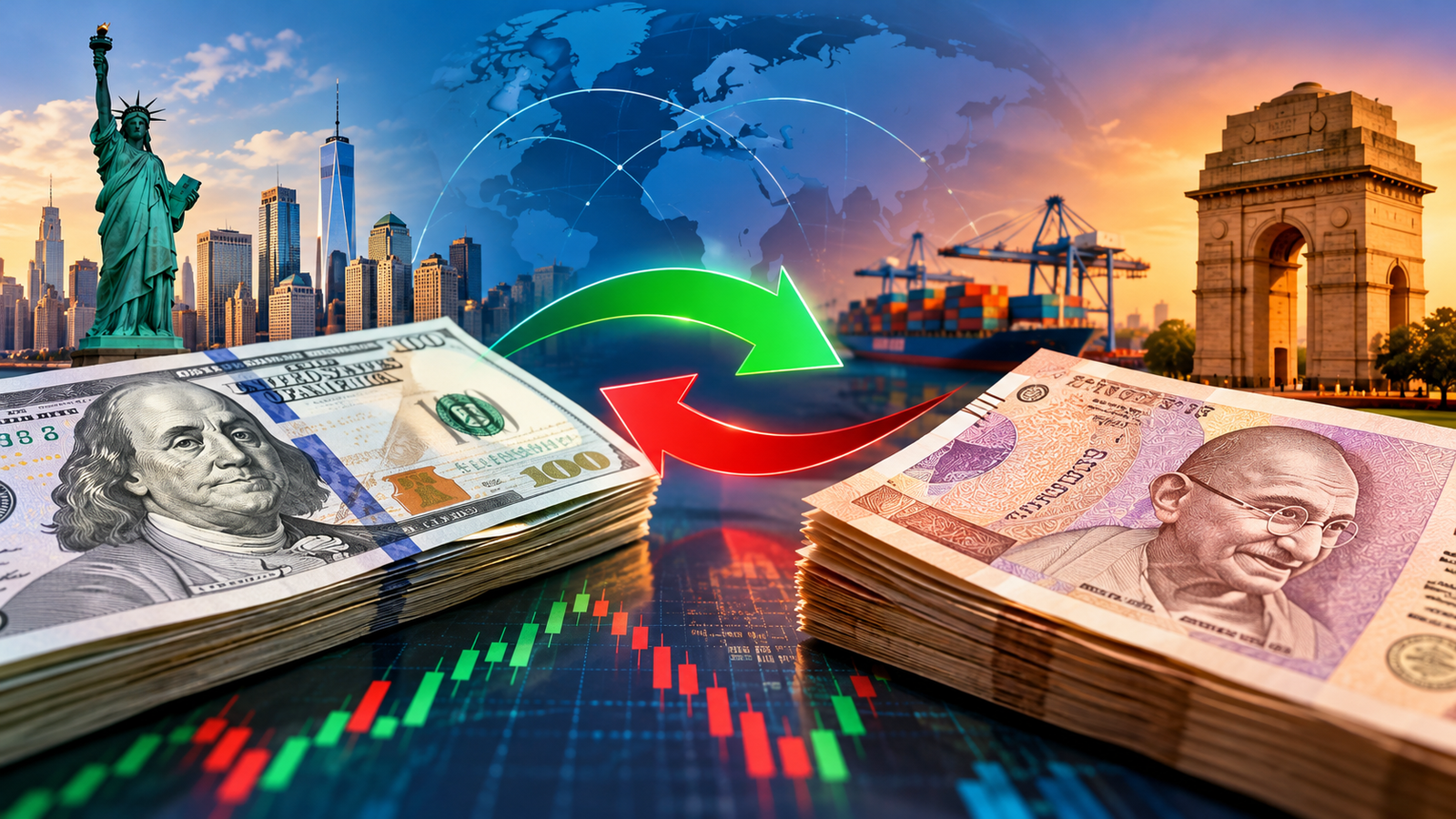
The USD-INR exchange rate tells us how many Indian rupees we need to buy one US dollar. For example, if one dollar costs ₹83, you need ₹83 to buy it. If the rate rises to ₹87, you need more rupees for the same dollar. This means the rupee has lost value against the dollar. If the rate falls from ₹87 to ₹83, the rupee has gained value.
This rate matters to India because the country buys many goods from other nations, and several of these payments take place in US dollars. It also affects students who study in the US, families who send money abroad, businesses that buy foreign goods, and people who travel overseas.
1. US Interest Rates
Interest rates in the United States play a major role in the value of the dollar. When US interest rates rise, dollar-based savings and investments may offer better returns. As a result, more investors may choose to put their money into US assets.
To do this, they often need US dollars. This raises demand for the dollar and can push the USD-INR rate up. A higher rate means the rupee has lost value against the dollar.
However, this does not happen every time. The final result also depends on India’s interest rates, market expectations and other economic factors.
2. Crude Oil Prices
India imports a large amount of crude oil from other countries. The country needs oil for fuel, transport and many parts of its economy. Since oil payments often take place in US dollars, oil prices can affect the rupee.
When crude oil prices rise, India’s oil bill can also rise. Indian buyers may then need more dollars to pay foreign suppliers. This can increase demand for dollars and put pressure on the rupee.
When oil prices fall, India’s import bill may come down. This can reduce the need for dollars and offer some support to the rupee. The effect depends on other factors, such as the amount of oil India buys and the movement of global markets.
3. Foreign Investment
Foreign investors often put money into Indian shares, bonds and businesses. When they bring money into India, they may need to exchange their dollars for rupees. This can increase demand for the rupee and help support its value.
The opposite can happen when foreign investors sell their Indian assets and take their money out of the country. They may exchange their rupees for dollars before they leave. This can raise demand for dollars and put pressure on the rupee.
Foreign investment can change quickly when investors expect better returns elsewhere or feel less confident about the Indian economy. These changes can affect USD-INR even when India’s local economy remains stable.
4. India’s Imports and Exports
India buys goods such as crude oil, electronics and machinery from other countries. It also sells goods and services abroad. These sales bring foreign money into the country.
When India spends more on imports than it earns from exports, it has a trade deficit. This can raise the country’s need for foreign currency, including US dollars. If the supply of dollars does not keep pace with demand, the rupee may lose value.
Exports can help balance this effect. When Indian companies sell more goods and services abroad, they can bring more foreign money into the country. This may support the rupee.
Still, a trade deficit does not always cause the rupee to fall. Foreign investment and other money flows can help cover the gap.
5. The US Federal Reserve and the RBI
The US Federal Reserve is the central bank of the United States. The Reserve Bank of India, or RBI, is India’s central bank. Both can affect USD-INR through their policy decisions.
When the US Federal Reserve raises interest rates or signals that rates may stay high, investors may prefer dollar-based assets. This can strengthen the dollar against the rupee.
The RBI can also affect the currency market. It may buy or sell dollars to reduce sharp changes in the rupee’s value. For example, the RBI may sell dollars when demand for them rises too fast. This can help reduce pressure on the rupee.
The RBI does not fix the exchange rate at one level every day. Its actions can help control sudden changes, but many other forces still affect the market.
6. Global Events and Market Fear
Events around the world can also move USD-INR. Wars, financial crises, political problems and sudden market shocks can make investors more careful with their money.
During such periods, many investors prefer assets they see as safer and easier to trade. The US dollar often benefits because it has a major role in world trade and finance.
If demand for the dollar rises during a crisis, the rupee may weaken. However, the result depends on the event and how investors respond to it. Not every global crisis has the same effect on the currency market.
7. Inflation and Economic Growth
Inflation means a rise in the prices of goods and services. If prices rise faster in India than in the United States for a long time, the rupee may lose value against the dollar over time.
This is because high inflation can reduce the amount of goods and services that people can buy with their money. It can also affect costs for businesses and the wider economy.
Economic growth matters too. A strong economy may attract foreign investors and support the local currency. If investors expect better returns from India, more foreign money may enter the country.
However, strong economic growth alone cannot guarantee a stronger rupee. Oil prices, interest rates, trade and global demand for the dollar also play important roles.
How Supply and Demand Affect USD-INR
The exchange rate works much like the price of any item in a market. When more people need dollars, the price of the dollar in rupees tends to rise. This means USD-INR goes up and the rupee weakens.
When more dollars enter the market and demand stays steady, the price of the dollar in rupees may fall. This means USD-INR goes down and the rupee strengthens.
For example, if oil prices rise at the same time that foreign investors sell Indian shares, both events may raise demand for dollars. This can put more pressure on the rupee than either event alone.
A Simple Example of the Cost
Suppose you need to pay a US university tuition bill of $10,000. The amount you pay in rupees will depend on the exchange rate.
At ₹83 per dollar, the bill costs ₹8,30,000. At ₹85 per dollar, it costs ₹8,50,000. At ₹87 per dollar, it costs ₹8,70,000.
So, a rise from ₹83 to ₹87 per dollar adds ₹40,000 to the bill. This amount does not include bank fees or other conversion charges. The same change can affect travel costs, overseas education fees and payments for imported goods.
What Should You Watch?
To understand changes in USD-INR, keep an eye on US Federal Reserve decisions, RBI policies, crude oil prices, foreign investment in India, the US Dollar Index, US Treasury yields, and India’s inflation and trade data.
The US Dollar Index shows how the dollar performs against a group of major currencies. US Treasury yields show the returns on US government debt and can affect investor choices. Together, these figures can help explain why the dollar rises or falls.
Final Thoughts
The USD-INR exchange rate depends on several factors, not just one. US interest rates, oil prices, foreign investment, trade, inflation and global events all affect the value of the rupee against the dollar.
The key idea is simple: when demand for dollars rises compared with its supply, USD-INR tends to rise. When dollar supply grows compared with demand, the rate may fall.
No single factor can predict every move in the exchange rate. It is better to look at several economic signs together to understand why the rupee has gained or lost value.
ALSO READ: How Global Bond Yields Affect Indian Markets