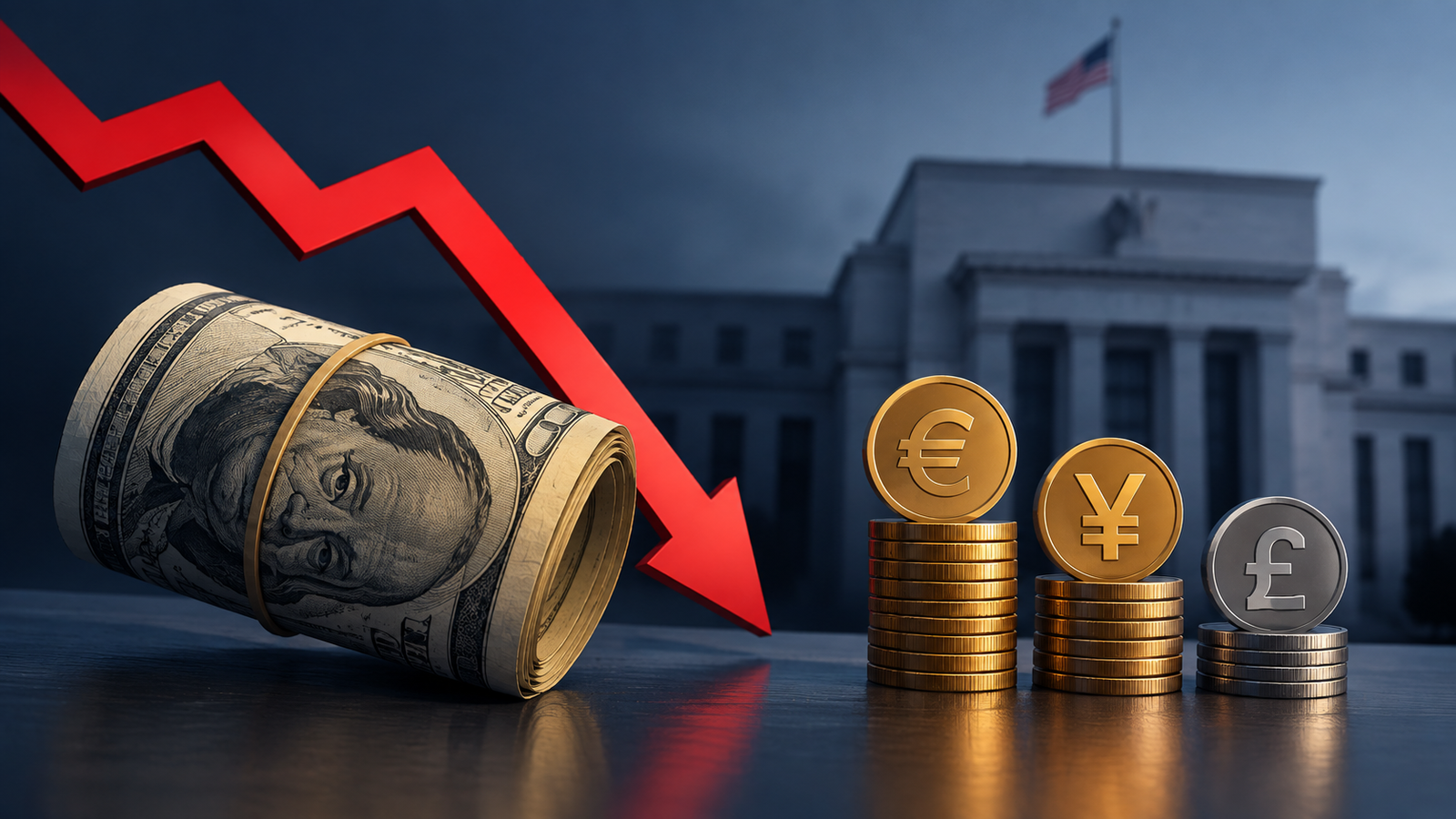
Global foreign exchange markets opened the week under heavy pressure after U.S. Federal Reserve Chair Jerome Powell delivered a sharp response to renewed political criticism. Traders reacted instantly. The U.S. dollar swung across major pairs, risk sentiment shifted hour by hour, and safe-haven currencies regained attention. Powell’s comments did not introduce new policy actions, but his tone carried weight. Markets listen closely when the Federal Reserve defends its independence, and this moment proved no exception.
The confrontation followed public attacks from former President Donald Trump, who accused the Federal Reserve of harming economic growth through restrictive policy. Powell answered firmly. He reaffirmed the Fed’s commitment to price stability, data-driven decisions, and institutional independence. Currency traders interpreted that stance as a warning. The central bank would not bend to political pressure, even in an election-sensitive year.
Forex desks across Asia and Europe responded before Wall Street opened. The dollar index slipped early, then reversed sharply. Traders rushed to reassess interest rate expectations, political risk, and capital flows. Volatility returned to levels not seen since late 2025, especially in dollar-yen and euro-dollar trading.
Dollar Faces Tug-of-War Between Yield and Credibility
The U.S. dollar entered January with strong momentum. Higher relative yields and resilient U.S. growth supported demand. Powell’s remarks challenged that calm. His pushback reminded investors that political noise could intensify through 2026. Markets do not fear independence; they fear conflict around it.
Some traders sold the dollar on concerns that political attacks might erode confidence in U.S. institutions over time. Others bought the dollar on the view that Powell’s resolve protected long-term credibility. That split opinion produced sharp intraday swings rather than a clean trend.
EUR/USD climbed above recent resistance during Asian hours, then retreated after U.S. traders entered. The pair reflected uncertainty more than conviction. The euro lacked its own strong catalyst, so dollar sentiment drove the move almost entirely.
Yen Strengthens as Safe-Haven Demand Returns
The Japanese yen emerged as a clear beneficiary of the turmoil. Traders increased demand for the yen as volatility rose and equity futures softened. USD/JPY dropped quickly after Powell’s comments circulated through global markets.
Japan’s low yields usually limit yen strength, but risk aversion can override rate differentials. This session followed that script. Hedge funds trimmed carry trades and reduced exposure to high-yielding currencies. The yen gained against the dollar, the Australian dollar, and several emerging market currencies.
Traders also watched Japanese officials closely. Any sign of tolerance for yen appreciation could amplify moves. Powell’s remarks did not cause yen strength alone, but they triggered the conditions that allowed it.
European Currencies Track Dollar Moves
The euro, pound, and Swiss franc tracked dollar sentiment throughout the session. None of these currencies delivered major domestic news, so traders focused almost entirely on U.S. developments.
The Swiss franc attracted modest inflows as another safety play. EUR/CHF edged lower as investors reduced risk exposure. The British pound showed more resilience, supported by steady UK data and limited political noise at home. Still, GBP/USD followed the dollar’s swings rather than setting its own direction.
European traders described the session as reactive rather than proactive. They watched Washington, not Frankfurt or London, for cues.
Emerging Markets Feel the Pressure
Emerging market currencies faced mixed outcomes. High-yield currencies struggled as risk appetite weakened. Investors reduced exposure to currencies tied closely to global growth and commodity demand.
Latin American currencies showed early losses as U.S. yields fluctuated. Asian emerging market currencies held up slightly better, supported by local inflows and cautious central bank stances. Still, traders treated Powell’s comments as a reminder. U.S. political uncertainty can spill over quickly into global capital flows.
Countries with large external financing needs felt the most pressure. Traders demanded higher risk premiums, especially where domestic politics already created uncertainty.
Interest Rate Expectations Remain the Core Driver
Powell did not change policy guidance, but his tone influenced rate expectations indirectly. By emphasizing independence and inflation control, he signaled patience rather than urgency. Markets reduced bets on rapid rate cuts later in 2026.
That shift supported U.S. yields at the long end, even as short-term yields moved less. Forex traders recalibrated strategies accordingly. Yield differentials still matter, but political headlines can override them in the short term.
The bond market reaction reinforced the forex response. When yields moved unevenly across the curve, currency traders followed.
Political Risk Reenters the Forex Narrative
For much of 2025, forex markets focused on inflation, growth, and central bank divergence. January 2026 reintroduced political risk as a major theme. Powell’s confrontation with Trump highlighted that risk clearly.
Investors understand that election cycles increase headline risk. Direct attacks on the central bank raise the stakes further. Even without policy changes, rhetoric alone can shift sentiment, alter positioning, and increase volatility.
Forex markets price credibility as much as interest rates. Powell’s defense of the Fed reassured some investors while alarming others who fear prolonged institutional conflict.
Short-Term Volatility Likely to Persist
Traders now expect elevated volatility to continue in the near term. Political commentary, central bank speeches, and data releases can trigger exaggerated moves while positioning remains light.
Many desks reduced leverage after the initial swings. Others looked for opportunities to trade ranges rather than trends. Options markets reflected that shift, with implied volatility rising across major dollar pairs.
The next U.S. inflation report and upcoming Fed communications could either calm markets or fuel further turbulence. Until clarity emerges, forex traders will treat headlines as tradable events.
Conclusion: Words Move Markets
Jerome Powell did not announce a rate hike or cut. He did not unveil a new framework. Yet his words moved global forex markets decisively. His response to political pressure reminded investors that central bank independence remains a pillar of currency stability.
The dollar now trades at the intersection of yield support and political uncertainty. Safe-haven currencies regained relevance. Emerging markets face renewed scrutiny. Traders must navigate a landscape where rhetoric carries as much weight as data.
As 2026 unfolds, forex markets will continue to test that balance. Powell has drawn a line. Markets will watch closely to see who challenges it next.
Also Read – Crypto Liquidity Crisis: Is It Over?