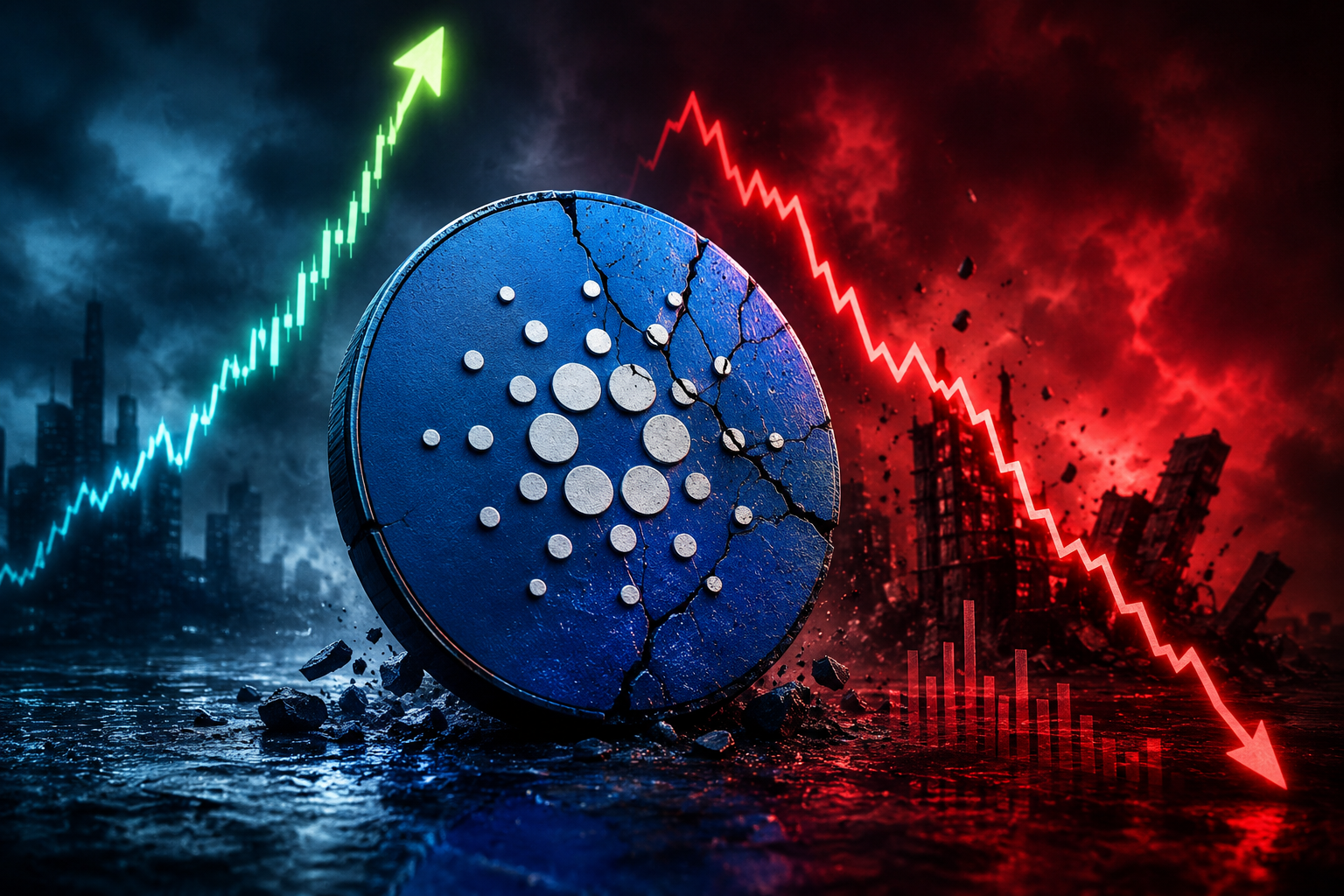
Cardano once stood among the biggest names in crypto. Many people saw it as the future of blockchain technology. Fans called it the “Ethereum killer.” Investors believed ADA could become one of the most important digital assets in the world.
For some time, that dream looked real.
In 2021, Cardano reached an all-time high near $3.10. Its market value crossed $90 billion. ADA became one of the largest cryptocurrencies on the planet. Huge excitement filled the market, and many people expected Cardano to dominate crypto for years.
But things did not go as planned.
Today, ADA trades more than 90% below its peak price. Other blockchains moved ahead faster, while Cardano faced delays, weak adoption, and constant criticism. The project still exists, but many investors now see it as one of the biggest disappointments in crypto history.
The Early Promise of Cardano
Cardano launched in 2017. The project came from Charles Hoskinson, one of Ethereum’s co-founders. His goal was simple. He wanted to build a blockchain that solved the problems older networks faced.
The Cardano team focused on research and academic work. Developers used peer-reviewed papers before they released updates. Supporters believed this careful process would create a safer and stronger blockchain.
The network also used a proof-of-stake system called Ouroboros. This method used far less energy than Bitcoin mining. At that time, many people saw Cardano as a modern and smart alternative.
The vision sounded powerful. Fast transactions, low fees, security, and decentralized governance attracted huge attention from crypto investors around the world.
ADA Became One of Crypto’s Biggest Coins
During the 2020 and 2021 bull market, ADA exploded in price. Millions of investors rushed into crypto, and Cardano became one of the hottest assets.
People believed Cardano would soon support massive decentralized finance projects, NFT platforms, games, and enterprise systems.
By September 2021, ADA touched almost $3.10. The market cap crossed $90 billion. Only Bitcoin and Ethereum stood ahead for a short period.
At that moment, Cardano looked unstoppable.
But the excitement came mainly from future expectations, not real adoption. Investors paid huge prices before the ecosystem proved itself.
That became a serious problem later.
Slow Development Hurt Cardano
One major issue followed Cardano from the start. Development moved very slowly.
The team focused heavily on research and testing. While this approach looked professional, crypto markets changed very fast.
Other blockchains released products quickly. Ethereum expanded rapidly. Solana gained popularity. Avalanche and Polygon attracted developers. Binance Smart Chain built a huge ecosystem in a short time.
Cardano spent years preparing upgrades while rivals gained users, apps, and liquidity.
Supporters defended the slow pace. They said Cardano cared more about quality than speed.
Critics disagreed. They believed Cardano moved too slowly for the crypto world.
Over time, this criticism became stronger.
Smart Contracts Came Too Late
Smart contracts are the heart of modern blockchains. They allow developers to create decentralized exchanges, lending apps, NFT markets, and games.
For years, Cardano lacked this feature.
Finally, the Alonzo upgrade arrived in 2021 and introduced smart contracts to the network. The crypto community expected a huge moment for Cardano.
But the market reacted differently.
By that time, Ethereum already controlled the DeFi sector. Solana, Avalanche, and other chains also gained traction. Developers had many choices, and most stayed with ecosystems that already had users and liquidity.
Cardano entered the race very late.
The network gained smart contracts, but adoption remained far smaller than many investors expected.
The Ecosystem Never Matched the Hype
The biggest problem for Cardano was the huge gap between promises and reality.
Supporters predicted thousands of apps and massive financial activity. Many expected banks, governments, and companies to use the network.
That level of adoption never arrived.
Cardano built an ecosystem, but activity stayed small compared to rivals. Many developers avoided the chain because users and capital already existed elsewhere.
This created a difficult cycle.
Developers wanted users before they built apps. Users wanted strong apps before they joined the network.
Cardano struggled to solve that issue.
Even after years of development, its ecosystem remained much smaller than Ethereum or Solana.
ADA Became More Speculation Than Utility
Another major issue came from ADA’s valuation.
The token price rose far faster than actual network usage. During the bull market, many investors bought ADA because they believed future success was guaranteed.
But markets eventually demand results.
When adoption failed to grow at the expected pace, investors started selling. The price collapsed hard during the crypto bear market.
Today, ADA trades near $0.23 to $0.28 in June 2026. That remains more than 90% below its all-time high near $3.10.
The market cap also fell sharply from above $90 billion to roughly $8 billion to $10 billion.
This massive drop damaged investor confidence.
Competition Became Too Strong
Cardano also faced brutal competition.
Ethereum remained the king of smart contracts. Solana became famous for speed and cheap fees. Polygon expanded through partnerships. Newer networks like Sui and Aptos entered the market with fresh technology.
Crypto users usually follow trends, developers, and liquidity.
Cardano failed to capture enough momentum while rivals expanded aggressively.
This made it harder for the network to grow.
Even loyal supporters admitted the project lost valuable time during key years of crypto expansion.
The Crypto Crash Made Things Worse
The entire crypto industry suffered after 2021.
Major disasters shook the market. The collapse of Terra and FTX destroyed investor trust. Many crypto companies went bankrupt. Fear spread across the industry.
Risky assets fell sharply, and ADA suffered heavy losses.
The bear market exposed weak projects and punished tokens with inflated valuations.
Cardano survived the crash, but the damage was enormous.
Latest Cardano News in 2026
Despite its struggles, Cardano still moves forward.
Developers now work on a major scalability plan called Ouroboros Leios. The upgrade aims to improve transaction speed and network capacity.
The ecosystem also prepares for the Van Rossem hard fork. This update should improve smart contracts, performance, and security.
Cardano continues its push toward decentralized governance through the Voltaire era upgrades. Community members now gain more influence over the future of the network.
At the same time, concerns still exist.
Charles Hoskinson recently warned that several projects inside the Cardano ecosystem could fail because of financial pressure. Analytics platform TapTools also announced plans to shut down operations.
These events raised fresh questions about the health of the ecosystem.
Can Cardano Recover?
Cardano still has strengths.
The project has a loyal community, active staking participation, and strong long-term supporters. Developers continue work on upgrades and infrastructure.
But the biggest challenge remains adoption.
Technology alone does not guarantee success in crypto. Networks need users, developers, apps, and liquidity.
Cardano spent years building technology while competitors captured market share.
That is why many investors now see ADA as a lesson about hype and expectations.
The project once looked ready to dominate crypto. Instead, it became one of the industry’s biggest missed opportunities.
Still, crypto markets change quickly. If Cardano finally turns its technology into real adoption, the story could change again.
For now, however, ADA remains far below its former glory.
Also Read – What to Expect From Indian Stock Market After RBI Policy

