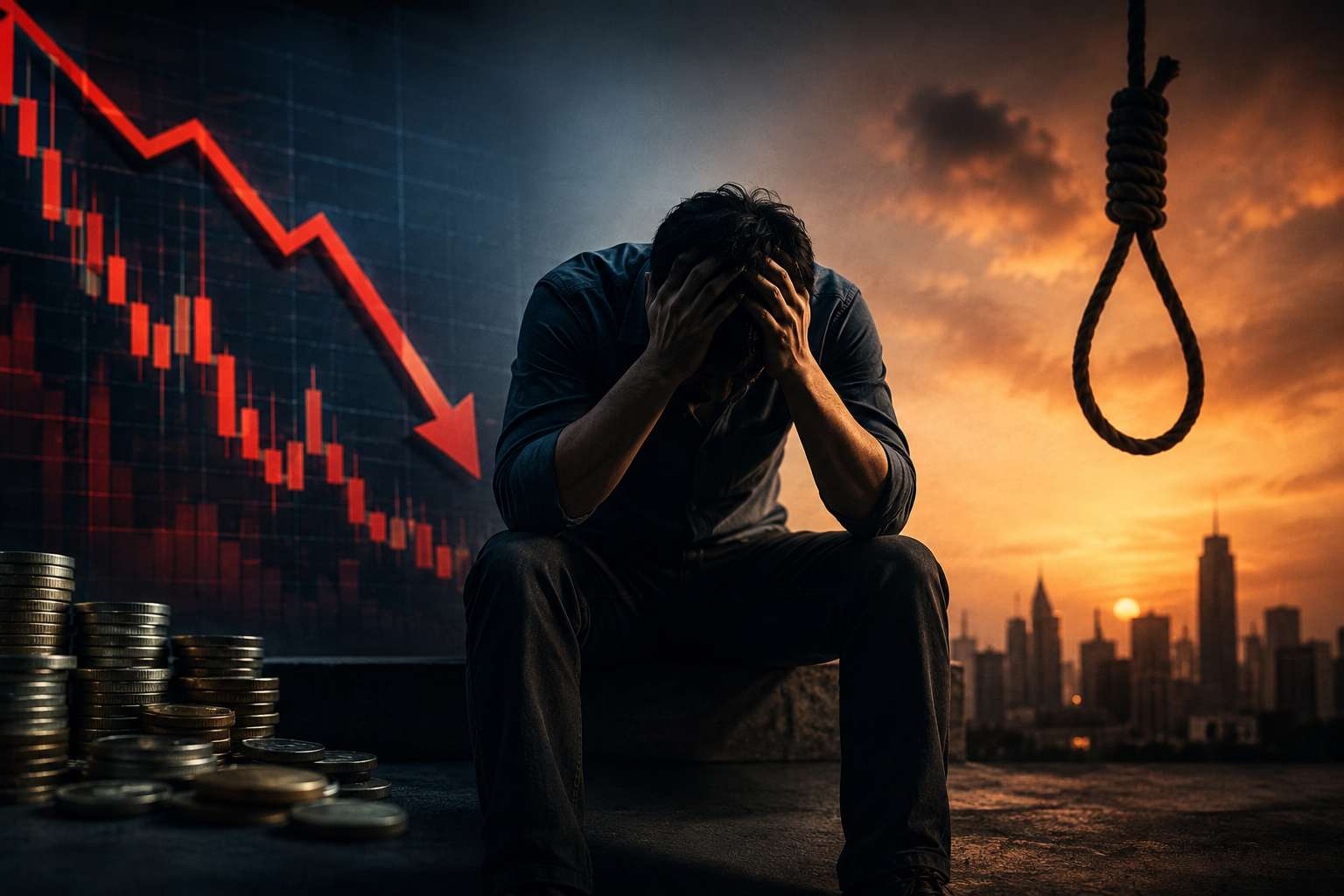
The stock market attracts millions of people across the world. Many investors enter the market with dreams of quick success, financial freedom, and a better future for their families. Some people make profits and build wealth over time. However, many others face painful losses that destroy savings, increase debt, and create emotional stress. In extreme situations, heavy financial losses push people toward depression and suicide.
The stock market itself does not track deaths linked to trading losses. No official global database records how many people die because of failed investments. Still, news reports, police investigations, and academic studies show a clear pattern. Severe losses in shares, futures, options, and other risky investments often become a major reason behind suicide cases.
These deaths rarely happen because of money alone. Financial stress usually combines with fear, social pressure, family expectations, debt, and emotional pain. Yet experts agree that sudden market crashes and large financial losses can deeply affect mental health. In many cases, people feel trapped after they lose huge amounts of money that they cannot recover.
The Rapid Rise of Retail Investors
India has seen massive growth in stock market participation during the last few years. By 2025, the country crossed more than 190 million demat accounts. In 2020, this number remained below 40 million. This sharp rise shows how fast ordinary people entered the stock market.
Online trading apps made investing easier than ever before. A person can now open a trading account within minutes through a mobile phone. Social media influencers, finance channels, and trading videos also encourage people to try stock trading. Many advertisements present the market as a simple path to wealth.
Daily turnover in Indian stock markets often crosses ₹1 lakh crore. Millions of retail traders buy and sell shares every day. Young investors, college students, salaried workers, and retired people now actively trade in stocks and derivatives.
This rapid growth also increases financial risk. Many new investors enter the market without proper knowledge. Some depend on social media tips instead of research. Others borrow money to invest in risky trades. When markets fall sharply, losses become severe.
The Dark Side of Borrowed Money
One major danger in stock trading comes from debt. Many investors use borrowed money in hopes of earning bigger profits. Some take personal loans from banks. Others borrow from friends, relatives, or private lenders. Certain traders also use margin trading, where brokers lend extra funds for larger trades.
This system may increase profits during a rising market. However, it also increases losses during market crashes. In some situations, investors lose more money than they originally invested. A sudden fall in prices can wipe out years of savings within days.
Heavy debt creates extreme pressure. Loan repayments continue even after investments fail. Bank calls, creditor pressure, and social shame often make the situation worse. Many victims feel they have no way out of their financial crisis.
Studies show that people with severe debt face much higher risks of depression and anxiety. Experts say individuals with unmanageable loans are two to three times more likely to suffer mental health problems than those without major debt burdens.
Real-Life Suicide Cases From India
India has witnessed many tragic suicide cases linked to stock market losses. These stories reveal the emotional pain behind financial collapse.
In Bengaluru, a 50-year-old man named Venkatesh died by suicide after heavy losses in share trading. Reports said he struggled with financial problems and constant pressure from creditors.
In Surat, a 31-year-old diamond unit manager ended his life after he lost more than ₹10 lakh in the stock market. He also carried large debts that increased his stress.
In Chennai, a tech worker jumped from his office building after he lost ₹10 lakh borrowed from a bank. Reports said repeated calls from bank staff pushed him into severe emotional distress.
In Rajkot, a 25-year-old man died by suicide after he lost ₹60 lakh that belonged to his father. Reports stated that he had secretly invested the money in the market.
These incidents represent only a small number of reported cases. Many similar deaths never receive national attention. Families often avoid public discussion because of shame or social pressure.
Market Crashes and Their Human Impact
Large stock market crashes often affect society far beyond financial losses. They can destroy jobs, businesses, savings, and emotional stability.
The 2008 global financial crisis remains one of the clearest examples. Major banks collapsed, stock markets crashed, and millions of people across the world faced economic hardship.
The Indian Sensex fell almost 60 percent between January and October 2008. In the United States, the S&P 500 lost around 57 percent of its value between 2007 and 2009.
The financial damage reached historic levels. Experts estimate that more than $30 trillion disappeared from global wealth during the crisis. In the United States alone, household wealth dropped by nearly $11 trillion. Major banks in America and Europe suffered losses above $1 trillion because of toxic assets and failed loans.
The COVID-19 pandemic also created panic in financial markets. During March 2020, the Sensex fell around 38 percent within weeks. Investors across the world watched huge portions of their wealth disappear in a short period.
For wealthy investors, these losses may recover over time. However, for ordinary people who invest savings, retirement funds, or borrowed money, such crashes can destroy financial security.
Studies That Link Financial Crises and Suicide
Academic research strongly supports the connection between economic crises and suicide rates.
A study published in the British Journal of Psychiatry estimated that the 2008 financial crisis caused around 4,900 to 6,500 additional suicides worldwide during 2008 and 2009.
Another major study found that recession-related hardship may have led to more than 10,000 extra suicides across Europe and North America after the financial crash.
Researchers who examined data from 54 countries discovered that suicide rates increased after the global recession, especially among working-age men.
Experts explain that sudden financial collapse creates feelings of hopelessness and failure. People who lose businesses, savings, or jobs may struggle to rebuild their lives. Some feel intense guilt toward family members. Others fear public embarrassment and social judgment.
Mental health professionals stress that suicide usually results from multiple factors. Still, financial disasters often act as a major trigger during already stressful situations.
Why Financial Loss Hurts So Deeply
Money affects much more than lifestyle. For many people, financial success connects with self-respect, social status, and family responsibility.
When investors lose huge amounts of money, they often feel shame and guilt. Some fear disappointing parents, spouses, or children. Others worry about public criticism from relatives and society.
Behavioral finance experts describe a concept called “loss aversion.” This theory explains that people feel the pain of losses far more strongly than the happiness from gains. A person who loses ₹10 lakh may experience emotional suffering much greater than another person who earns the same amount.
This emotional reaction becomes stronger when losses come suddenly. A trader who watches savings disappear within hours may panic and make poor decisions. Fear and stress often lead to sleepless nights, anxiety, anger, and hopelessness.
In many cases, victims isolate themselves from family and friends. They avoid conversations because they feel embarrassed about their financial mistakes. This isolation increases emotional pain.
The Mental and Physical Effects of Trading Stress
Extreme financial stress affects both the mind and body. Mental health experts say market losses can create serious emotional problems.
People under heavy financial pressure often suffer anxiety, depression, panic attacks, headaches, and poor sleep. Some lose appetite. Others experience constant fear and emotional exhaustion.
Stress hormones rise sharply during financial crises. Doctors say long-term stress may increase blood pressure and heart-related problems.
For active traders, the emotional pressure becomes even more intense. Many traders spend long hours watching market movements. Constant fear of losses creates emotional instability.
Some investors become addicted to trading. After losses, they try risky trades in hopes of recovering money quickly. This behavior often causes even bigger losses.
Psychologists compare this pattern to gambling addiction. The hope of quick recovery pushes people into dangerous financial decisions.
The Influence of Social Media and Trading Culture
Social media now plays a major role in modern investing culture. Thousands of influencers post videos about stock tips, fast profits, and luxury lifestyles.
Many young investors believe stock trading offers an easy path to wealth. Some influencers show only profits while hiding losses and risks. This creates unrealistic expectations.
Online communities also increase pressure. Traders often compare profits with others on social media. When losses happen, feelings of failure become stronger.
During market rallies, many people invest without understanding risk. They follow trends, rumors, or advice from strangers online. When markets crash, panic spreads rapidly.
Easy access to trading apps also increases impulsive behavior. A person can now place risky trades within seconds through a mobile phone. This convenience sometimes encourages emotional decisions instead of careful planning.
The Need for Financial Education
Experts believe financial education can reduce many of these problems. New investors should understand that stock markets always carry risk. No investment guarantees profit.
People should avoid borrowing money for speculative trading. Experts also advise investors to keep emergency savings outside the market.
Long-term investing usually carries lower risk than aggressive short-term trading. However, many beginners chase quick profits through futures, options, and leverage without understanding the dangers.
Schools and colleges rarely teach practical financial management. Many young people enter the market without knowledge about debt, risk, or emotional discipline.
Financial awareness programs can help investors make safer decisions. Responsible investing habits may prevent severe financial disasters.
Mental Health Support Can Save Lives
Mental health support remains equally important. People who face financial collapse need emotional care and understanding.
Families should encourage open conversations about money problems. Many victims suffer silently because they fear judgment or shame.
Friends and relatives must take warning signs seriously. Sudden isolation, hopelessness, emotional breakdowns, or talk about death may indicate severe mental distress.
Professional counseling can help people handle stress and rebuild confidence after financial loss. Support from loved ones often plays a major role in recovery.
Experts remind people that money problems can improve with time. Debt may reduce slowly through planning and support. However, suicide ends every chance of recovery.
Conclusion
The stock market creates wealth for millions of people, but it also carries serious emotional and financial risks. Behind every market crash stand real human stories filled with fear, debt, stress, and pain.
Cases from Bengaluru, Surat, Chennai, Rajkot, and many other places show the tragic human cost of severe trading losses. Research after the 2008 financial crisis also proves that economic collapse can increase suicide rates across the world.
Financial loss alone does not cause every suicide. Yet heavy debt, market crashes, emotional pressure, and social shame often combine into a dangerous situation for vulnerable individuals.
As more people enter the stock market, society must recognize these hidden dangers. Better financial education, responsible investing habits, and stronger mental health support can help reduce future tragedies.
Money lost in the market may return one day. Human life never can.
Also Read – Acutaas Chemicals Share Price Jumps After Strong FY26